
Related videos:
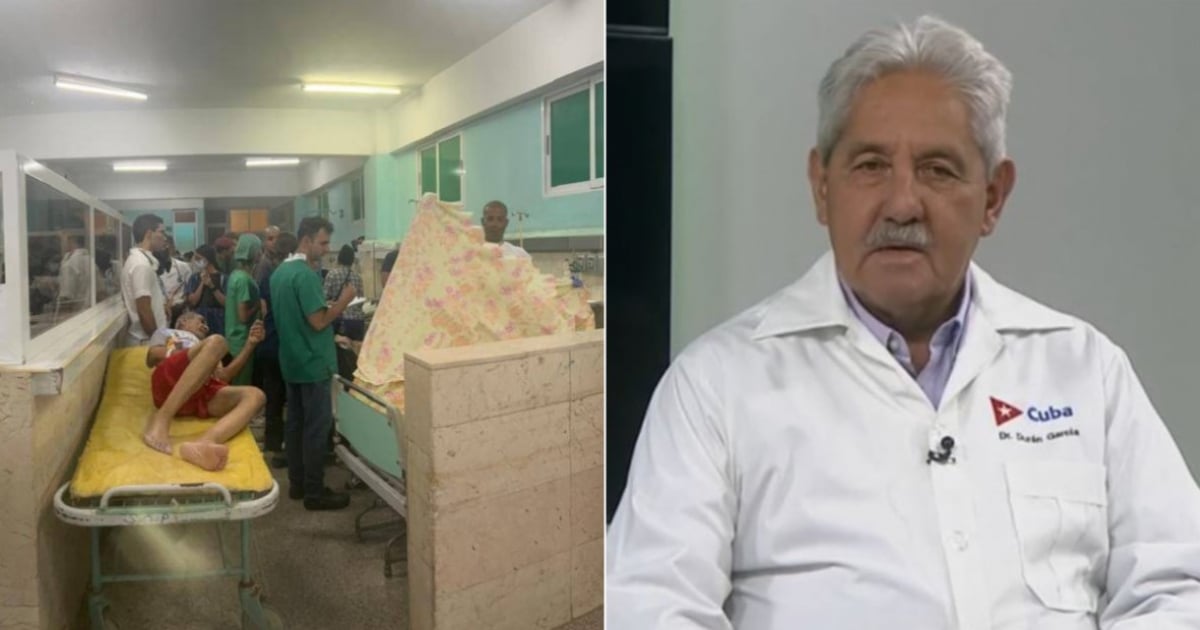
The recent statements by Dr. Francisco Durán, the national director of Epidemiology at the Ministry of Public Health, regarding the arbovirus crisis in Cuba and medical assistance for the population, have generated a strong public response on social media.
On Facebook, where our editorial team published the latest report from Durán, numerous Cubans claim that they do not go to the doctor because there are no medications, supplies, or minimal conditions for care.
In his appearance, Durán acknowledged that the official figures do not reflect the true magnitude of the problem, because a significant portion of patients do not seek healthcare services.
He clarified that the statistics are based only on those who visit the doctor. As an example, he reported that in the previous day 1,706 patients with unspecified febrile syndrome were identified and 3,226 were admitted, of which 84.1% were treated at home, under the supervision of the doctor and family nurse, and only 16.9% remain in health institutions, for a total of 47,125 patients admitted in the country for febrile conditions.
Durán recalled that dengue is an endemic disease in Cuba, with years of circulation and several epidemic outbreaks that have caused a significant number of fatalities in the past and also during the current crisis.
He stated that the virus is present throughout the country, although reports are concentrated in "14 provinces and 43 municipalities," and noted that the province of Granma, particularly in the municipalities of Bayamo and Río Cauto, has recently opened to active transmission. In the last reporting period, he pointed out, more than 344 cases were diagnosed in various provinces.
According to the epidemiologist, the greatest concern at this moment is chikungunya, “due to the number of cases and the extremely painful symptoms it causes,” which is leaving thousands of people with severe joint pain and prolonged discomfort.
But while Dr. Durán insists on the importance of the population going to the doctor to be registered and identified, many citizens on Facebook responded by questioning the usefulness of visiting a healthcare system that lacks medications, resources, and has overwhelmed hospitals.
A woman summarized the feelings of many this way: “Why should we go to the doctor if there’s nothing at all?” Those who can buy paracetamol or Duralgina have to do it on the street, and most of the people affected by the virus don’t have the money for that with such low salaries.
The same commentator reported that the limited medication that enters the system ends up in the hands of resellers, who sell it at unaffordable prices.
He reported that these individuals “have even bought scooters and dress very nicely,” while the population only receives “four bottles of each item,” in a scheme where even chlorine for hygiene is diverted for resale.
She herself claims to be ill with the virus, in addition to being diabetic, having suffered a heart attack, and suffering from asthma. At 78 years old, she says she cannot get "not even an asthma device" nor a simple blood test that she urgently needs, living alone in Colón, Matanzas.
Other users were more direct: "Just say that Cuba as a whole is sick and that if they go to the doctor, they won't have anything, not even for relieving pain, that's the plain truth," wrote one.
Another comment stated that it would be more honest to acknowledge that “100% of the Cuban population is sick and many have lost their lives, without medication and without any kind of medical attention, that the hospitals are collapsed,” rather than continuing to “talk just to talk” while “there is no fumigation anywhere.”
There were also criticisms of the care model itself. An internet user questioned Doctor Durán's emphasis on people seeing a doctor when, once there, they are asked to bring their own resources.
“Please, what do they want you to go to the doctor for, just for a number? Seriously, when you arrive, they ask: did you bring medicine, did you bring gloves… they ask for everything. Stop being victims.”
The comment denounces the increasingly common practice of requiring patients to provide gloves, syringes, medicines, and even healing materials, something impossible for those who rely on devalued state salaries.
The contrast between the official message—centered on statistics, household income, and healthcare systems—and the experiences shared by Cubans on social media reveals a deep gap.
While the Ministry of Health asks that the sick report themselves to have a clearer picture of the epidemic, many citizens state that they refuse to go to the doctor because they do not expect to find relief, only a consultation without medications, without available laboratory tests, and sometimes with the additional burden of having to procure the supplies themselves.
Thus, Dr. Durán's call to strengthen information and individual protection clashes with a reality that thousands of Cubans describe as healthcare abandonment: essential medications missing from pharmacies, resellers controlling access to drugs, and a lack of mosquito fumigation.
The population, caught between pain and exhaustion, ultimately says: "We don't go to the doctor because there are no medications."
Filed under: