
Related videos:
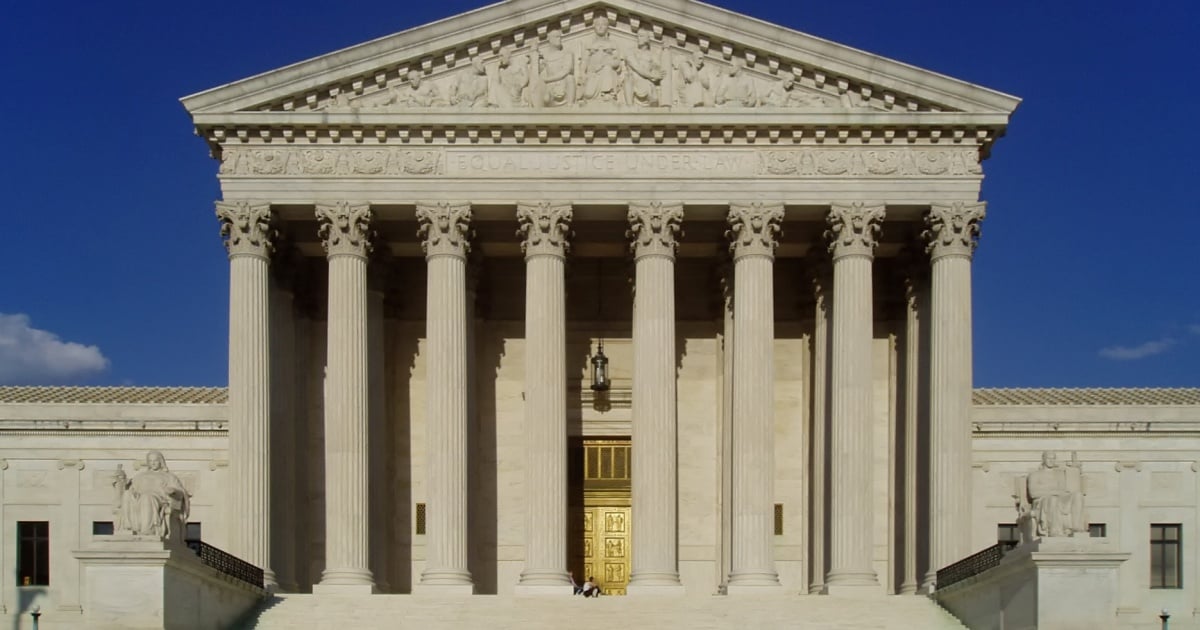
The Supreme Court of the United States met this Friday to discuss President Donald Trump's appeal regarding his executive order that restricts birthright citizenship for the children of undocumented immigrants or individuals who are temporarily staying in the country.
According to the agency Associated Press (AP), the court may announce next Monday whether it will agree to hear the case, after several lower courts declared the measure unconstitutional and blocked its implementation nationwide.
The order, signed by Trump on the first day of his second term, is part of his policy of tightening immigration and seeks to reinterpret the 14th Amendment of the Constitution, which for over a century has guaranteed automatic citizenship to anyone born on U.S. soil, with the exception of children of foreign diplomats or occupying forces.
If the Court agrees to review the case, the arguments would be heard in the spring and a final ruling is expected by early summer, the cited agency indicated.
Federal courts, including the Ninth Circuit Court of Appeals in San Francisco and one in New Hampshire, have ruled that the order violates or is likely to violate the 14th Amendment, as the right to citizenship by birth was intended to include all individuals born under the jurisdiction of the United States, regardless of their parents' immigration status.
The Trump administration, however, argues that the children of non-citizens are not "subject to the jurisdiction" of the country and, therefore, should not automatically receive citizenship.
In a statement, Attorney General D. John Sauer argued that previous court decisions “invalidated a policy of great importance to the president and his administration, to the detriment of border security,” noted AP.
The American Civil Liberties Union (ACLU), which is leading the lawsuit on behalf of those affected, requested the court to reject the appeal, describing the government's arguments as "weak and lacking legal basis."
If reviewed, this would be the first immigration policy of Trump's second term to reach the Supreme Court for a final decision.
President Donald Trump's attempt to eliminate birthright citizenship in the United States has sparked an intense legal battle that has been unfolding since the beginning of his second term.
The Supreme Court had already allowed his administration to proceed with the plan, despite legal challenges and concerns about its constitutionality.
After that first step, the public debate intensified around the future of automatic citizenship for children of immigrants, especially those born in the United States to parents in irregular or temporary migratory status.
In the following weeks, Trump submitted directly to the Supreme Court a formal request to eliminate this right, basing his argument on a restrictive interpretation of the 14th Amendment, which has been key in guaranteeing the principle of jus soli in the country.
The legal battle continued to escalate with new legal actions and reactions from civil organizations that see this initiative as a direct threat to fundamental rights and an exclusionary maneuver that particularly affects migrant communities.
Filed under: