
Related videos:
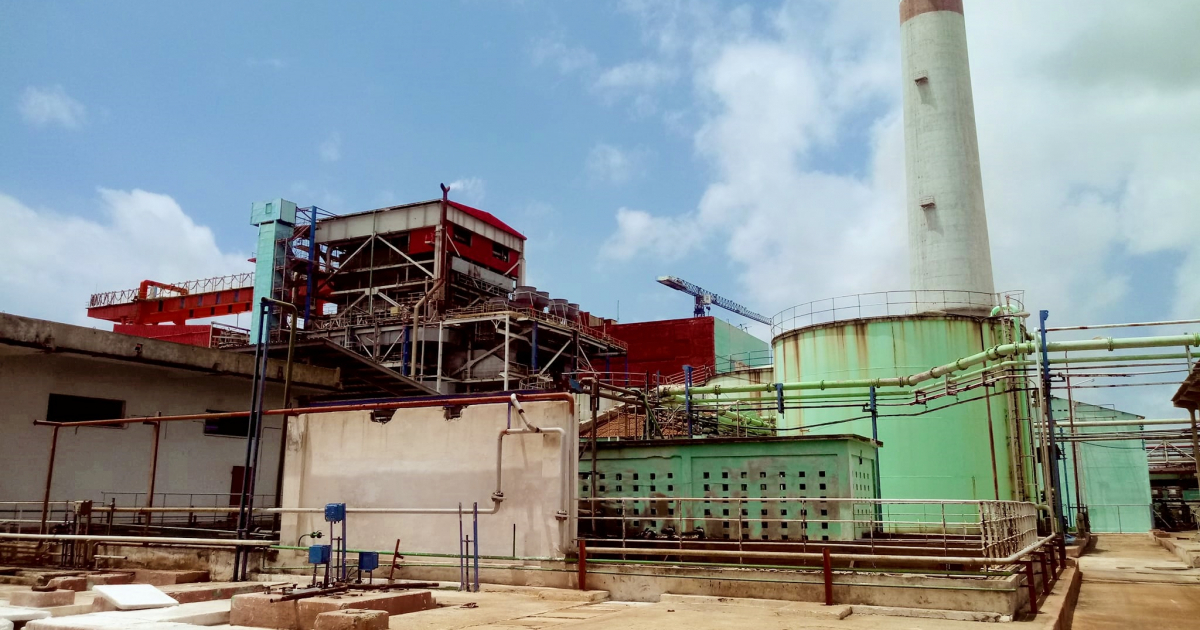
The Lidio Ramón Pérez thermoelectric plant, better known as Felton, went offline again this Saturday, once again exposing the Cuban government's inability to ensure a minimally stable energy infrastructure.
La Unión Eléctrica (UNE) confirmed on Facebook that at 9:00 AM, Unit 1 went offline due to "high temperature in the bearing," a technical failure that halts one of the key components of the national electrical system.
Although the official report was brief, it was the users who, more clearly, explained the extent of the damage.
One of them explained that the bearing housings are essential because they support the turbine shaft and allow for high-speed rotation, so a failure means disassembly, adjustment, cleaning, and maintenance.
Another user was more direct: "Those jobs take at least 20 days..."
The UNE didn't say it, but the population has already accepted the delay as part of the usual script of blackouts and breakdowns.
A third commentator pointed out what many see as the root of the disaster: decades of improvisation and propaganda instead of state planning.
"We are far away, but far from having a stable national electricity system, neither now nor in the next 10 years, nor in the next 50," he wrote.
He also criticized the official insistence on photovoltaic energy as a miraculous solution, stating that the experts consulted predict it could even worsen the situation if the government continues to rely on it as the sole option.
A country without light and direction
Felton is not just any power plant: with over 500 megawatts installed, it is one of the cornerstones of electricity generation in Cuba, especially for the eastern provinces.
However, it has become a symbol of collapse.
Only in September was it announced that the same Unit 1 would remain out of service for at least 20 days due to a failure in the transformer, which also required cleaning work on the boiler and condenser.
Then, at the end of October, the plant sustained partial damage after Hurricane Melissa passed through.
Authorities downplayed the impact, asserting that the damage to roofs and metal structures "did not hinder the technical startup." However, it still took several days to proceed, as access to the water pumping area, essential for cooling the equipment, was not possible.
Experts warned that it would take at least five days just to reach the location due to land collapses and blocked roads.
The crisis is not about the climate: it is about the State
The ongoing deterioration of Cuba's thermoelectric plants has created a vicious cycle where hurricanes, technical failures, obsolescence, lack of maintenance, and poor state planning accumulate without a clear exit strategy.
The government limits itself to posting fragmented notes on social media, while it is the citizens who explain the technology, estimate the timelines, and acknowledge the obvious: there is no short-term or long-term solution with the current course.
While the official discourse speaks of investments, alternative energies, and "resistance," the machines collapse, cities plunge back into darkness, and Cubans learn to live at the mercy of an electrical system that no one trusts to function with stability anymore.
What happened today in Felton was not an unforeseen accident: it was another symbol of an energy model exhausted by decades of government inefficiency.
And another sign that the blackout, more than in the wires, lies in the country's management.
Filed under: