
Related videos:
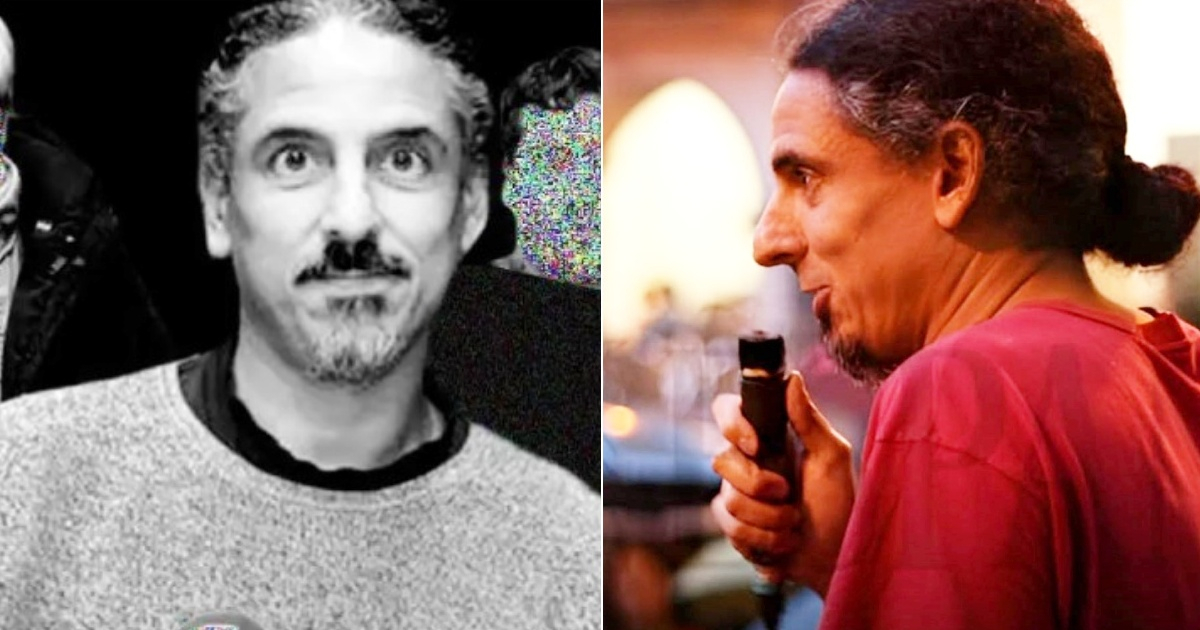
The return of the former professor and former Galician politician Martiño Ramos Soto to Spain, accused of serious sexual offenses, seems imminent, despite the fact that there is no extradition treaty between Cuba and Spain.
Ramos was arrested this week on the island by the Revolutionary National Police in compliance with an international arrest warrant.
He was included in the list of the ten most wanted fugitives by the Spanish authorities, and his capture has triggered a repatriation process that could be resolved very quickly.
When will Martiño Ramos return to Spain?
The Spanish government claims that the extradition could be finalized soon.
“We trust that in the coming days we will have him in Spain serving the sentence to which he was firmly condemned,” said the Government delegate in Galicia, Pedro Blanco, in statements reported by the Spanish news portal 20 Minutos.
The Ministry of Justice has already submitted all the necessary documentation for its delivery to the Cuban authorities.
According to the aforementioned source, the Executive expects the extradition of the sexual assailant to be finalized "within the next few hours or days."
Although there is no bilateral legal framework that regulates this delivery, the good political rapport between both countries allows for progress through diplomatic means.
What will the process be like without a formal extradition treaty?
In the absence of an extradition treaty, everything depends on the willingness of the involved governments.
Thus explains the Cuban lawyer Judith Tabares, based in Madrid: “In Cuba, there is no separation of powers; rather, the law of the dictator is applied. Any decision made by the courts is politicized and depends on what the government dictates, so in this case, it is very likely that he will be extradited because the Cuban government maintains a good relationship with that of Pedro Sánchez.”
Attorney Mariano Calleja, a specialist in immigration, agrees: “There is no legal procedure established with Cuba... everything depends on a voluntary agreement between governments; it is more of a diplomatic issue than a legal one.”
Calleja adds that this type of informal agreements can even expedite the process, as they are not bound by the complex legal requirements governing other extraditions: "In this case, there is no need to follow any of those formalities."
Both legal experts believe that the political landscape is favorable for a swift handover.
"Cuban authorities also have no interest in keeping a sexual assault offender in Cuba," Tabares emphasizes.
Although they do not rule out that the Spanish government may offer some "off the record compensation" in return.
The case: A firm conviction and a flight to Cuba
Martiño Ramos was sentenced to 13 and a half years in prison for the continuous sexual abuse of a minor over a period from age 12 to 16.
The Supreme Court upheld the sentence in July, but before entering prison, he managed to escape to Cuba.
The Provincial Court of Ourense issued an international arrest warrant on October 31, which was finally executed by the Cuban authorities.
His escape was not coincidental. Many convicts seek refuge in countries that do not have extradition treaties with Spain as a strategy to avoid prison. However, in this case, it does not seem that this maneuver will provide him with protection.
In fact, the lawyers believe that the defense will attempt to halt the extradition with political arguments, given that Ramos was a leftist militant and leader of En Marea.
"He will try to claim that he has been unjustly convicted in Spain for false crimes, but politically, this man, who has been convicted of very serious offenses, is of no interest to the Cuban government," Calleja believes.
Are there similar precedents?
Although there is no active extradition treaty between Cuba and Spain, both countries have collaborated in other cases.
In 2012, the Cuban government extradited Ángel Carromero, a youth leader of the Popular Party, following his conviction for the car accident in which opposition members Oswaldo Payá and Harold Cepero were killed.
Tabares recalls that this precedent shows that extradition agreements can be reached with governments of different political affiliations, as long as there is mutual willingness.
The return of Martiño Ramos to Spain does not depend on courts, but on negotiations between foreign ministries. The crime for which he was convicted is serious, and social pressure is high. Therefore, everything suggests that the Cuban authorities will facilitate his departure, and Spain will welcome the fugitive within days.
"It's more of a diplomatic issue than a legal one," experts reiterate. And all indications suggest that this time, that diplomacy will be swift and effective.
Filed under: