
Related videos:
The state-owned Aguas Varadero company announced that the neighborhoods of Santa Marta and Varadero Histórico would be without drinking water supply for 24 hours—from midnight on December 3 to midnight on December 4—in order to replace damaged pipes.
In a note published by TV Yumurí on Facebook, residents were asked to store water and use it wisely, justifying the cut as part of efforts to improve infrastructure. However, the news comes at a time when the shortage of potable water on the island is much more severe.
In the eastern provinces, the lack of rainfall and the low level of reservoirs affect around 860,000 people, while in Havana, about 248,000 experience constant interruptions due to electrical failures that leave the pumping equipment out of service.
This precarious situation is exacerbated because, as reported in an article by Periódico Cubano, in the capital, between 40% and 70% of water is lost due to leaks and deteriorated pumps, and power outages burn out pumping motors, leaving tens of thousands of homes without service.
A scheduled outage in Varadero, a symptom of the crisis
The notice from Aguas Varadero highlights a specific technical issue: sections of piping will be replaced to "ensure greater quality and stability" in the service. However, numerous testimonies from citizens in other provinces indicate that water outages last for days.
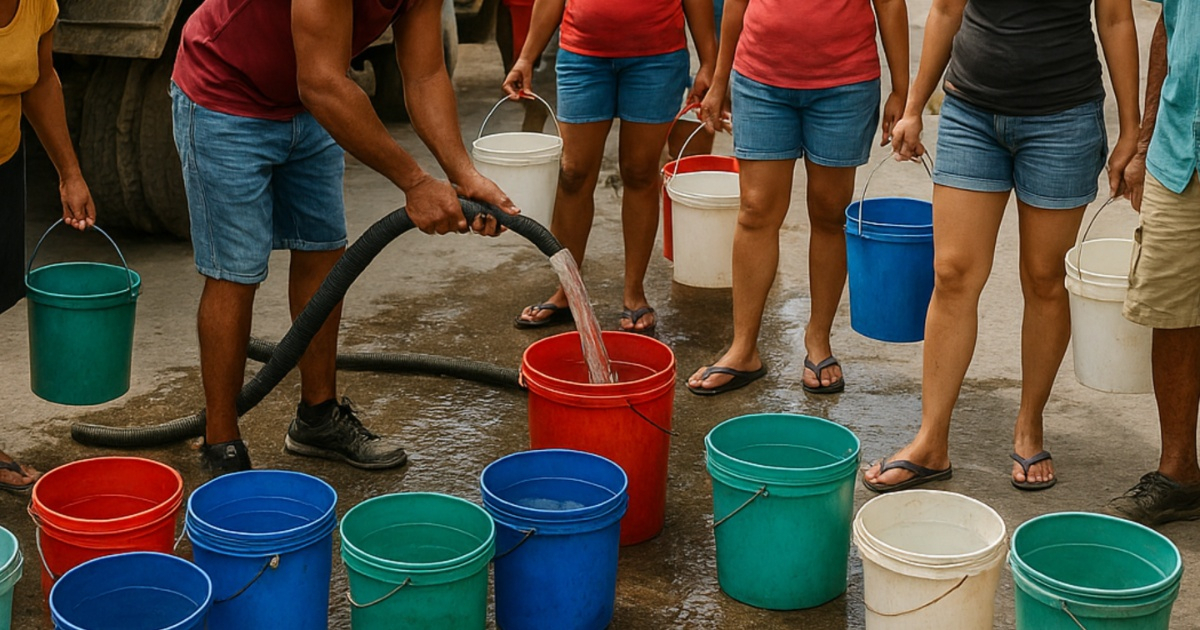
In light of this scarcity, many families are forced to carry water from streams or pay thousands of pesos for water truck services.
Lack of infrastructure and power outages
The water deficit is closely linked to the energy crisis. Frequent breakdowns in thermoelectric plants and the lack of fuels have led to power outages, which in some areas exceed 20 hours a day.
Each power outage stops the water pumps; in cities like Matanzas, a one-minute electrical "blip" can halt pumping for an entire hour. Furthermore, 91 significant leaks have been identified in the supply network, and the fleet of water trucks has decreased, worsening distribution
In summary, although the 24-hour cut in Varadero aims for maintenance, it adds to a national emergency: hundreds of thousands of Cubans have been without this vital liquid for days, weeks, or even months.
The lack of investments, leaks, broken pumps, and prolonged blackouts have created a vicious cycle in which water and electricity are simultaneously scarce. The note from Aguas Varadero is therefore another reminder that Cuba's water crisis requires structural solutions and not just scheduled outages.
Filed under: