
Related videos:
The Municipal Assembly of the People's Power of Santiago de Cuba was forced to publicly apologize this Wednesday after spreading a false news report about the alleged death of two university workers due to consuming a product illegally sold as "alum".
The post, made from the official profile of the political group on Facebook, caused alarm among the people of Santiago, already affected by the crisis resulting from Hurricane Melissa and the diseases.
In the rectifying statement, the authorities admitted: "I apologize [...] for the recent unverified publication regarding the illegal sale of 'alumbre', and of two deceased university workers, which is NOT TRUE. The institutional communicator responsible for the note did not follow the editorial guidelines of the institution."
The false alarm: deaths, toxins, and an alleged industrial bleach
Hours earlier, the official page had stated that two employees of the University of Santiago de Cuba had died after consuming a product sold on the street as "alum," but according to the information released, it was actually an industrial bleach stolen from the Mar Verde warehouses, which is highly toxic.
The post warned about alleged criminals selling this chemical as if it were aluminum and potassium sulfate, a coagulant commonly used at home to clarify water, although its use does not replace disinfection.
The false report spread quickly, instilling fear in a population already forced to seek desperate solutions to purify the dirty water that reaches homes after the damage caused by the cyclone.
A correction that reveals more problems than solutions
Although the Government apologized, the episode reveals: the improvisation with which institutional communication is managed, the lack of verification, the deterioration of health control, and the fragility of the water distribution system in Santiago de Cuba.
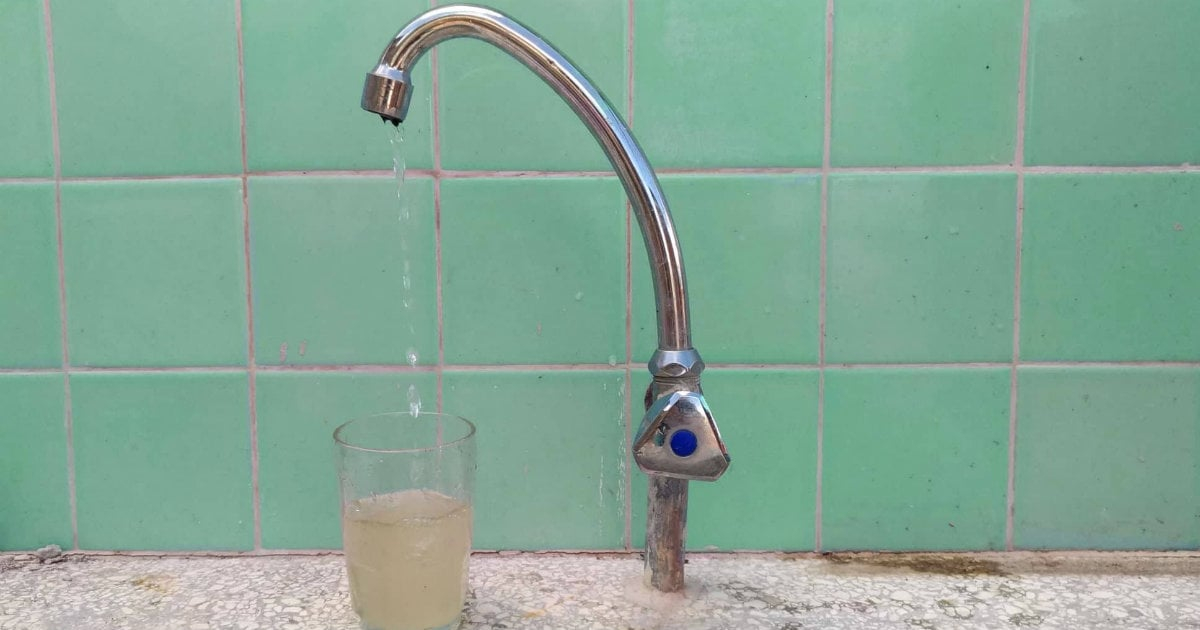
While the authorities are correcting themselves, the people of Santiago continue to deal with water that arrives brown, with sediments and without minimum guarantees of potability.
A population forced to filter, boil, and survive as best it can
In the face of a shortage of safe products to treat water, the population is trying to survive using rudimentary methods: makeshift strainers made from cloth or gauze, old filters without replacement parts, boiling water when electricity is available (or, if not, using charcoal or firewood), or consuming it directly, despite the risks involved.
The situation is particularly serious considering that Hurricane Melissa has damaged the water infrastructure, leading to an increase in gastrointestinal diseases and reports of contaminated water in homes.
State misinformation amid a real emergency
While the people desperately search for clean water, the authorities issued a statement that turned out to be false, adding only confusion and fear. The subsequent apology does not change the fact that the government preferred to blame anonymous unscrupulous individuals rather than confront the root of the problem: a collapsed system, lacking health control, resources, and real solutions for the population.
The episode demonstrates, once again, the institutional opacity, the lack of journalistic rigor, and the disconnect between the official narrative and the reality of a people forced to filter their own water to survive.
Filed under: