
Related videos:
The United Nations Children's Fund (UNICEF) warned this Wednesday about the severe water crisis that persists in the province of Santiago de Cuba, where 50 of the 164 supply systems remain out of service following Hurricane Melissa.
Through its official account on the social media platform X, UNICEF Cuba announced that a team led by Deputy Representative Sunny Guidotti, along with ECHO Latin America and the Embassy of Canada in Cuba, is in the eastern province to oversee recovery efforts and support the communities most affected by the cyclone.
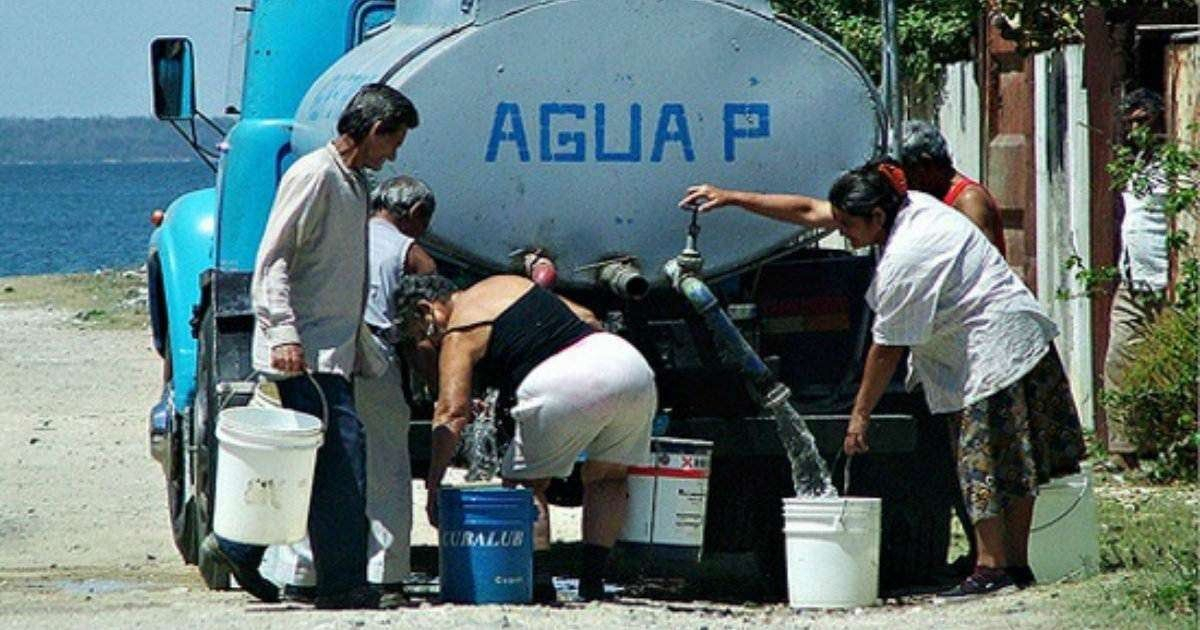
“Access to water is a challenge: 50 of the 164 supply systems have not yet been restored. In El Cristo 1, which supplies 85,000 people, the community relies on water trucks,” the organization indicated, referring to one of the areas hardest hit by the lack of service.
During their visit, UNICEF representatives also toured a protection center for evacuated families, where 26 girls, boys, and adolescents are currently staying, unable to return to their homes due to the slow pace of the regime in recovering the houses affected by the cyclone.
There, they identified the main needs regarding health, hygiene, education, and emotional support, as specified by the organization in the publication.
The UN agency provided recreational materials, the Zunzún magazine, and educational audiovisuals for displaced children, while announcing that its work will continue in the coming days in Guamá, one of the most isolated municipalities affected by the hurricane. Thanks to this, the region has experienced some relief, unlike that provided by the regime.
Although Cuban authorities have emphasized the "progressive recovery" of services, the situation in Santiago de Cuba remains critical.
In several communities, residents have been relying for weeks on an irregular supply of water tankers, without running water or proper conditions for basic hygiene.
The water crisis adds to the severe material and humanitarian damage caused by Hurricane Melissa, which struck eastern Cuba at the end of October and affected infrastructure, crops, and homes.
UNICEF continues to actively cooperate in the country, focusing on ensuring access to safe water, providing care for children, and restoring essential services in the most affected provinces.
In this context, amid the severe damage left by Hurricane Melissa in the province of Granma, UNICEF Cuba's actions have made a difference for thousands of families who remained without access to drinking water weeks after Hurricane Melissa passed through.
According to the website of the United Nations agency, in technical coordination with the National Institute of Hydraulic Resources (INRH), three portable water purification plants were put into operation, capable of producing safe water for over 21,000 people daily.
The facilities were located in the municipalities of Río Cauto and Cauto Cristo, two of the most affected by the floods and the collapse of local infrastructure.
Filed under: