
Related videos:
The professor Rolando Luis Pérez Vizcaíno questioned the credibility of the floating rate of the Central Bank of Cuba (BCC) by pointing out that, without access to the informal market or official currency sales, the entity lacks real data to establish an exchange rate.
Pérez Vizcaíno, administrator of the group on Facebook Economistas Libres de Cuba, highlighted this Saturday a central contradiction of the new exchange rate scheme: the BCC buys dollars at a fixed rate, hardly sells foreign currencies, and does not participate in the informal market, which is where the real price is formed.
In this context, it was questioned what data and against what operations a reference rate or an average can be calculated to justify daily variations.
The economist also questioned the recent decrease in the official exchange rate from 410 to 407 pesos per dollar, while noting that the BCC does not record sales transactions and the informal market continues to operate beyond its reach.
In his view, the maneuver aims to attract foreign currency to the banking system in order to subsequently force prices down, without any genuine relationship between supply and demand.
In his analysis, Pérez Vizcaíno also denounced actions aimed at "blinding" the population, referring to attacks against independent platforms like El Toque, which publish reference rates from the informal market.
According to that information, the dollar remains around 440 pesos, the euro at 480, and the MLC at 310, figures that contrast with the official exchange rate.
The reactions were swift. Numerous users agreed that there is no official currency exchange market as long as the State does not sell foreign currency and restricts operations to selective purchases.
Others warned that, without a real reduction in prices, an artificial drop in the dollar only worsens the purchasing power of those who rely on remittances.
Several comments compared the new scheme to previous experiences, such as the 1×120 rate, noting that it will fail again because it goes against economic logic.
"It's a trap, and people are not fools. Dollars are not very useful for shopping in dollar stores due to shortages and prices in USD being higher than in MLC. Many exchange them for CUP and use that to buy in the private sector, which, although exploitative, offers alternatives and is a bit less expensive," clarified a user identified as Juan Manuel.
For many, the supposed floating rate is nothing more than an administrative figure, lacking support from real transactions, meant to project control where there is only scarcity, opacity, and distrust.
The BCC announced on Wednesday the so-called floating rate, a new category of exchange rate that will be updated daily based on supply and demand.
It is intended for individuals and the private sector and is part of an effort by the government to bring the official value of the dollar and the euro closer to informal market prices.
However, in practice, the informal market remains more relevant for Cubans.
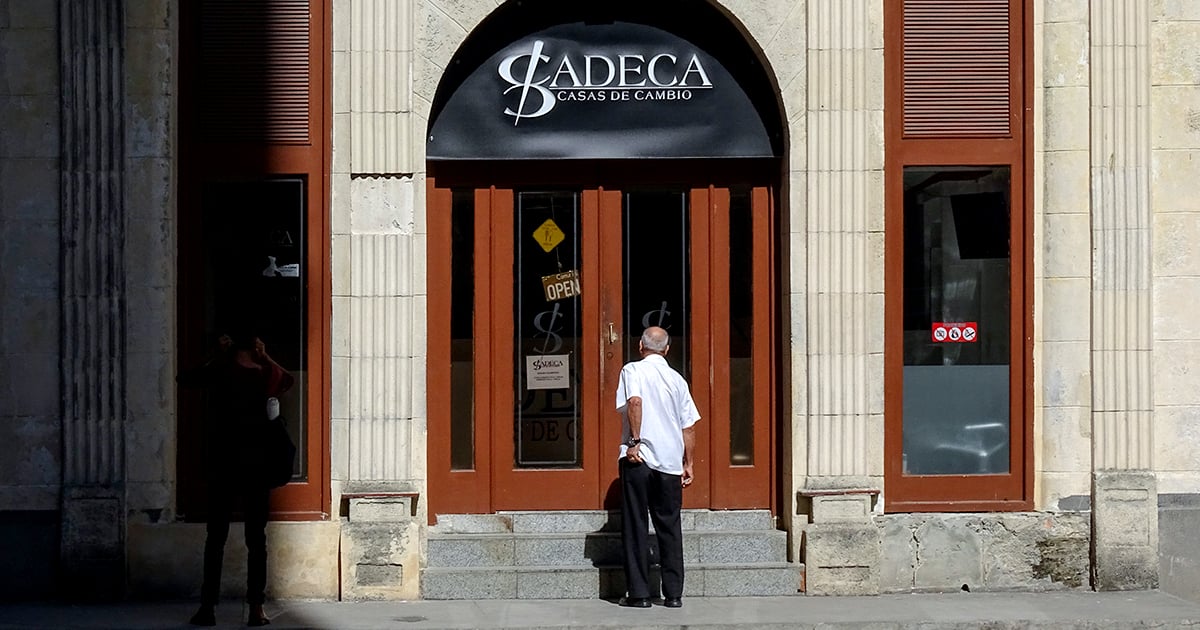
Although the BCC publishes an official exchange rate that serves as a reference for the currency market, the Currency Exchange Houses (CADECA) and other financial institutions determine their buying and selling rates by applying a commercial margin.
This creates visible disparities for the population and fuels complaints on social media about the gap between what the BCC announces and what is ultimately offered at the counter.
Just this Saturday, the US dollar shows an eight peso difference between the BCC rate (408 CUP) and the CADECA rate (416 CUP).
With the official exchange rate of 408 pesos per dollar, the average salary is equivalent to just over 16 dollars a month, which remains insufficient to meet basic needs, given the high cost of living that exceeds 50,000 pesos monthly.
Filed under: