
Related videos:
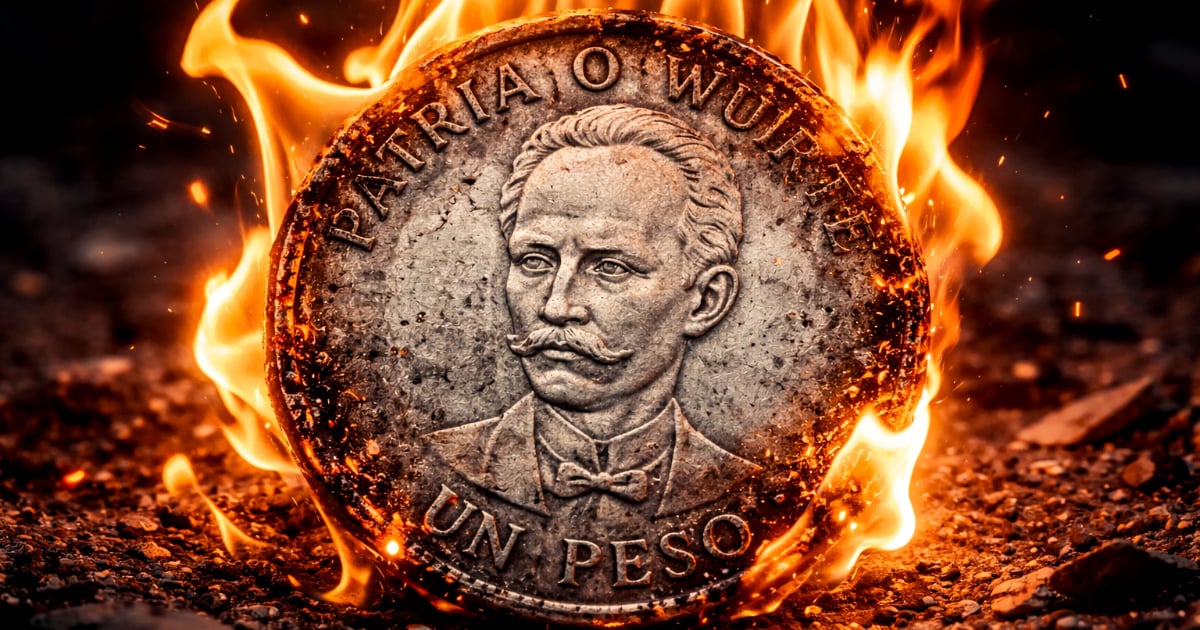
The Central Bank of Cuba (BCC) officially set a new exchange rate on December 18 of 1 USD = 410 CUP and 1 EUR = 481.42 CUP, a measure that results in a 242% devaluation of the Cuban peso compared to the previous rate of 1x120.
The economist Pedro Monreal described the event as “the largest official devaluation of a currency in 2025 worldwide,” a record that places Cuba at the top of a ranking no one wants to be a part of.
A historic devaluation "by decree"
The measure, presented by the regime as part of its "transformation of the exchange market," amounts to an immediate loss of more than two-thirds of the nominal value of the Cuban peso.
Until now, the State maintained an official rate of 120 pesos per dollar, but in practice, it already recognized the informal rate to set internal prices in trade and imports.
Therefore, as Monreal emphasized, the currency was already devalued by the market itself: “The Central Bank merely formalizes what the real economy had determined months ago.”
In other words, this is not a technical correction, but rather a belated admission of monetary collapse.
Official devaluation vs. market devaluation
In economics, an official devaluation occurs when the government centrally decides to lower the value of its currency against others.
On the other hand, a market devaluation occurs when this loss of value happens naturally, driven by supply and demand, inflation, or a lack of confidence.
In Cuba, both devaluations have been running in parallel for years
- The informal market was already quoting the dollar at 440 CUP and the euro at 480 CUP before the announcement.
- The government, without reserves or sufficient currency, simply legalized the disaster.
International comparisons
In 2025, several currencies have depreciated, but none to the extent of the Cuban peso.
The Iranian rial lost about 50% of its value against the dollar. The Lebanese pound, one of the most unstable currencies on the planet, depreciated by 60%.
On their part, the Indonesian rupiah and the Vietnamese dong also weakened, although by percentages lower than 15%.
Cuba, with its collapse of 242% in a single day, surpasses any global benchmark. No recognized economy has experienced an official devaluation of such magnitude in 2025.
The recognition of failure
With this measure, the regime aims to establish a more realistic "floating rate" and attract foreign currency through legal means.
But the underlying problem remains unchanged: there is no trust, there are no dollars, and there is no production.
The devaluation is not a sign of recovery, but rather a public admission of the collapse of the Cuban peso.
The government can change the numbers, but not the reality: the value of money is still determined by the streets.
Filed under: