
Related videos:
The former spy Juan Pablo Roque stated that he feels excluded in the film Wasp Network and described the book Los últimos soldados de la Guerra Fría as "garbage," which presents the official version of the Castro government regarding the events in which he participated during his mission in Miami.
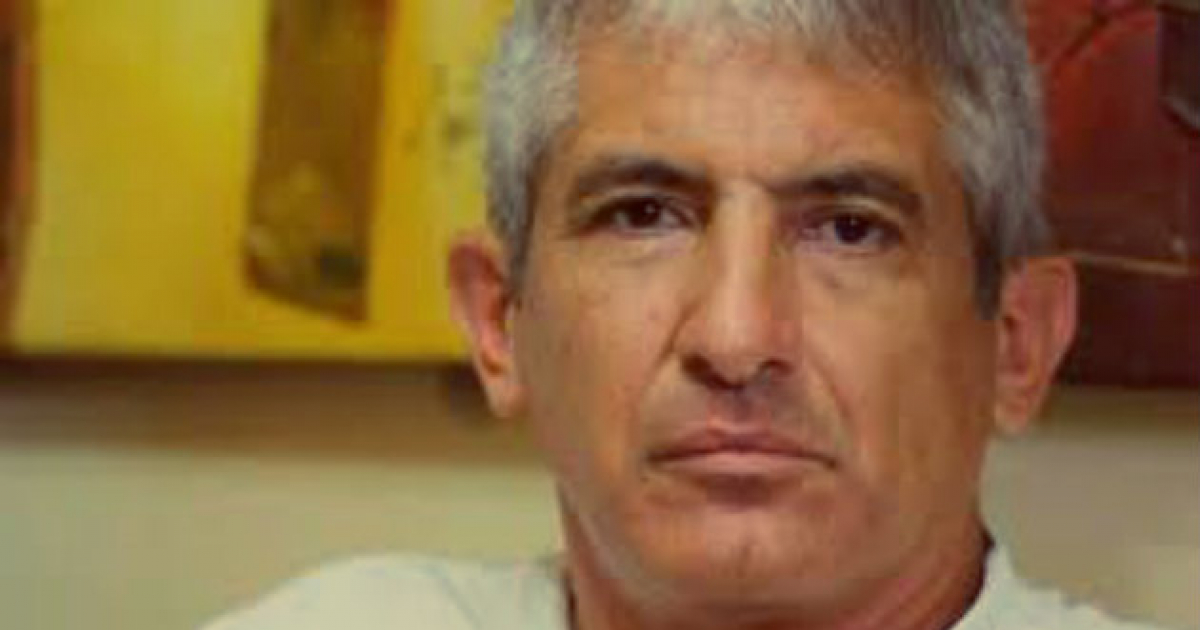
Roque, 64 years old, who worked as a double agent for Cuban intelligence and the FBI, gave an exclusive interview to CiberCuba after watching this week in Havana the film by French filmmaker Olivier Assayas, based on the book by Brazilian writer Fernando Morais.
"Several colleagues recommended that the writer and the filmmaker talk to me, but no one came to see me, and although the movie is more truthful than 'that piece of garbage of a book,' it is still a commercial film that diverges significantly from reality because it tells things as they didn't happen," Roque states.
The former agent warns that the omissions in the film could be grounds for a lawsuit, although he did not specify whether he will pursue it or if it is just a passing wish.
"In the fiction, I appear swimming to the Guantanamo Naval Base as if I were an American SEAL, in a wetsuit, but the truth is that I swam for hours in a patched pair of shorts I bought when I was studying in the Soviet Union, with fins sewn together with wire and a useless mask and snorkel," Roque stated, criticizing the omission of the interrogations with lie detectors that he was subjected to at the American facility.
Before swimming, I was hiding in the trunk of a Soviet GAZ-69 jeep filled with screws, nuts, and washers, which got embedded in my body. Once I was in the sea, a fish struck me in the side, and I had to be hospitalized at the base, recalls the former pilot who faked his desertion in 1992.
Morais, the author of the book that served as the basis for the film's script, "offered support to Cuba" in creating a volume that would contribute to the cause of the five Cuban spies imprisoned in the United States, but the task was entrusted to Miguel Álvarez Sánchez, who "is imprisoned here for being a CIA agent," and it was this gentleman who provided copies of excerpts from files to the Brazilian writer.
Álvarez Sánchez, who served as an advisor to the then President of the National Assembly, Ricardo Alarcón, was sentenced to 30 years in prison, and his wife Mercedes Arce to 15 years, after being tried as alleged CIA agents, ultimately ending the political career of their boss, who was well-versed in Cuba-U.S. relations.
The book states that my bosses insisted several times on my return to Havana due to my narcissistic and exhibitionist character, and that is a lie. It was I who requested to go back because I missed my family and my home, Roque affirms, who married Ana Margarita Martínez in Miami, whom he abandoned in the early morning before the downing of the Brothers to the Rescue planes (1996) in international waters, as determined by the on the case.
When asked about the messages from the Main Center of Cuban Intelligence to the agents of the Red Avispa ordering them to penetrate U.S. military installations, including Southern Command; to identify coastal points in Florida for the landing of weapons and explosives, as well as the destruction of the planes of Brothers to the Rescue and the burning of a hangar, Roque smiles and says that this is science fiction, despite the fact that these instructions are part of the judicial summary.
Cuba has never had any interest in infiltrating the American military and it's easier to find weapons on the streets of Miami than to unload them; those points were really set by the narcoleaders of the Cuban exile community who heated them up to mislead the DEA and manage to unload drugs at other cold points," says Roque, who claims that the FBI was aware of these illegal activities. He did not comment on the sabotage of the hangar and destruction of the aircraft.
The former spy suggests investigating the case of an exiled Cuban who, using the pseudonyms Tony, Jaime, and Jairo, allegedly trafficked drugs under the guise of organizing anti-Castro actions, and is currently serving a sentence in a U.S. prison.
When asked about the statement made by Edgerton I. Levy (Ariel) that the dismantling of the Red Avispa confirmed the operational disaster of Cuban Intelligence, following the deployment of the FAR in MININT in 1989, Roque admits that during the "special period, the comrades here went above and beyond to carry out" espionage work, but attributes Ariel's stance, whom he never met, to "a desire to make money" and claims that his opinions are unfounded.
The former spy admits that he and Edgerton Levy are the major exclusions from the film and the book, which avoid mentioning Ariel's role in monitoring and tracking the Castro wasps in Miami. However, he warns that all intelligence services, including the CIA, have significant successes as well as major failures.
When discussing his pilot career, he reacts defensively, confused by the belief that it was José Basulto who mentioned his flying skills. "I taught the pilots of Hermanos al Rescate how to fly in formation and drop bags of food to the rafters as if they were bombs, so they wouldn't sink," using the Tope Mástl technique, which involves pointing the nose of the plane at the water and, just above the sea, counting three seconds: Habana 1, Habana 2, Habana 3, and releasing the load.
Only when CiberCuba mentions that former colleagues of his from the Squadron and Air Regiment, where he became Second Chief and Political Officer, claim that he never broke a retractable tail fin on the MIG-23, does he relax and advise: "When a pilot is about to land, he must focus entirely on the maneuver and not think about the kiss he will give to his wife."
"I no longer fly; when I returned, I took a few flights. Now I live off my pension and grow fruit trees, ornamental plants, and medicinal herbs in my backyard. When you called me, I was fixing my French Peugeot, which is complicated due to the lack of spare parts. I live like any other Cuban, facing all the difficulties we have here..."
Filed under: