
Related videos:
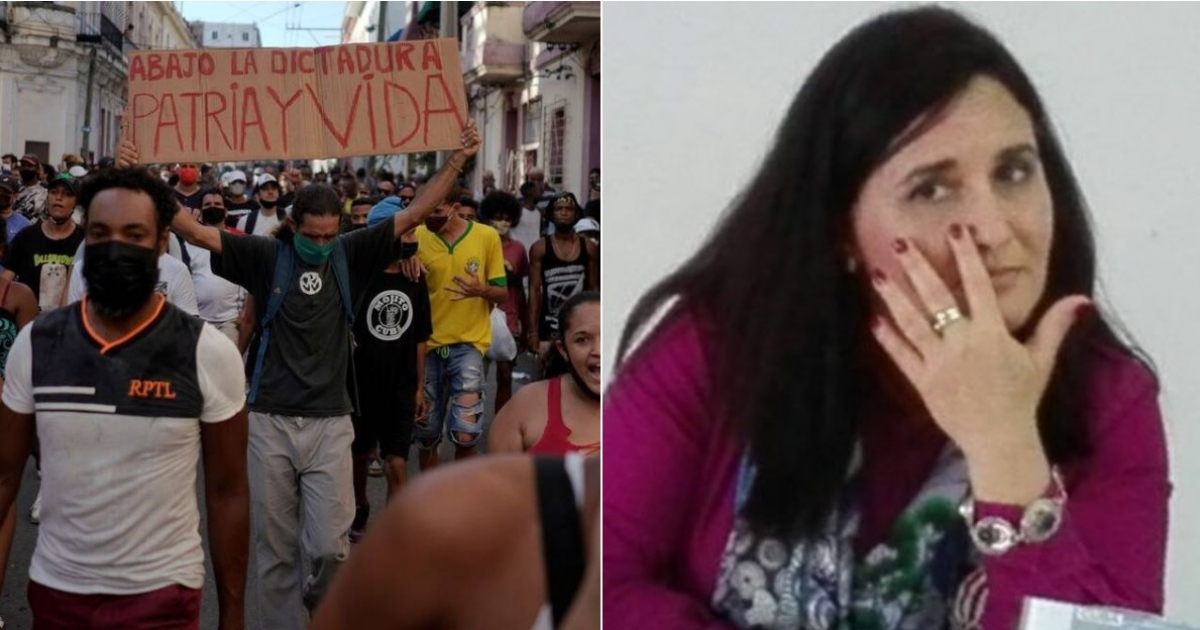
Johana Tablada de la Torre, Deputy Director General of the United States Division of the Ministry of Foreign Affairs, stated that the song "Patria y Vida" "did not resonate in Cuba."
"Biden's government should take home the Grammy for the production and costly promotion of the song," Tablada de la Torre said in a Twitter post shortly after the nomination of the song in the Best Urban Song and Song of the Year categories.
He also stated that the current occupant of the White House is lying when he says that his administration "is doing everything possible to help the Cuban people and that they offered vaccines to Cuba."
Tablada de la Torre's message received criticism from internet users, who condemned his use of social media to spread lies that only benefit the dictatorship.
"If you say that the song did not resonate in Cuba, it is just a reflection of the distance between you leaders and ordinary people," wrote journalist José Raúl Gallego.
The internet user Javier Vigoa reminded the MINREX official that in Cuba, the police force citizens to stop playing the song in their own homes because it is deemed "counter-revolutionary."
"That happens in our country... simply astounding. Don't trample on our rights any further," he added.
The writer Ariel Maceo Téllez recalled that during the protests on July 11, in over 60 locations across Cuba, the chants were "Down with the dictatorship" and "Homeland and Life."
"You lobbied for Biden, hoping for a supposed thaw. I suppose you have to live with that," he emphasized.
The attempts to discredit "Patria y Vida" from official discourse, state media, and government representatives have been constant since the song was released, and even more so with the rise it achieved within the island, where Cubans identified with the message of the song performed by Yotuel Romero, Maykel "Osorbo" Castillo, El Funky, Descemer Bueno, and Gente de Zona.
Although the regime adopted various measures to try to silence the song, whether by publishing other musical responses or attributing the phrase to the dictator Fidel Castro, the reality is that those Cubans who echo the message conveyed by the song may face legal charges.
The Ministry of the Interior explained on state television that shouting "Homeland and Life" "is a crime of inciting to commit a crime", after more than a thousand citizens who participated in the peaceful protests of July 11 were imprisoned.
In an effort to censor the news and prevent the impact of the song from being known within the island, EGREM removed Patria y Vida from the list of nominees for the Latin Grammys, although it took the opportunity to celebrate that the album "Cha, Cha, Chá: Homenaje a lo tradicional," featuring the Orquesta Aragón, Alain Pérez, and Issac Delgado, is competing in the category of Best Traditional Tropical Album.
From the United States Government, which Johana Tablada de la Torre criticized in her Twitter message, they celebrated the decision of the Music Academy to include the song among the nominees because it "inspires hope and freedom for the Cubans."
Filed under: