
Related videos:
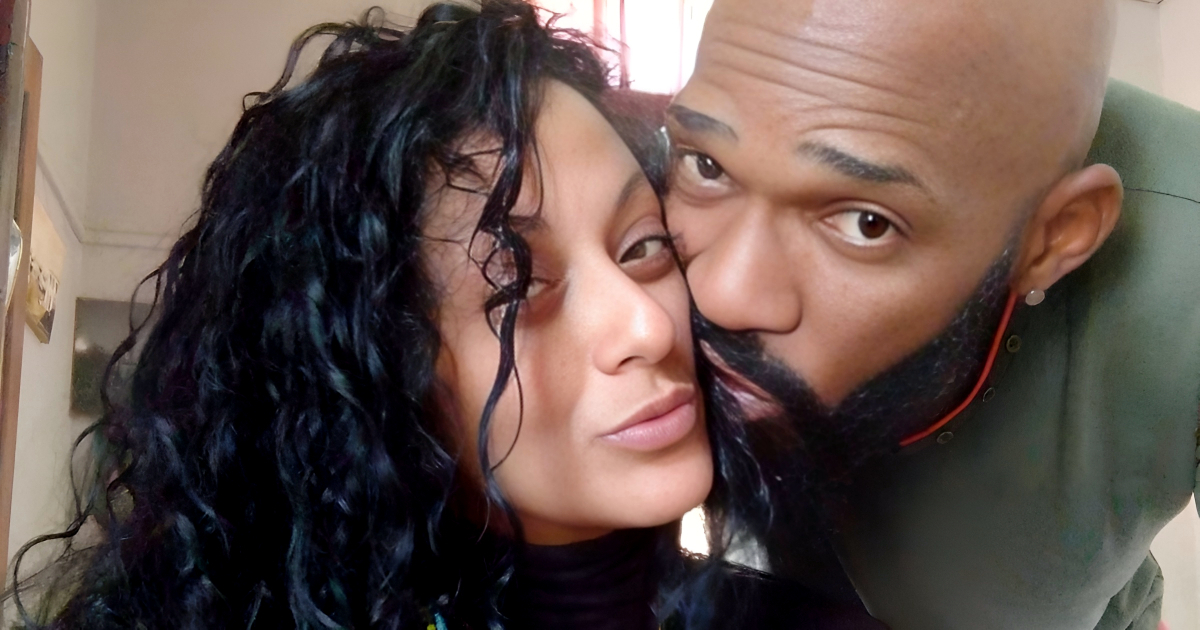
The Cuban activist Ana Ibis Tristá Padilla, wife of the political prisoner Damián Hechavarría Labrada -imprisoned since April 2021 for protesting against the regime in Las Tunas, months before July 11th-, was sentenced to 14 years in prison.
The sentence was handed down by the Chamber of Crimes Against State Security of the Provincial Court of Santiago de Cuba and was executed immediately: Ana Ibis was arrested at the moment she was notified and taken to prison, on the charges of "propaganda against the constitutional order" and "other acts against State Security".
The case has sparked a wave of outrage among human rights organizations and Cuban opponents, not only due to the severity of the sentence but also because there are no substantiated facts to justify it: the peaceful protest that he allegedly organized in Las Tunas in 2023 never took place.
"What is happening to Ana Ibis is not justice. It is pure repression, an exemplary punishment for thinking differently and speaking out loud," denounced a member of the Cuban Observatory of Human Rights (OCDH) from exile, who had access to the ruling.
An activist marked by her steadfastness
Ana Ibis, a 34-year-old woman from Tunas, is no stranger to political activism. Her story is inextricably linked to that of her husband, Damián Hechavarría Labrada, who is serving a five-year sentence for peacefully protesting in April 2021 against a fine of 5,000 CUP imposed on him for selling ornamental plants to support his ill mother.
On that April 21, 2021, in the middle of the street and with his face uncovered, Damián tore up the fine receipt and shouted: “Down with the dictatorship! Homeland and Life!”, marking one of the first, or the first documented case of using the cry of “Homeland and Life” as a demand for freedom.
The images of the event, broadcast live by the activist Adrián Góngora, quickly spread through social media, foreshadowing the atmosphere of discontent that would lead to the historic protests of July 11.
Alongside Damián were Taimir García Meriño and Adrián himself, who were also imprisoned for participating in that spontaneous protest.
The scene was later amplified by the state television, where the regime's spokesperson, Humberto López, labeled them as “criminals with poor social conduct” in a media piece aimed more at intimidation than at informing.
A family pursued by dissent
Since then, Ana Ibis has become a constant and challenging voice in defense of her husband and all political prisoners. Her presence on social media, her statements to independent media, and her connection with other activists made her a target of the regime's repressive actions.
In October 2024, she was detained and charged with leading a call for a peaceful march that was supposedly organized in Las Tunas in May 2023. Although the event never took place, and no tangible evidence of its organization was presented, she was charged along with Jarol Varona Agüero, Félix Daniel Pérez Ruiz, and Christian de Jesús Peña Aguilera.
The first instance of the process concluded in January 2025 with an acquittal due to insufficient evidence, as acknowledged by the court itself.
"Honestly, I think it's incredible. The ruling states that both Jarol and I are acquitted due to lack of evidence. Now I have to be very careful because, for any reason, they are capable of incarcerating me again," Ana Ibis said in a statement to Martí Noticias.
He was not mistaken.
A new trial, without new evidence
In the second trial, held in Santiago de Cuba—one of the two provinces with specialized courts for State Security cases—the previous verdict was overturned without the appearance of new evidence or independent witnesses.
“Everything is based on reports and interpretations from the Ministry of the Interior and Counterintelligence, institutions directly involved in repression,” denounced the OCDH.
The organization emphasized that the terms used, such as “enemy propaganda” or “relationship with counter-revolutionary groups,” lack precise legal definitions, allowing for their arbitrary use to criminalize dissent.
The result:
- Ana Ibis Tristá Padilla: 14 years old.
- Jarol Varona Agüero: 13 years old.
- Félix Daniel Pérez Ruiz: 5 years old.
- Christian de Jesús Peña Aguilera: 4 years.
- Exemplary punishment and judicial silence
According to the OCDH, what has taken place in Santiago de Cuba is "a political operation disguised as a judicial process." The severity of the sentences reflects a clear intention to "plant fear and discourage any attempt at citizen organization," even if it is symbolic or never comes to fruition.
"The Cuban judicial system has once again shown that it does not function as a guarantor of rights, but rather as another arm of State Security," the NGO stated.
A reversed process without new evidence
According to the court documents accessed by the OCDH, Ana Ibis and Jarol Varona had already been acquitted of these same charges in a ruling issued on November 24, 2024.
In that ruling, the court acknowledged that there was no material evidence, such as chemical substances, blueprints, or compromising messages in the telecommunications or bank accounts of the accused.
However, following an appeal filed by the Prosecutor's Office, represented by the prosecutor Adán Vicente Santos Santos, and with the support of the Supreme Court, that decision was overturned on May 21, 2025, leading to the second trial. The new process did not introduce any new evidence, but it did overturn the acquittal and handed down severe sentences.
In the new official version, the court claimed that Ana Ibis had advised other activists on how to grow their social media networks to organize a march on May 14, 2023, in Vicente García Park in Las Tunas.
The march, called on Facebook by Félix Daniel Pérez Ruiz—who was sentenced to five years for that post—never took place, as it was aborted due to police intervention.
One of the sentenced, Cristhian de Jesús Peña Aguilera, received four years in prison simply for sharing the original post.
Regarding Jarol Varona, the court states that he was connected by Ana Ibis to an opposition organization abroad called Autodefensa del Pueblo (ADP), which allegedly provided him with instructions to launch Molotov cocktails at a MININT building. Despite the seriousness of these allegations, no physical evidence or independent witnesses were presented.
"My soul is free": The legacy of the Hechavarría-Tristá
In the midst of family pain and the new separation, Ana Ibis continues to be seen by many as a woman who has chosen the path of dignity. In her own words: “I am proud of my husband, just as he is of me. They will not silence me.”
His husband, from prison, has also made it clear that his will has not been broken. In 2022, in a clandestine phone call, he said: “Not even in prison will they silence me. My soul is free. I am a patriot.”
Both represent, for many Cubans, the face of a resistance that doesn't need weapons or large banners, but rather conviction, courage, and a cell phone camera turned on at just the right moment.
Today, however, she is behind bars and so is he. But their voices, amplified by those who can still speak, continue to transcend walls, censorship, and sentences.
Filed under: