
Related videos:
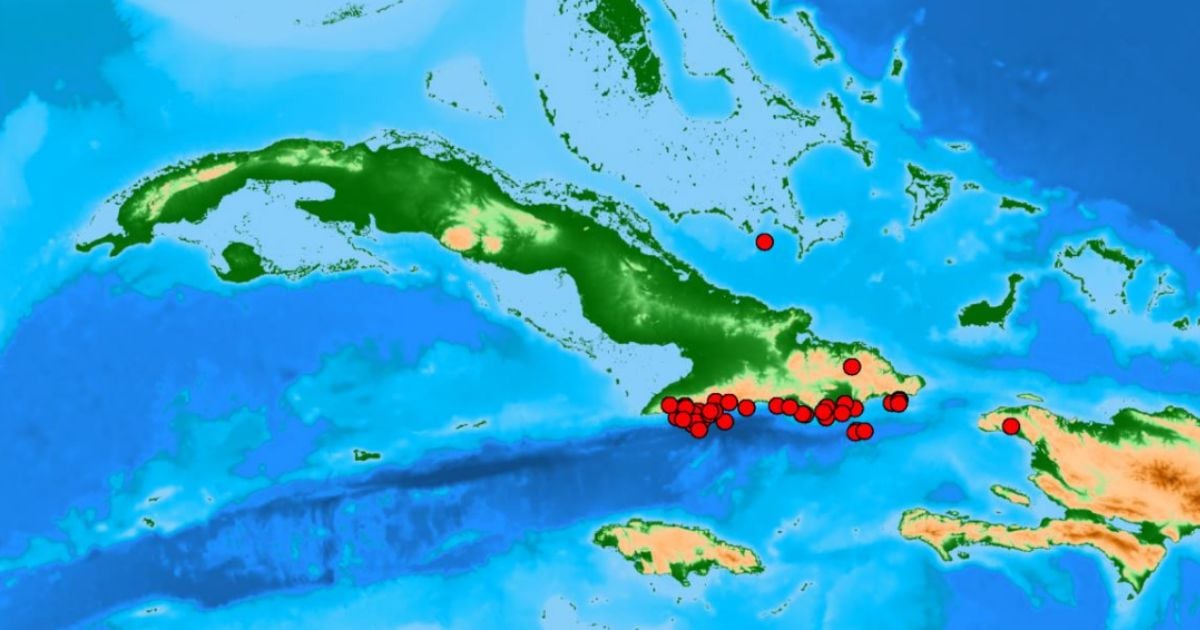
Seismic activity in the eastern region of Cuba has seen a significant increase in recent months, with 9,468 aftershocks recorded since the earthquakes that occurred on November 10 in the Pilón area.
Thus reported Dr. Enrique Diego Arango Arias, head of the National Seismological Service of Cuba, who shared on his Facebook profile a comparative statement between the current reports and those from a year ago.
In his publication, he highlighted the significant difference in the number of earthquakes recorded in the southeastern area, noting that activity remains high due to the persistence of aftershocks from the main event.
This situation reflects greater tectonic instability in the region, keeping both authorities and the population on alert.
According to the latest bulletin from CENAIS, the earthquakes of magnitudes 6 and 6.7 that occurred on November 10, 2024, have generated a total of 9,468 aftershocks, of which 141 have been reported as presumably perceptible.
On the other hand, the earthquake of December 23, 2024, with a magnitude of 6.1 and centered in the eastern half of the country, has recorded 547 aftershocks, three of which were noticeable, the report emphasized.
On the night of February 2, at 11:51 p.m., a magnitude 3.1 earthquake was recorded in the city of Guantánamo, according to authorities, and despite its low intensity, some residents reported feeling it.
What is curious about this record is that, according to the protocols established by the National Seismological Service and Civil Defense, the event was not officially classified as perceptible because insufficient reports were received at the central station.
This regulation is based on technical criteria aimed at distinguishing between events that have a significant impact on the population and those that are of low perceptibility.
A recent scientific study, published by CENAIS on its website, indicates that earthquakes tend to occur more frequently at night in certain regions of the Caribbean.
This finding was announced in relation to the 6.1 magnitude earthquake that shook eastern Cuba in the early morning of Monday, December 23, raising concerns among the population and highlighting the importance of understanding the factors that influence these phenomena.
Frequently Asked Questions about Seismic Activity in Eastern Cuba
How many aftershocks have been recorded in eastern Cuba since November 2024?
Since the earthquakes of magnitudes 6.0 and 6.7 that occurred on November 10, 2024, a total of 9,468 aftershocks have been recorded in the eastern region of Cuba.
Why do so many aftershocks occur after earthquakes in Cuba?
After significant earthquakes, aftershocks are a common phenomenon due to the re-adjustment of the fault zone. These are usually smaller than the main quake, as explained by Enrique Diego Arango Arias, head of the National Seismological Service of Cuba.
What impact has seismic activity had on the population of eastern Cuba?
The seismic activity has generated fear, uncertainty, and destruction in the most vulnerable communities in the eastern part of Cuba, impacting both material and emotional levels.
What have been the main earthquakes in Cuba in 2024?
In 2024, the major earthquakes in Cuba were those of magnitudes 6.0 and 6.7 that occurred on November 10 southeast of Pilón, and the one with a magnitude of 6.1 on December 23 in Santiago de Cuba.
Filed under: