
Related videos:
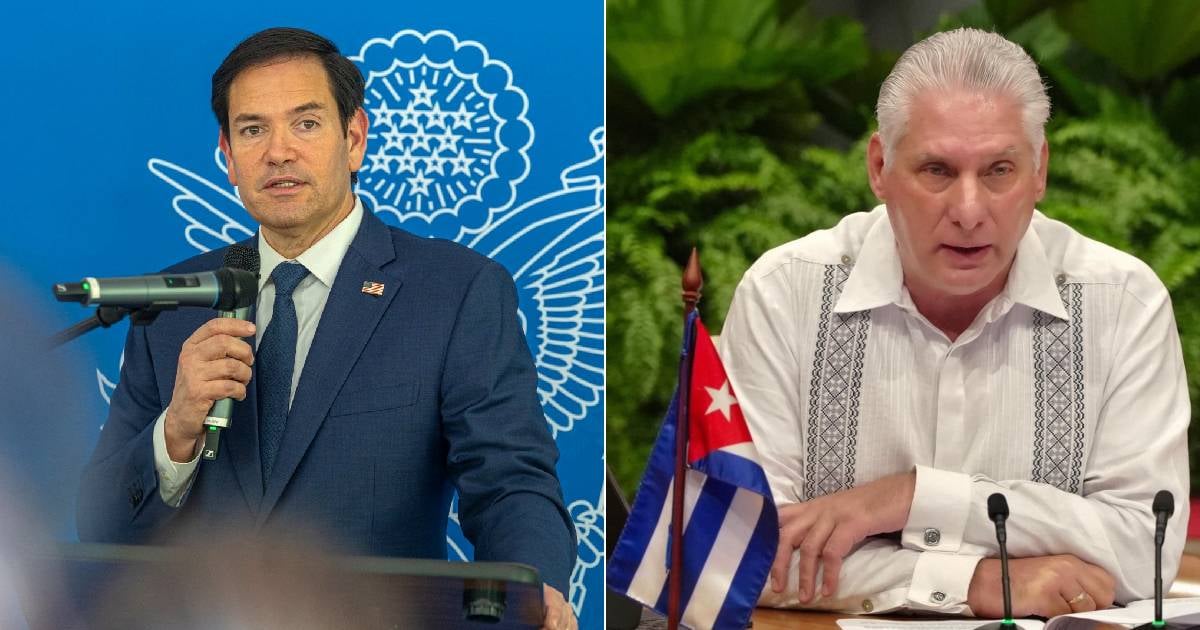
The Cuban ruler, Miguel Díaz-Canel, responded with indignation on social media to the recent statements made by U.S. Secretary of State Marco Rubio, who blamed Cuba, Nicaragua, and Venezuela for the migration crisis in the hemisphere, labeling their governments as "enemies of humanity."
"Shamelessness once again taking hold of the cynical politicians in the U.S. It has been proven that the migration exodus in #Cuba is proportional to the tightening of the #blockade, which deprives our people of essential goods. Humanity is at risk because of your neofascism," Díaz-Canel wrote on his X account.
The one appointed by Raúl Castro to lead the Cuban government continued saying to the American official: “Who are the enemies of humanity: those of us who resist blockades without abandoning solidarity with other peoples, or those who impose the #Blockade, trampling on international laws? The enemy of humanity is the empire with its expansionist appetite and its futile pretension to govern the world.”
This Tuesday, during a press conference in San José, Costa Rica, Rubio, of Cuban descent and a fervent critic of the Havana government, pointed out that the Venezuelan, Nicaraguan, and Cuban regimes have caused the massive exodus of citizens due to the ineffectiveness of their political and economic systems.
"Those three regimes that exist: Nicaragua, Venezuela, and Cuba are enemies of humanity and have created a migration crisis. If it weren't for those three regimes, there would not be a migration crisis in the hemisphere," declared Rubio in the presence of Costa Rican President Rodrigo Chaves.
The exchange of statements between both politicians comes at a time when the Cuban migration crisis has reached record numbers and the administration of President Donald Trump has initiated a deportation process for many irregular migrants.
According to official data from the U.S., since 2022, more than 850,000 Cubans have emigrated to the United States, accounting for approximately 18% of the island's population. This mass exodus even surpasses that of the rafter crisis in the 1990s.
The causes of this migration are multifaceted. The island is facing a severe economic crisis marked by chronic shortages of food, medicine, and other basic goods, as well as rampant inflation.
Furthermore, the lack of opportunities, especially for the youth, and the increase in repression following the protests of July 2021 have worsened the sense of hopelessness among the population.
The journey to the United States is dangerous and expensive. Many migrants choose to travel through Central America, taking advantage of the fact that Nicaragua eliminated the visa requirement for Cubans in November 2021.
This journey can cost between $8,000 and $10,000 per person and has resulted in numerous fatalities.
During the fiscal year 2021-2022, approximately 220,000 Cubans were detained at the border between the United States and Mexico, a figure nearly six times higher than the previous year.
Authorities from various countries have responded with deportations. In 2024, more than 1,300 irregular migrants were returned to Cuba, of which 978 were sent from the United States.
The situation at the southern border of Mexico is also critical. Asylum offices are overwhelmed due to the influx of Cuban migrants and individuals from other nationalities, especially following the new immigration policies implemented by Trump that restrict the entry of migrants across the border with Mexico.
Frequently Asked Questions about the Migration Crisis and the Statements by Díaz-Canel
Why does Díaz-Canel blame the United States for the Cuban exodus?
Díaz-Canel blames the United States for the Cuban exodus due to the tightening of the economic blockade. According to the Cuban leader, this blockade deprives the population of essential goods, deepening the economic crisis and driving mass emigration. However, critics point out that the lack of internal reforms and the inefficiency of the political system are also significant causes of the exodus.
What did Marco Rubio say about the regimes of Cuba, Nicaragua, and Venezuela?
Marco Rubio described the regimes of Cuba, Nicaragua, and Venezuela as "enemies of humanity." In his view, these governments have caused a migration crisis due to the ineffectiveness of their political and economic systems. Rubio argues that if it weren't for these regimes, there would be no migration crisis in the hemisphere.
How many Cubans have emigrated to the United States in recent years?
Since 2022, more than 850,000 Cubans have emigrated to the United States. This represents approximately 18% of the island's population. This massive exodus even surpasses that of the rafts crisis in the 1990s and is a consequence of the economic crisis, lack of opportunities, and the increase in repression in Cuba.
What is the cost of the journey for Cuban migrants to the United States?
The journey to the United States can cost between 8,000 and 10,000 dollars per person. Many Cuban migrants choose to travel through Central America, taking advantage of Nicaragua's removal of the visa requirement for Cubans in 2021. However, this route is dangerous and has resulted in numerous fatalities.
Filed under: