
Related videos:
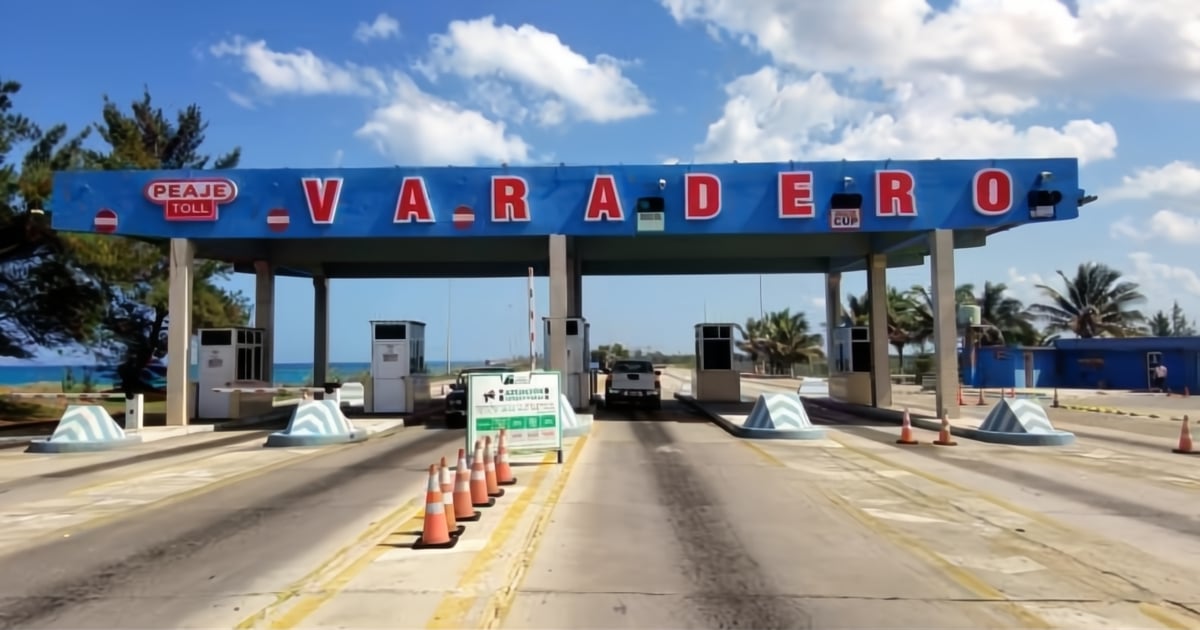
The Cuban government announced this Tuesday an increase in the toll rate that will take effect from February 10, 2025, with the aim of raising funds for the maintenance and repair of the country's road infrastructure.
The measure, established in Law 174/2024, responds to the progressive deterioration of the roads and the insufficient state resources to ensure their maintenance, according to authorities.
The Ministry of Transport of the Republic of Cuba reported on its Facebook profile about the new toll rates that drivers, both national and foreign, will have to pay when traveling through toll sections of the highway.
According to official information, motorcycle, car, jeep, panel van, and truck drivers will pay 40 Cuban pesos (CUP) for each stretch traveled, while microbuses, buses, trucks, and vans will be charged 80 CUP.
Additionally, vehicles transporting trailers will need to pay an extra 10 CUP for light vehicles and 20 CUP for larger ones.
Toll collection will continue on the three road sections currently operating under this system: the Matanzas-Varadero Highway, with 32 kilometers subject to tolls; the Cayo Santa María Causeway, with 46 kilometers; and the Cayo Coco Causeway, with 38 kilometers.
The current legislation states that new segments could be added in the future, although the source did not specify what these cases would be.
The authorities justify the measure as a way to ensure the funding of roads, which until now have relied almost exclusively on the state budget.
In December of last year, the Cuban government announced that it was considering the implementation of new tolls on the country’s roads as a measure to fund the maintenance and improvement of road infrastructure, which has suffered significant deterioration in recent years.
Thus stated the Minister of Transport, Eduardo Rodríguez Dávila, during a meeting of the Commission for Service Attention, prior to the Fourth Ordinary Session of the National Assembly of People's Power (ANPP) in its X Legislature.
The proposal, which arises amid a complex economic situation, aims to acquire foreign currency to ensure the safety and quality of the country's main communication routes, according to the official media Cubadebate.
The minister specified that four feasibility studies were completed to increase these toll points, referencing: the Habana Matanzas Tourist Corridor (Vía Blanca) from point 0 to the entrance of that city, the Havana Bay Tunnel, José Martí International Airport from the intersection with Avenida Boyeros to beyond Terminal 4, and the Holguín-Guardalavaca Highway, added the Cuban News Agency.
Currently, the Cuban road system faces serious difficulties due to a lack of resources, accumulated wear and tear, and the effects of the climate. Various roads have potholes, cracks, and sections that are impassable, which hampers mobility and increases the risk of accidents.
Last year, it was reported that the government of China presented the Ministry of Construction of Cuba with a donation aimed at paving the roads and international airports on the Island.
The donation consisted of 93 pieces of equipment, including 25 dump trucks, 25 vibratory compactors, compactors, and vibratory spreaders, six front loaders, loaders, and backhoe loaders, among others.
In addition, 26 generator sets with lighting towers were included for nighttime work.
According to Cuban authorities, during that same year, more than 700 people lost their lives due to traffic accidents. Although it is not the only factor, the condition of the roads also impacts these deaths.
Frequently Asked Questions About the Increase in Toll Fees on Cuban Highways
Why has the Cuban government decided to raise the toll rate?
The Cuban government has decided to increase the toll rate to raise funds for the maintenance and repair of road infrastructures, which have suffered considerable deterioration due to insufficient state resources. This measure aims to improve the safety and quality of the roads in a challenging economic context.
What are the roads in Cuba where the new toll will be applied?
The new toll will be applied to three existing road sections: the Matanzas-Varadero Highway, the Cayo Santa María Causeway, and the Cayo Coco Causeway. In addition, new segments are being evaluated for toll implementation in the future, according to feasibility studies conducted by the Ministry of Transportation.
How will the toll increase impact drivers in Cuba?
The increase in tolls will represent an additional cost for drivers, both national and foreign, who travel through the toll sections. This could increase the economic burden on citizens, especially affecting those who rely on these roads for their daily transportation.
What problems is the road system in Cuba currently facing?
The Cuban road system faces serious difficulties due to a lack of resources, accumulated wear, and climatic effects. Many roads exhibit potholes, cracks, and impassable sections, complicating mobility and increasing the risks of traffic accidents, which have already claimed the lives of more than 700 people last year.
Filed under: