
Related videos:
The Cuban regime deemed that Cuba "was not and is not a priority for Trump," despite years of emphasizing the detrimental effects and malice of the U.S. president towards the so-called "Cuban revolution."
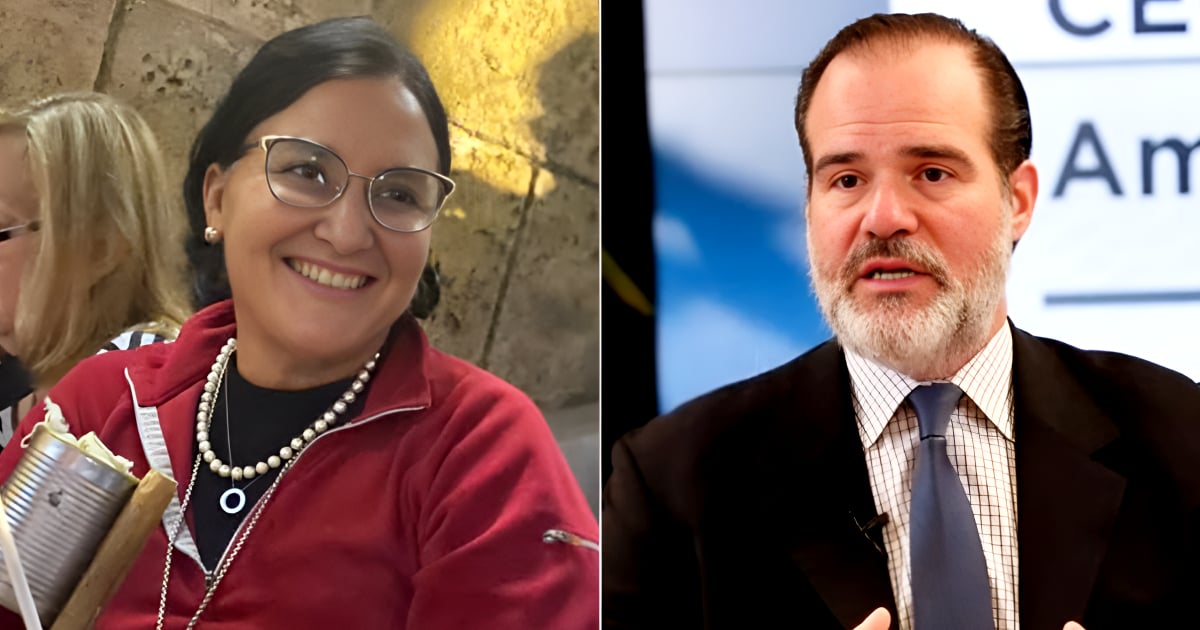
Contrary to the official mantra that has been repeated ad nauseam, claiming that the current crisis is a result of the "intensification of the blockade" and the "more than 240 measures" taken by Donald Trump during his first term, the deputy director general of the United States Division of the Ministry of Foreign Affairs of Cuba (MINREX), Johana Tablada de la Torre, stated that Cuba is not among the priorities of the Republican in his return to the White House.
In a post on her social media, which was replicated by the official site Cubadebate, the high-ranking official criticized Cuban-Americans who are in the forefront of the current Trump administration, accusing them of a feverish interest in promoting pressure measures against Havana.
“Except for the break in diplomatic relations and the naval blockade against Cuba, which they proposed a thousand times, almost everything else they managed to extract from the Trump administration, for whom Cuba was and is not a priority, but who wishes to please the Cuban-origin politicians who serve them best, even though they have deceived them time and again,” asserted the diplomat.
The statement represents a significant shift in the official narrative of the Cuban regime which has traditionally maintained that Washington has a "sick obsession" with destroying the “Cuban revolution,” accusing it of implementing policies aimed at economically suffocating the country.
However, in her article titled "Claver-Carone and His Obsession with Cuba," Tablada de la Torre took a striking turn from her usual narrative and shifted the focus away from the Republican to denounce that his measures are a result of the influence of these actors and not of a genuine interest from Trump in relations with the island.
It dismisses the diplomat's approach to two fundamental issues. The first is Trump's closeness to the Cuban-American community and politicians in Florida, a state where the president spends a significant part of the year. The perception of Cuba as a detrimental dictatorship to U.S. interests in the region primarily reaches Trump through this channel.
The second, and no less important, aspect is related to the psychology of the current president, who finds it difficult to be guided or manipulated by advisors and always maintains the leading role in the decisions he makes. This, in the case of Cuba, reveals that the measures he adopted during his first term, as well as those he has announced for the second, stem from his vision of the relations between the United States and the communist regime.
The assertion that "Cuba was never a priority for Trump" does not seem to hold up against the facts, but it does represent a significant shift in the traditional rhetoric of the regime, which has always focused its denunciations of the "blockade" and other "aggressive policies" on the occupants of the White House.
During the first Trump administration (2017-2021), over 240 measures were implemented that strengthened the economic embargo against Cuba, including the reclassification of the island as a state sponsor of terrorism in January 2021. This approach was maintained by the Biden administration, except for the last point, which was amended just days before the Democrat left the presidency.
In January 2021, the website Cubadebate referred to “the more than 240 measures by Trump against Cuba,” emphasizing that “the hostile policy of Donald Trump's government against Cuba recorded unprecedented measures and actions, which stood out for their systematic nature.”
In the more than 6,000 words of the article published by the official site and written at MINREX, the names of Cuban-American senators or congressmen were not mentioned even once, nor that of Mauricio Claver-Carone, who Havana now points to as the Machiavelli whispering in Trump's ear.
In this regard, it is noteworthy that Tablada de la Torre asserts that "Cuba was never a priority for Trump and is not a priority now." The current geopolitical context, with the war triggered by Russia's invasion of Ukraine and the controversial search for solutions for the Gaza Strip, seems to absorb all media attention, which could lend a certain gloss of analysis to the conclusions of the Cuban regime's diplomat.
However, empirical evidence shows that the Republican puts his signature on every decision he makes as if it were a personal matter, and that beyond the influence of the circle of advisors and Cuban-American officials in his administration, Trump seems determined to reestablish the American sphere of influence in the region, a goal that clearly runs through Havana.
Whether in the Palace or at the MINREX, nerves are running high. However, the instructions are to target the "mafioso" group of Cuban-Americans and to ensure that the statements barely brush against the petal of a rose concerning the Republican magnate, with whom Havana is starting to have mixed dreams filled with nightmares and jolts, following the shift in relations between the United States and Russia.
In the chaotic and unpredictable era ushered in by Trump, the Cuban regime is crossing its fingers for the first conflict between the president and his subordinates—behavior that defined his first term—and for the removal of the Cuban-American "hawks" from the scene.
Meanwhile, they begin to sugarcoat things for the Republican, hoping that in a more favorable scenario, they can foster a rapprochement and a negotiation that ends with the same outcome as the last 66 years: with the dictatorship firmly entrenched in power.
Filed under: