
Related videos:
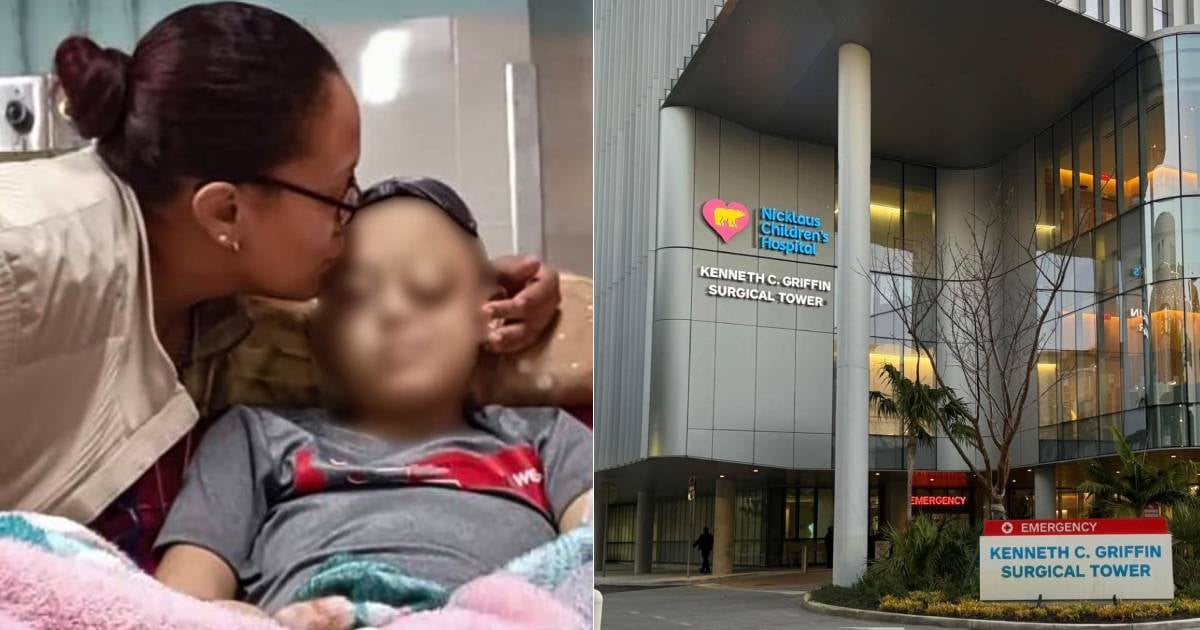
The Cuban boy Damir Ortiz Ramírez, whose health condition has raised great concern among the Cuban community, remains stable and without fever, according to activist Idelisa Diasniurka Salcedo Verdecia in a recent post.
"Damir is stable, he hasn't had any more fever and with his treatment and full attention, we have no way to thank this great nation enough", stated Salcedo Verdecia, highlighting the level of medical care the child is receiving in the United States.
The case of Damir has generated a wave of solidarity among Cubans both on the island and abroad, with many people closely following his progress and offering support to the family.
Damir is a 10-year-old Cuban boy who has faced a complex and delicate health situation.
In February of this year, he was diagnosed with type 1 neurofibromatosis and a plexiform neurofibroma in his right eye. Subsequently, his condition worsened after being diagnosed with acute leukemia.
Due to the lack of resources and specialized treatments in Cuba, her mother, Eliannis Ramírez, sought alternatives abroad.
A hospital in Miami, Florida, agreed to treat Damir, and a campaign was launched on GoFundMe to raise $40,000 to cover medical and travel expenses.
However, obtaining a humanitarian visa for Damir faced significant obstacles.
The United States Embassy in Havana initially denied the visa due to the lack of documentation issued by the Cuban Ministry of Public Health (MINSAP), which refused to provide the necessary authorization letter, arguing that Cuba had the resources necessary to treat the minor.
In light of this situation, activists and members of the Cuban community organized peaceful protests outside the U.S. embassy in Havana and at the office of Congressman Mario Díaz-Balart in Miami, requesting a humanitarian visa for Damir.
Moreover, the international press began to cover the case, highlighting the challenges faced by patients with severe illnesses in Cuba due to bureaucracy and the lack of adequate medical resources.
Finally, in early March 2025, the United States Embassy in Havana approved the humanitarian visa for Damir and his mother.
Thanks to a swift mobilization of the Cuban community, more than $36,000 was raised in less than 24 hours to cover the costs of an air ambulance that would transport the child to the United States.
However, Damir's transfer was delayed due to the lack of an official hospital admission letter, which was necessary for the air ambulance to make the trip. This letter depended on the presentation of financial backing to guarantee coverage for his admission to the hospital in Miami.
Finally, the boy arrived in Miami on Wednesday, where treatment for his illness began.
This new health update comes as a relief for those who have closely followed his case. So far, family members and close friends have expressed their gratitude for the support and care provided.
Frequently asked questions about the health situation of the Cuban child Damir Ortiz
What is the current health status of Damir Ortiz?
Damir Ortiz remains stable and free of fever, according to activist Idelisa Diasniurka Salcedo Verdecia. The child is receiving specialized medical care at a hospital in Miami, United States, thanks to a humanitarian visa that was recently granted to him.
Why did Damir Ortiz need to be transferred to the United States for treatment?
Damir Ortiz, diagnosed with type 1 neurofibromatosis and acute leukemia, needed to be transferred to the United States due to the lack of resources and specialized treatments in Cuba. A hospital in Miami agreed to take his case, providing care that was not available on the island.
What difficulties did Damir face in obtaining the humanitarian visa?
The humanitarian visa application for Damir was initially denied by the United States Embassy in Havana due to the lack of documentation issued by the Ministry of Public Health of Cuba (MINSAP). MINSAP refused to provide the necessary authorization letter, arguing that Cuba had the resources to treat the minor. The pressure from activists and the international community was crucial in ultimately obtaining the visa.
How was Damir's move to the United States funded?
The transfer of Damir to the United States was funded through a fundraising campaign on GoFundMe, which managed to raise more than $36,000 in less than 24 hours. These funds were allocated to cover the expenses of an air ambulance that transported the child to Miami for medical treatment.
Filed under: