
Related videos:
The Secretary of State Marco Rubio broke his silence this Friday regarding the programs aimed at supporting democracy in Cuba and the funding for media outlets focused on the island, which have been threatened by the cuts from the new U.S. Administration.
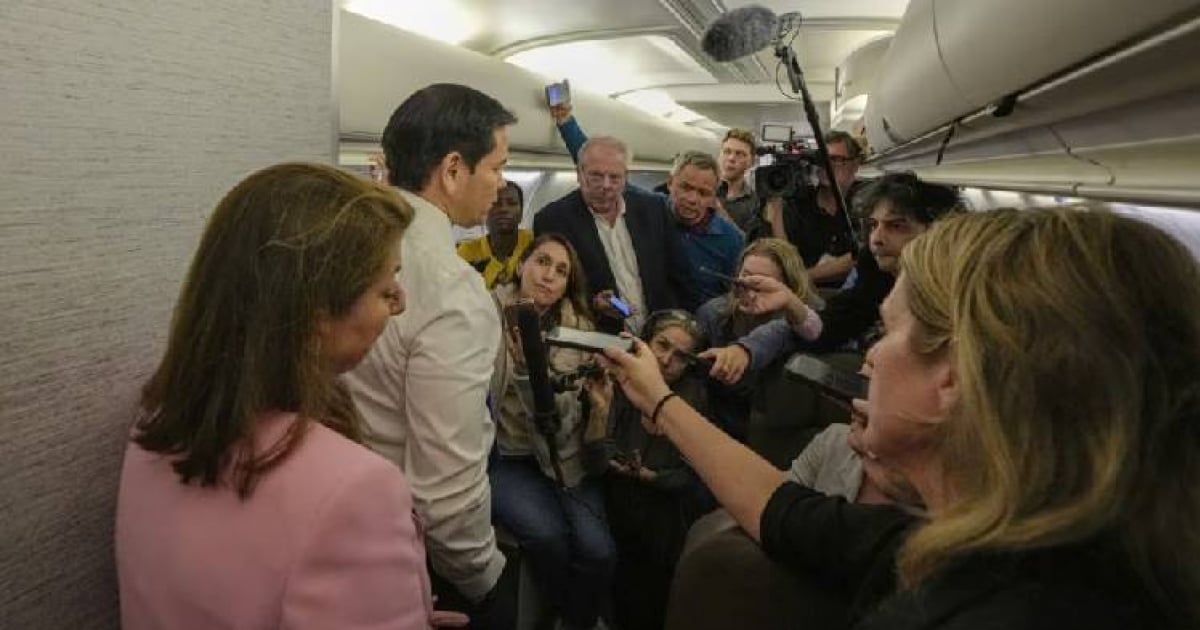
In statements to the press following his tour of Jamaica, Guyana, and Suriname, the Cuban-American stated that some of these projects "were not cut"; but that many of them "will be reassessed over time."
"Well-executed foreign aid can advance our national interests, protect our borders, and strengthen our partnerships with key allies. Unfortunately, USAID strayed from its original mission a long time ago. As a result, the achievements were very few and the costs were too high," he stated.
He added that "we are reorienting our foreign aid programs to align them directly with what is best for the United States and our citizens. We are continuing essential life-saving programs and making strategic investments that strengthen our partners and our own country."
"Ultimately, we are looking for effective programs," Rubio explained, clarifying that certain programs have been "restarted and are being implemented," while others have been suspended for not generating the expected return on investment.
"That money could be reused for a program that works better for the same cost," he stated.
The secretary was also questioned about the cuts to the U.S.-funded media, such as the Office of Cuba Broadcasting, which manages Radio Martí and Martí Noticias.
"I understand that Martí, along with other entities, has started rebroadcasting today. I believe the executive order required that all these agencies be reduced to the legal minimum," he remarked.
He assured that the ultimate goal is to reform these agencies so they provide news that favors and promotes the national interest of the United States; however, he clarified that the State Department does not directly control these entities.
"We have many independent media outlets, including all of you, and we are interested in media that present the United States' viewpoint from our perspective on foreign policy. Therefore, this review will be ongoing, but obviously that is outside the Department of State. I do not control them," he stated.
Regarding the situation of Cuban doctors working abroad, Rubio criticized the Cuban medical missions program, describing it as a scheme of "forced labor," where doctors do not receive fair wages.
"The Cuban government decides how much, if anything, to give them; they take away their passports; basically, they operate as forced labor in many places," Rubio stated.
However, the Prime Minister of Jamaica, Andrew Holness, defended the island's doctors, highlighting their contribution to the healthcare system of his country and affirming that they benefit in accordance with Jamaica's labor laws.
Rubio's statement regarding the programs in Cuba comes in the context of a series of adjustments in U.S. policy toward the island, which include the expansion of visa restrictions for individuals involved in the Cuban labor export program.
The island's independent media that receive financial support from certain U.S. entities have been threatened by Trump’s new measures.
Cubans eagerly awaited Rubio's statements, as he has been a politician close to the independent media of the Caribbean nation and to the exile community.
Frequently asked questions about support programs for democracy in Cuba and Cuban medical missions
What has Marco Rubio said about support programs for democracy in Cuba?
Marco Rubio has pointed out that some democracy support programs in Cuba were not cut, but others will be reevaluated over time. His goal is to seek effective programs, suspending those that do not yield the expected return on investment.
What is Marco Rubio's stance on Cuban medical missions?
Marco Rubio has criticized Cuban medical missions, describing them as a scheme of "forced labor." He claims that Cuban doctors do not receive a fair salary and are subjected to exploitative working conditions, such as the retention of passports and wages.
What changes are happening in the funding of independent media in Cuba?
The U.S. State Department has restored certain contracts and grants for independent Cuban media, although many programs are still under review or have been cut back. Uncertainty remains regarding the future of funding.
How has the Cuban government reacted to the visa restrictions imposed by the U.S.?
The Cuban government has condemned the visa restrictions, describing them as an "aggression" and claiming that they affect the population that relies on Cuban health services in other countries. They accuse Marco Rubio of prioritizing his personal agenda over the interests of the U.S.
What impact do U.S. sanctions have on Cuban medical missions in the Caribbean?
The U.S. sanctions aim to stop what they consider the export of Cuban labor under exploitative conditions. However, several Caribbean leaders defend medical cooperation with Cuba, viewing it as essential for their healthcare systems.
Filed under: