
Related videos:
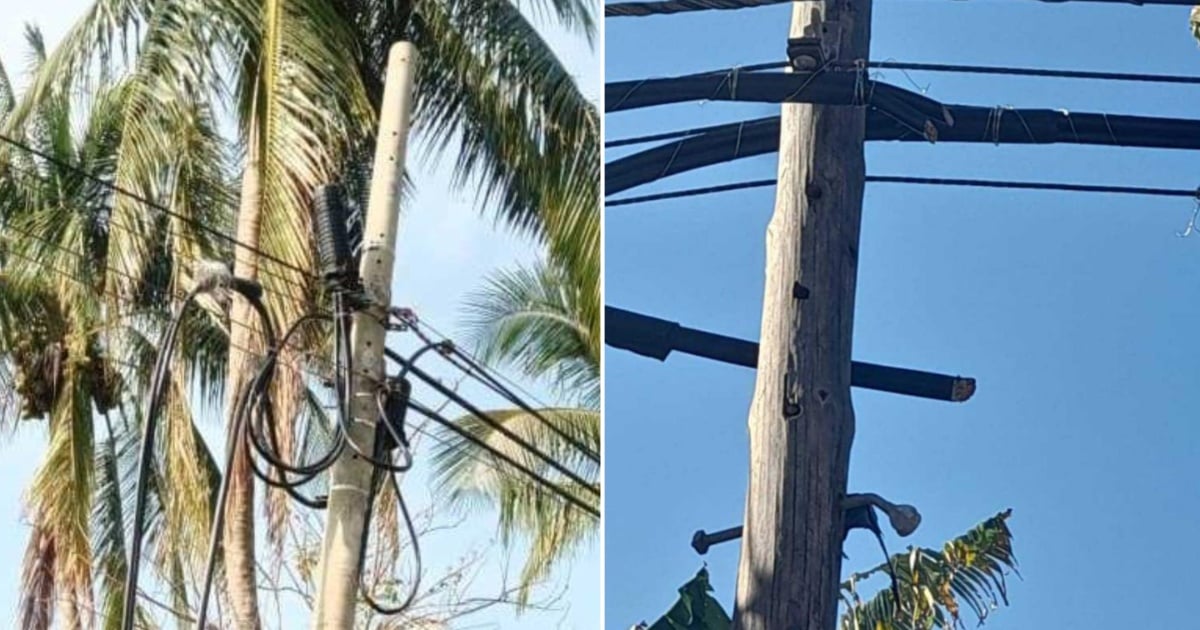
The thefts of cables in public facilities have caused interruptions to telephone service, affecting hundreds of people in Havana. In the Cuban capital, by the end of 2024, 39 acts of vandalism were reported, a number that nearly doubled the figures recorded in 2023.
According to the local outlet Tribuna de La Habana, these incidents, which have increased recently, have disrupted around 300 residential and state entity services and have impacted approximately 600 individuals.
The executives of the communications monopoly, ETECSA, clarify that the purpose of the cable theft is to obtain the copper they contain, for sale in the informal market.
The highest number of thefts have been reported in Arroyo Naranjo, Cotorro, and Boyeros. In the latter municipality of Havana, a recent report indicated the theft of more than 600 meters of high-capacity cable, which left approximately 600 customers in the El Chico neighborhood, part of the Wajay Popular Council, without telephone service, and they still do not have access to the phone.
Armando Marchan Bárcena, head of the Boyeros Telephone Center, said that four criminal incidents have occurred on the cable route 27, 28, and local cables, from February 2023 to the present date. In just the months of 2025 so far, seven thefts of this type have occurred in Havana.
"It is a critical service that the population stops receiving; the financial impact is quite significant when vandalism occurs," said the executive, who added that when the cables are cut, the voice and Nauta home services and services for fixed-line telephony are interrupted for several days.
For his part, Gerardo Oliva Cubillas, director of Security and Defense of the Havana Division of ETECSA, emphasized that the cables that are stolen or cut "are the thickest," "those that allow high-quality connections over greater distances and are the most expensive."
The regime authorities attribute the interruptions in connections to these crimes, but communication services in Cuba have always been inadequate.
The economic crisis in Cuba has led to an increase in the theft of electrical, telephone, and railway materials, due to the high demand for copper and other metals in the illegal market.
This month, two men were arrested in Cárdenas, Matanzas, after stealing over 1,100 meters of electric cable from a state-owned company and attempting to extract the copper by burning it in the yard of a nearby house.
The suspects allegedly attempted to extract copper from the stolen material by burning the cables in a yard, a rudimentary method but common among those looking to sell the metal on the black market.
However, their plan did not go unnoticed, and the authorities acted quickly, assuming the allied profile of the regime.
Frequently Asked Questions about Cable Theft and Its Impact on Telecommunications in Cuba
Why are telephone cables being stolen in Havana?
The theft of telephone cables in Havana is primarily driven by the interest in copper, which is found within the cables and is highly valued in the black market. The economic crisis in Cuba has intensified the demand for this metal, leading to an increase in vandalism against telecommunications infrastructure.
What impact do these robberies have on the people of Havana?
The theft of cables has caused significant interruptions in telephone service, affecting around 600 customers in Havana. This situation leaves both residences and state entities without access to critical communication services, resulting in a negative impact on daily life and the operations of various institutions.
What are the areas most affected by cable theft in Havana?
The municipalities most affected by cable theft in Havana are Arroyo Naranjo, Cotorro, and Boyeros. In Boyeros, for instance, more than 600 meters of high-capacity cable have reportedly been stolen, leaving hundreds of customers in the El Chico neighborhood without telephone service.
How is the Cuban regime responding to these thefts?
The Cuban regime has attempted to strengthen surveillance and security at ETECSA facilities through agreements with related entities, but the thefts remain a significant problem. The lack of effective measures and inefficiency in protecting the infrastructure continue to allow these crimes to persist.
Filed under: