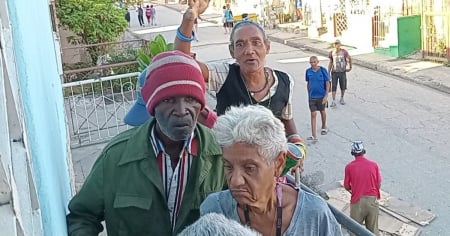
Cuban opposition leader José Daniel Ferrer, head of the Patriotic Union of Cuba (UNPACU), reported that his home in Santiago de Cuba has been surrounded for over 27 hours by agents of the Revolutionary National Police (PNR) and plainclothes officers to prevent him from carrying out humanitarian work for vulnerable individuals.
According to Ferrer, the police operation against their headquarters has intensified, exceeding 27 hours of siege, with agents from the political police and the PNR reinforcing surveillance and repressing those who attempt to assist in food distribution.
"The siege lasts more than 24 hours. Harassment, detentions, threats, and offers of 'help' to collaborators and vulnerable cases," he reported on his social media.
Ferrer reported that on Thursday they managed to feed 1,281 vulnerable people, but that more than 40 collaborators and aid recipients were detained and harassed.
Among the detainees are the brothers known as "Caguairán," who provided firewood for the community kitchen, and whose whereabouts remain unknown.
Despite the power outages and constant surveillance, the UNPACU team has continued to prepare food and provide basic medical care.
Dr. Nelva Ismarays Ortega, Ferrer's wife, has been attending to dozens of patients daily, reflecting the serious healthcare and social crisis affecting the most vulnerable in Cuba.
Ferrer held the Cuban regime responsible for imposing a “real and cruel blockade” against his humanitarian work. “Yesterday we fed 1,281 people and 48 received basic medical care. Siege, detentions, and threats,” he emphasized, denouncing the persecution against those trying to alleviate hunger in Santiago de Cuba.
The United States government expressed its disapproval of the police harassment against Ferrer and the individuals receiving assistance from UNPACU. Through the Office of Western Hemisphere Affairs at the Department of State, Washington condemned the repression and demanded that the Cuban regime protect its citizens instead of repressing them.
On social media, many Cuban citizens expressed their support for Ferrer and his humanitarian work: "Down with the Castro dictatorship. Long live a free Cuba! Homeland and Life!"; "José Daniel for president."; "In the history books, there will be a beautiful page about UNPACU and its work."; "Congratulations on your commitment to helping those in need," were some of the comments.
The international community remains vigilant about the situation of Ferrer and his team, as the police cordon continues to block access to food and assistance for the most vulnerable in Santiago de Cuba.
Frequently Asked Questions about the Situation of José Daniel Ferrer and Repression in Cuba
What is the reason for the police barricade around José Daniel Ferrer?
The police cordon around José Daniel Ferrer aims to prevent the humanitarian work he carries out through the Patriotic Union of Cuba (UNPACU) in Santiago de Cuba, where they distribute food and provide basic medical care to vulnerable individuals. Ferrer has denounced that the Cuban regime is trying to halt these activities through harassment, arrests, and threats.
How has the repression affected the collaborators of José Daniel Ferrer?
Repression has resulted in detentions and harassment of more than 40 collaborators and beneficiaries of Ferrer's aid. Some, like the "Caguairán" brothers, have been arrested and remain missing. These actions aim to dismantle the support network that facilitates the distribution of food to those in need in Santiago de Cuba.
What position has the United States government taken regarding Ferrer's situation?
The United States government has expressed its rejection of the police harassment against Ferrer and the individuals receiving assistance from UNPACU. It has urged the Cuban regime to protect its citizens instead of repressing them, condemning the repression and supporting Ferrer's humanitarian work.
How has the Cuban population and the international community responded to Ferrer's allegations?
The Cuban population has shown support for Ferrer through social media, with messages of solidarity and recognition of his humanitarian work. The international community, including the Office of Western Hemisphere Affairs of the U.S. Department of State, remains attentive to the situation, condemning the repressive actions of the Cuban regime.
Filed under: