
Related videos:
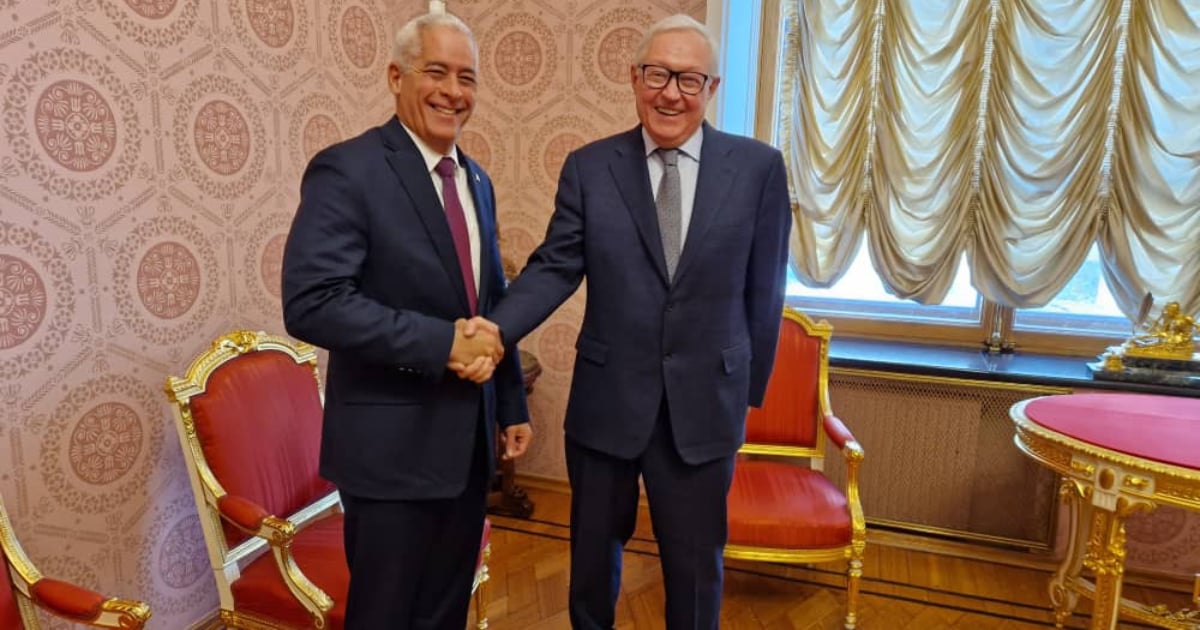
The recent celebration of the Inter-Ministerial Political Consultations between the governments of Cuba and Russia, led by Cuban Deputy Minister Gerardo Peñalver Portal and his counterpart Serguéi Ryabkov in Moscow, once again highlights the depth of a relationship that goes beyond diplomatic courtesy and delves into realms of ideological subordination, strategic dependency, and loss of sovereignty for the island.
At first glance, the statement issued by the Ministry of Foreign Affairs of Cuba appears to be just another mundane note regarding bilateral relations. It highlights the "excellence" of ties, "common interests," and cooperation "in multiple areas," as well as the traditional gratitude to the Kremlin for its support at the UN.
However, this official narrative disguises a troubling reality: the increasing submission of the Cuban regime to the dictates of the regime of Vladimir Putin.
Energy for Loyalty: An Unequal Exchange
One of the pillars of this dependency is energy supply. In December 2024, Russia provided credit and committed to sending fuel to Cuba as part of an agreement to rehabilitate strategic industrial sectors on the island.
Given the collapse of the Cuban electrical system and the paralysis of the industry, this assistance seems vital. However, the true cost of this Russian “solidarity” is political: an unconditional alignment with Moscow, even on such sensitive issues as the invasion of Ukraine.
While the Cuban regime appreciates Russia's stance against the American embargo, it maintains a complicit silence—or worse, an active justification— regarding the military aggression against a sovereign state.
This alignment is not new: since 2022, Havana has refrained from condemning the Russian invasion and has blamed NATO for the conflict, in line with the Kremlin's narrative.
Mercenaries and official silence
Even more serious was the scandal of the presence of young Cubans recruited to fight as mercenaries in the war in Ukraine.
Although the regime tried to distance itself from the events, attributing them to “an illegal network”, multiple testimonies and reports confirmed that these trips were carried out with the knowledge of Cuban authorities and in coordination with official Russian actors.
The lack of a clear condemnation, the opacity in the investigations, and the tepidness of the measures taken reflect the regime's fear of contradicting Moscow.
A hierarchical relationship, not bilateral
Recent bilateral meetings have addressed a wide range of topics such as advisory services and economic cooperation, investments, and the transformation of the Cuban model.
In January 2023, Russian delegations offered the regime "recipes" to adapt the Cuban economic system to a logic of "controlled market socialism", a euphemism that actually means the creation of submissive oligarchies and clientelist groups that respond to the regime's power, along with greater state control over private initiatives under surveillance.
Additionally, Russian companies are being invited to participate in strategic sectors—energy, tourism, transportation—with special benefits and without guarantees of transparency.
It is not about cooperation among equals. Russia offers assistance under implicit conditions: political loyalty, diplomatic support, and strategic functionality. Cuba, in this scheme, does not act as a sovereign nation but as a minor partner, subservient and grateful.
Ideological subordination
The connection goes beyond economic or energy ties. The Cuban regime has embraced the ideological narrative of Moscow in international forums, supporting platforms like the BRICS or the Group of Friends in Defense of the United Nations Charter, promoted by Russia, China, Iran, and other authoritarian countries.
With this, Havana moves even further away from any alignment with liberal democracies and reinforces its presence in a global axis that challenges the rules-based international order.
An Old Dependency: From the Soviet Union to Putin's Russia
This unequal relationship is not a new phenomenon. It dates back to the beginnings of the regime of Fidel Castro, when, after declaring the socialist nature of the revolution in 1961, he sealed the alliance with the then Soviet Union. From that moment on, Cuba became a strategic satellite of the communist bloc in the western hemisphere.
The so-called Soviet "pipeline" —popular slang for the generous subsidy flowing from Moscow— sustained the Cuban economy for over three decades.
According to estimates from the U.S. Intelligence Agency itself and corroborated by scholars such as Carmelo Mesa-Lago, total Soviet aid exceeded 65 billion dollars, a figure greater than that of the Marshall Plan, which rebuilt Western Europe after World War II.
Organizations like the Cuban Conflict Observatory estimate that the Cuban regime has received 300 billion dollars in remittances and subsidies since 1960.
That dependence was not without cost. The USSR used Cuba as a platform to extend its influence in Latin America and Africa. It subsidized Cuban interventions in Angola, Ethiopia, Mozambique, and other countries on the African continent, where tens of thousands of Cuban soldiers were sent to fight.
Financial support was also provided for destabilization campaigns through guerrilla movements and insurgent groups in Latin America.
The most critical point of this subordination was the Missile Crisis of 1962, when Moscow decided to install nuclear missiles in Cuban territory at Castro's urging, which he later withdrew without the dictator's prior knowledge, after reaching an agreement with the United States, highlighting that the sovereignty of the island was subordinated to Soviet strategic interests.
Despite the collapse of the USSR in 1991 and the withdrawal of direct support, the ideological ties were never entirely broken. In recent years, Putin has revived that strategy of regional penetration, and Cuba has resumed its role as a loyal ally, serving the geopolitical interests of the Kremlin.
From Venezuela to Nicaragua and Bolivia, the Cuban regime has acted as a bridge and operator of Russian influence in the region, not only due to ideological affinity but also out of sheer economic necessity.
In this regard, the statement from the Cuban Foreign Ministry is not innocent. It is another performance of an alliance that, instead of benefiting Cuba, deepens its external dependence, compromises its sovereignty, and reinforces its international isolation.
In the name of an old loyalty inherited from the Cold War, the Cuban regime binds itself to a partner that imposes its agenda without concessions and demands, in exchange for assistance, absolute loyalty.
Filed under: