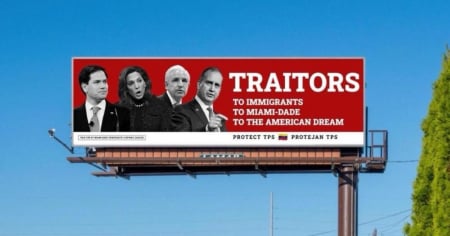
The Republican congressman Mario Díaz-Balart stated this Wednesday that he is in talks with the Donald Trump administration to promote a legal process that would benefit migrants with I-220A forms, a document that primarily affects thousands of Cubans in an irregular situation in the United States.
During an interview on the program Encuentro Virtual from Telemundo 51, hosted by journalist Gloria Ordaz, Díaz-Balart confirmed that he is actively working to provide I-220A holders with a path to legalization.
"We are in discussions with the administration to find a solution that allows those with an I-220A to obtain legal status," stated the legislator from Florida.
The issue is gaining traction in Washington
The congressman’s statements come amid growing mobilizations of Cuban migrants affected by the I-220A, who are preparing to protest this week in Washington D.C., coinciding with the first 100 days of Donald Trump’s second term.
Since the government has tightened its immigration policies, holders of this form—issued after being released under ICE supervision without a clear deportation date—have found themselves in legal limbo, lacking access to work permits or opportunities to adjust their status under current law.
Díaz-Balart also calls for pressure on the Cuban regime
In the same television segment, Díaz-Balart reiterated his support for tougher policies against the regime in Havana, including his backing for measures to restrict remittances and travel to Cuba if the government does not make substantial democratic changes.
"As long as the dictatorship continues to oppress the Cuban people, funding must be cut off. Remittances and travel are key sources that the regime uses to sustain itself," the congressman stated.
Context: a migrant community in uncertainty
The Cuban community in the U.S., especially the thousands who entered through the border and received the I-220A, lives with increasing anxiety. The document does not guarantee immigration status nor protect against final deportation, which has sparked protests, lawsuits, and petitions to Congress.
Díaz-Balart's interest in seeking a legal solution represents a potential turning point, although it will depend on the political support within the administration and Congress, as well as the direction of immigration policy under Trump's current administration.
Frequently Asked Questions about the I-220A Immigration Status for Cubans in the United States
What is Form I-220A and why is it important for Cubans in the U.S.?
The I-220A is a document that grants parole to migrants, allowing them to stay in the U.S. while their immigration status is being determined. For many Cubans, this form represents a legal limbo, as it does not provide access to permanent residency or the possibility of returning to their home country without risks.
Why are Cubans with I-220A protesting in Washington?
Cubans with I-220A are protesting to demand a resolution to their uncertain immigration status. They seek permanent residency from the U.S. government under the Cuban Adjustment Act, as they feel trapped in a legal limbo that impacts their stability and future in the country.
What role does Congressman Mario Díaz-Balart play in this matter?
Mario Díaz-Balart is in talks with the Donald Trump administration to promote a legal process that benefits migrants with form I-220A. His goal is to find a solution that allows these individuals to obtain legal status in the United States.
What challenges do Cubans with I-220A face in the U.S.?
Cubans with I-220A face multiple challenges, such as legal uncertainty, lack of access to permanent residency, and the constant fear of deportation. Additionally, they must adapt to the economic and cultural differences in a developed country, which can be a long and complicated process.
What impact could the U.S. presidential elections have on the future of Cubans with I-220A?
The U.S. presidential elections could significantly influence immigration policies, affecting Cubans with I-220A. A change in administration could open new opportunities or, conversely, tighten policies towards migrants, increasing uncertainty about their future in the country.
Filed under: