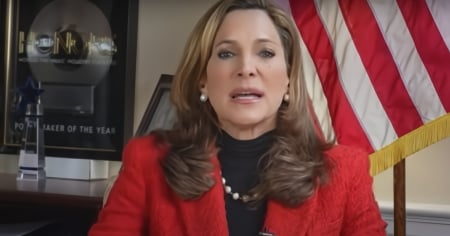
The Cuban-American businessman Mike Fernández, a magnate in the health sector in the United States and a former Republican, harshly criticized the silence of prominent Cuban-American Republican leaders in Miami regarding the immigration offensive by President Donald Trump.
In an open letter addressed to Marco Rubio, María Elvira Salazar, Mario Díaz-Balart, and Carlos Giménez, Fernández accused them of betraying the communities they represent.
"If you cannot find your voice at this moment, or distinguish between one dictator and another, maybe it is time to make way for others who can and have a vision that you may be lacking," wrote the businessman.
The letter was revealed by El Nuevo Herald, a media outlet to which Fernández also gave a phone interview, where he stated that he is willing to invest his own money to support leaders who uphold migratory and democratic values.
“Our four representatives are simply kneeling before the presidency because they fear for themselves and their jobs. They will be remembered for turning their backs on their community,” he stated to the newspaper.
In his public message, Fernández, president of MBF Healthcare Partners, described the Trump administration's decision to revoke immigration protections for those fleeing dictatorships as “hypocrisy,” “just as our families once did.”
He added that “this silence is neither neutrality nor ignorance; it is complicity and cowardice,” and stated that it has instilled fear and caused real harm to many people in their districts.
The businessman has been a prolific political donor in Florida, supporting both Republicans and Democrats. He invested millions in Jeb Bush's presidential campaign in 2016 and served as co-finance director for Rick Scott's reelection in 2014. In the past, he also made smaller contributions to Rubio and Salazar.
During the interview with El Nuevo Herald, Fernández warned that current immigration policies could adversely affect the economic competitiveness of the U.S. by leading to the expulsion of foreign talent.
"The image of the United States has changed: from being a country that welcomed immigrants to one that deports students for their political opinions," he stated.
He also lamented the dismantling of the post-World War II international order under Trump’s agenda, and deemed the cuts to foreign aid funds aimed at promoting democracy in countries like Cuba, Venezuela, and Nicaragua a "betrayal."
Of the leaders mentioned, María Elvira Salazar was the only one who responded publicly, defending her Dignity Bill proposal, a bipartisan immigration reform, the news portal highlighted.
"Who else in Congress has confronted both parties to defend those who don’t have papers or criminal records, yet do the jobs that other Americans do not want to do? Only I," he declared.
However, Salazar has avoided confronting the Trump administration directly, and has focused her criticisms on former President Joe Biden, which some sectors have viewed as a strategy to remain aligned with the Republican Party base, without contradicting the former president.
"They can say whatever they want, but the actions are very clear," concluded Fernández in his conversation with El Nuevo Herald.
In recent days, Cuban-American Republican leaders have increased their media presence in response to criticism of their stance on the immigration policies of former President Donald Trump.
Congresswoman María Elvira Salazar publicly reacted after being labeled a "traitor" on a billboard placed in Miami, stating that her commitment to immigrants remains strong, especially for Cubans under the I-220A immigration status.
Salazar thanked those who financed a counter-offensive with new banners that advocate for his work, and reaffirmed his promise to fight for the legalization of these immigrants, even under a potential Trump administration.
On his part, Congressman Mario Díaz-Balart has focused on securing concrete commitments from Trump to include a "realistic and compassionate" immigration policy in his 2026 electoral platform.
According to Díaz-Balart, he is holding discreet conversations to persuade the former president to reconsider the cancellation of the humanitarian parole, arguing that this program has been essential for maintaining immigration control and protecting those fleeing authoritarian regimes.
Meanwhile, the representative Carlos Giménez requested financial support to continue his work in Congress and promised to advocate for immigrants who arrived legally under previous policies.
Although he has avoided direct confrontations with Trump, Giménez has expressed his disagreement with measures that would threaten vulnerable communities, especially those made up of Cubans, Venezuelans, and Nicaraguans.
Frequently Asked Questions about Mike Fernández's Critique of Cuban-American Republican Leaders and Trump's Immigration Policies
Why does Mike Fernández criticize Cuban-American Republican leaders?
Mike Fernández criticizes Cuban-American Republican leaders for their silence regarding Trump's immigration policies, accusing them of betraying their communities and complicity with measures that harm immigrants. Fernández believes that their inaction is a form of hypocrisy and cowardice, especially because these policies affect individuals fleeing dictatorships, similar to what their own families experienced.
What is María Elvira Salazar's stance on the criticisms and immigration policies of Trump?
María Elvira Salazar defends her Dignity Law proposal, which seeks a bipartisan immigration reform, and has criticized the Biden administration for the legal limbo faced by immigrants. However, she has avoided directly confronting Trump and has focused on criticizing Biden. Salazar has been accused of maintaining a strategy to align with the Republican Party base.
What impact do Trump's immigration policies have on the Cuban community in the U.S.?
Trump's immigration policies have generated uncertainty and fear among Cuban immigrants in the U.S., especially those under humanitarian parole, who face the possibility of deportation. The administration has revoked immigration benefits, affecting thousands of Cubans who entered the country legally, and has been criticized for not addressing the structural causes of migration from Latin America.
How has the Cuban-American community reacted to the immigration measures and the silence of its leaders?
The Cuban-American community has expressed discontent and concern over Trump's immigration policies and the silence of their leaders. Some have labeled Cuban-American politicians as traitors for not defending immigrants. This sentiment has been reflected in advertising campaigns and criticism on social media, highlighting the disappointment with those who are seen as complicit in the measures that impact the immigrant community.
Filed under: