
Related videos:
A Cuban who entered the United States in 2024 under the CBP One program with an I-94 form fears that returning to Cuba could impact his application for U.S. residency and permanently close the doors to the northern country.
In a message shared on social media, the migrant explained that he was supposed to apply for residency in August, but due to "present circumstances," he left the United States on April 12 without notifying anyone of his departure. "I just took a plane and came back to Cuba," he said.
In the message, he expresses his concern about how his immigration status would be affected if, in the future, the measures imposed by President Donald Trump on immigration are revoked.
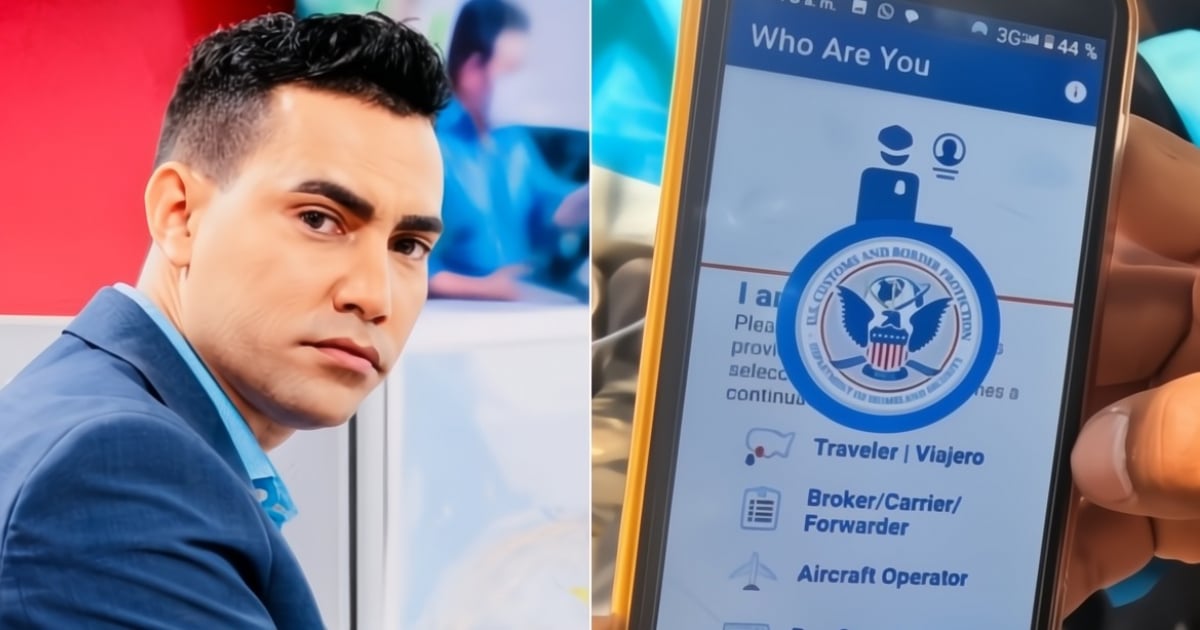
The post was met with a blunt response from journalist Mario J. Pentón, who asserted that the Cuban migrant has already lost their "once-in-a-lifetime opportunity."
"You cannot return to this country because: 1- you violated the conditions of the parole that was granted to you; 2- you returned to the country you were supposedly fleeing from, which is why you were allowed to enter the United States. Good luck in your new life in Cuba. You're going to need it," Pentón wrote on his profile.
The case has sparked debate on social media, where users are divided between those who express understanding for the reasons behind the return to the island and those who support the immigration policies of the Trump administration.
In February 2025, the United States government announced that the CBP One application, which served as an identification method for undocumented immigrants on domestic flights, would be restricted solely for self-deportation processes or transfers between detention centers.
The Transportation Security Administration (TSA) confirmed that migrants would only be allowed to access airport security checks if the purpose of their trip was related to their departure from the country.
This measure was presented by the Secretary of Homeland Security, Kristi Noem, as a reversal of immigration policies from the Biden era.
Subsequently, on April 8, the Department of Homeland Security (DHS) began sending notifications of cancellation of stay permits (paroles) to migrants who entered the U.S. through CBP One.
In these communications, beneficiaries were urged to leave the country immediately, warning that failure to do so would result in deportation and loss of benefits such as the work authorization.
The authorities did not specify the exact number of those affected. These measures aligned with the new government's objectives of strengthening national security and limiting the use of parole as a mechanism for legal entry.
The cancellation of these permits represents a radical change compared to the previous administration, which used CBP One as a key tool for managing legal appointments at the southern border.
Since his first day in office, Donald Trump ordered a halt to new appointment allocations through this app, leaving thousands of people stranded in Mexico.
This policy, along with the elimination of humanitarian parole, constitutes one of the pillars of the current migratory offensive, which directly affects communities such as the Cuban one.
Frequently asked questions about the use of CBP One and the immigration status of Cubans in the U.S.
What is CBP One and why has its use been restricted?
CBP One is an application created under the Biden administration that allowed migrants without valid identification to board domestic flights in the U.S. through biometric verification. However, under the Trump administration, its use has been restricted to only allow self-deportation processes or transfers between detention centers, as part of a stricter immigration control policy.
What consequences does a Cuban migrant face for returning to Cuba after entering the U.S. with CBP One?
Upon returning to Cuba after entering the U.S. with CBP One, the migrant violates the conditions of the granted parole, which may result in the loss of the opportunity to obtain U.S. residency. Returning to the country of origin contradicts the reasons stated for entering the U.S. and could permanently close the doors for re-entry into the North American country.
How does the cancellation of parole affect migrants who used CBP One?
The cancellation of parole affects migrants who entered the U.S. through CBP One, as they are notified that they must leave the country immediately. If they do not comply, they will face law enforcement measures and lose benefits such as work authorization. This action is part of a policy aimed at securing the borders and strengthening national security under the Trump administration.
What changes has the Trump administration implemented in immigration policy towards Cuba?
The Trump administration has implemented significant changes to immigration policy towards Cuba, including the revocation of humanitarian parole and the restriction of the use of CBP One. Additionally, it has ordered the self-deportation of Cuban migrants who do not have a defined immigration status, impacting thousands of individuals who entered the country with temporary permits.
Filed under: