
Related videos:
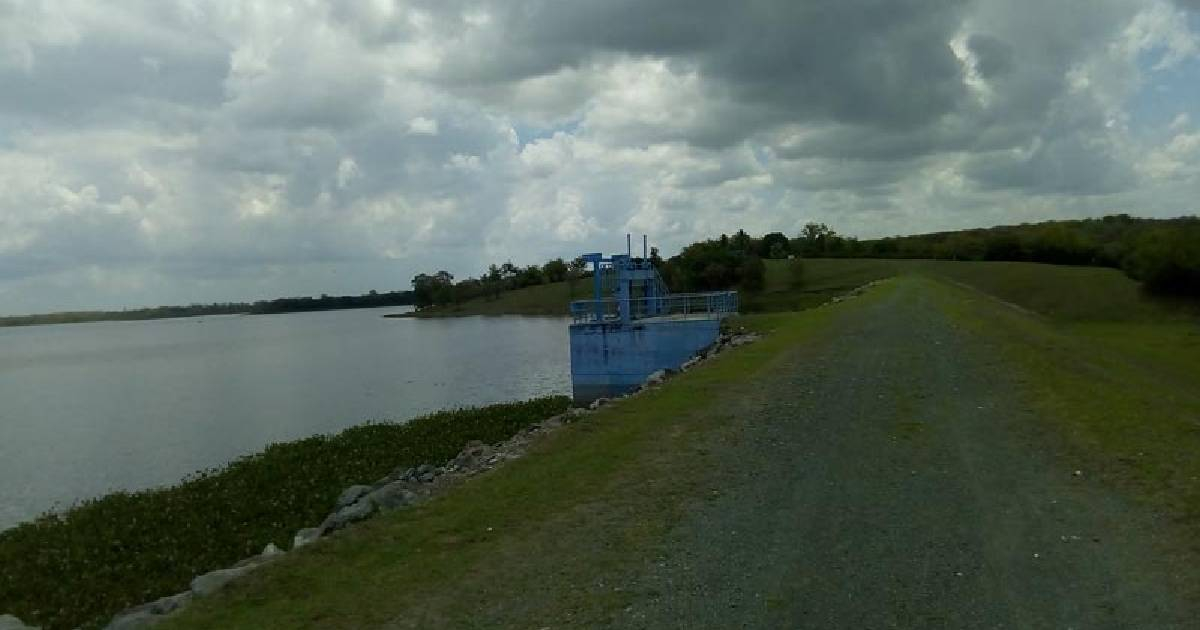
Although May arrived with rains, the water supply in the city of Las Tunas remains on the brink of collapse, as the El Rincón dam, the main source of supply for the city, holds barely six million cubic meters of water, just 27% of its total capacity, and authorities are struggling against outdated infrastructure to prevent service disruptions.
Divers are working against the clock to install a floating intake in this reservoir, aiming to improve supply in a city where pumping is halted at several sources, including Piedra Hueca, due to a transformer malfunction, reported the official newspaper 26.
Piedad Herrera Núñez, the municipal director of Aqueduct and Sewerage, acknowledged that the situation "remains tense" and called for savings in every home, workplace, and service.
On Monday, pumping from the Piedra Hueca system was halted due to an electrical failure. The only hope is that the transformer will be repaired "in the next few hours," but there are no guarantees.
Days ago, the official herself confirmed that this source of supply operates with a single active well, which provides only 50 liters per second.
Meanwhile, in the La Cana basin, a single pump operates with a capacity of around 50 liters of water per second, of which only about 20 to 30 reach the city due to the deterioration of the networks, the local newspaper reported.
A newly repaired pump has been reinstalled at the Cayojo dam to try to supply the industrial area of the city, which has also been affected. However, these temporary solutions do not address the structural problem of a collapsed network that relies on old parts and constant electrical failures.
Meanwhile, severe local storms in the early days of May left rain, hail, and strong gusts of wind in various locations across the province. This occurred on May 3 in a town in the municipality of Puerto Padre, where the bad weather caused significant damage to homes and the electrical system.
However, these events have not been enough to reverse the low levels of the reservoirs. In recent months, drought has severely impacted several Cuban provinces, worsening the water supply crisis. A recent report revealed that Holguín is experiencing a 22% rainfall deficit, classifying its entire territory as "very dry."
Meanwhile, in Ciego de Ávila, 69% of the last 51 months have recorded rainfall below the historical average, with reservoirs and aquifers unable to recover due to the persistence of high oceanic pressures and the El Niño climatic phenomenon.
That situation caused, in recent days, the water distribution cycle in Ciego de Ávila to be extended to nine days, a decision made by the government due to the depletion of the Ruspoli aquifer.
Similarly, in the province of Sancti Spíritus, the situation is no less alarming. The number of people relying on water trucks to access drinking water has doubled in a year, reaching nearly 82,000 residents.
The combination of drought, prolonged power outages, and structural failures has left thousands of families in this central province without regular access to the service. Municipalities like Fomento, Trinidad, and the provincial capital itself top the list of the most affected areas, with neighborhoods where distribution occurs only every 15 days.
Crisis of Water Supply in Las Tunas
What is the current status of the El Rincón dam in Las Tunas?
The El Rincón dam, the main source of water supply for the city of Las Tunas, is in a critical condition, with only 27% of its total capacity, equivalent to about six million cubic meters of water.
What issues affect the water supply in Las Tunas?
The water supply in Las Tunas is affected by obsolete infrastructure, electrical breakdowns, and halted pumping at various sources, in addition to the critical water level in the reservoirs. The situation is exacerbated by the prolonged drought and the deterioration of the distribution networks.
What measures are the authorities taking to improve the water supply?
Authorities are working on the installation of a floating intake at the El Rincón dam and repairing pumping equipment in the Piedra Hueca system. However, these are temporary solutions that do not address the structural issues of the water distribution system.
How does the drought affect other provinces of Cuba?
The drought has severely affected other Cuban provinces such as Holguín and Ciego de Ávila, where the rainfall deficit and the depletion of aquifers have prolonged water distribution cycles and left thousands without regular access to the service.
Filed under: