
Related videos:
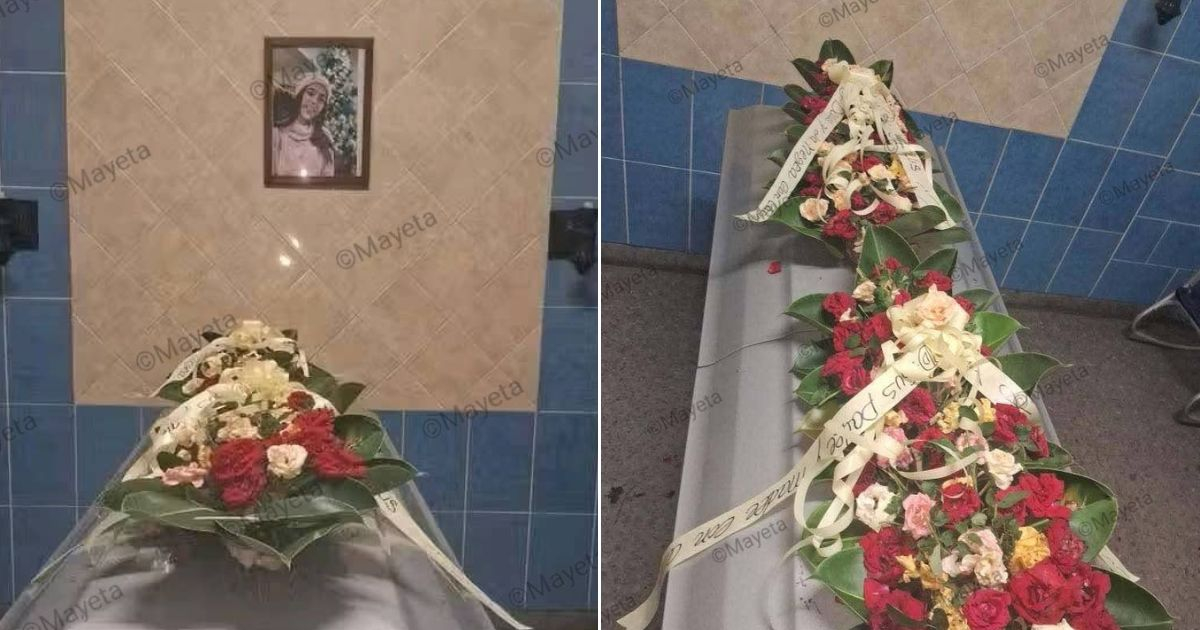
Yannelis de la Caridad Casales Antón, the young Cuban woman who was killed in March by her partner in Jacksonville, Florida, was mourned this Thursday at the funeral home in her hometown, Santiago de Cuba, amid the grief of family and friends who came to bid her farewell since dawn.
The young woman's body was displayed in a closed casket due to the severity of her injuries, to the extent that, as recounted by a close acquaintance quoted by journalist Yosmany Mayeta on his Facebook profile, “she was in very bad condition” when they tried to style and make up her hair.
The young woman will be buried in the Santa Ifigenia Cemetery, near her family's home, while friends and neighbors attended the wake to support her loved ones, who are deeply devastated.
Initially, her family was uncertain about whether to bury her on the outskirts of the city or to change her coffin, as the sarcophagus brought from abroad did not fit in a Cuban vault, Mayeta explained.
Finally, the body was placed in a locally produced coffin to be buried in the Santa Ifigenia Cemetery, the closest to his family's home, where friends and neighbors gathered at the wake to support their loved ones, who were deeply devastated.
The crime has caused a shock both in the Cuban community of Jacksonville and in Cuba, where cases of femicide and gender-based violence continue to accumulate without a structural response that guarantees protection or full justice for the victims.
Casales, 30 years old, was brutally murdered on March 30 in a domestic violence incident that occurred in the city of Jacksonville, Duval County, Florida.
His partner, Carlos Yordanis Aldana, 38 years old, was arrested that same day as the main suspect, after being found injured in the vicinity of the crime scene.
In the apartment where they lived, the police found Yannelis's lifeless body with multiple stab wounds, and she was pronounced dead at the scene.
The murder occurred in the early hours of the morning, around 3:20 a.m., as confirmed by the Jacksonville Sheriff's Office (JSO).
The victim was located thanks to the trail of blood that the agents followed from where Aldana was found to inside the apartment.
After weeks of efforts and a campaign on GoFundMe to cover the costs of repatriating her body, her family was able to bring her to Cuba to fulfill her last wish: to be buried in her homeland.
Frequently asked questions about the feminicide of Yannelis de la Caridad Casales Antón
How did the murder of Yannelis de la Caridad Casales Antón occur?
Yannelis de la Caridad Casales Antón was brutally murdered on March 30, 2025, by her partner, Carlos Yordanis Aldana, in Jacksonville, Florida. The crime was a domestic violence incident where Yannelis received multiple stab wounds. Aldana was found injured near the crime scene and arrested as the main suspect.
What complications arose in the repatriation of Yannelis' body to Cuba?
The repatriation of Yannelis' body to Cuba faced logistical challenges because the casket used in the United States was too large for a Cuban vault. Ultimately, the body was placed in a domestically produced coffin and buried in the Santa Ifigenia Cemetery in Santiago de Cuba.
What has been the response of the community and the authorities to this feminicide?
The femicide of Yannelis has generated shock both in the Cuban community of Jacksonville and in Cuba. Family and friends have expressed their sorrow and demanded justice, calling for the charge against Aldana to be raised to first-degree murder. However, as in other cases of gender violence in Cuba, there has been no effective structural response from the authorities that guarantees protection or full justice for the victims.
What measures are being taken in Cuba to combat gender-based violence?
Despite the rise in femicides, the Cuban government has not classified femicide as a crime in the Penal Code. A national system for recording, addressing, tracking, and monitoring domestic violence has been established, but its effectiveness continues to be questioned by feminist organizations and activists.
Filed under: