
Related videos:
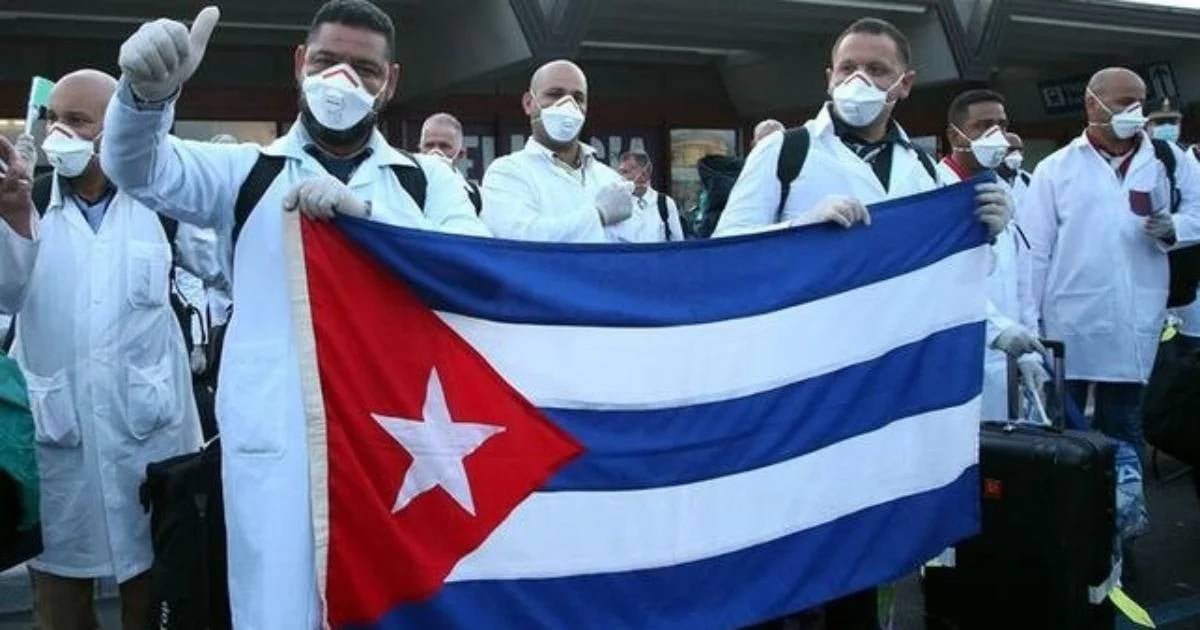
Despite the public commitment of the Bahamian government to pay directly to the Cuban doctors hired in their territory, the salary confiscation mechanisms implemented by the regime in Havana persist.
This was confirmed by several former collaborators of the medical brigades to Martí Noticias, who stated that even with direct deposits from the local government, the professionals were forced to remit the majority of their earnings to accounts controlled by the Cuban State.
The complaint resurfaces amidst a review of bilateral agreements driven by diplomatic pressure from Washington, particularly from U.S. Secretary of State, Marco Rubio, who has repeatedly pointed out the existence of forced labor in these missions.
"They deposited our full salary, but Cuba required us to send almost all of it through bank transfers," said a doctor who worked in 2018 and requested anonymity for fear of reprisals.
From the bank to cash: the regime adapts
Although Bahamian Prime Minister Philip Davis announced that his country will now directly transfer salaries to Cuban doctors to avoid international scrutiny, activists and analysts agree that the measure does not address the core issue: the coercive control of the regime over its professionals abroad.
According to María Werlau, director of Archivo Cuba, the Cuban government has modified its methods in response to external scrutiny. Instead of demanding bank transfers, it now prefers to collect cash, utilizing figures such as the "economic" officer of the mission, who instructs how to remit salaries through fictitious online purchases via entities like RBC Dominion Securities, a subsidiary of the Royal Bank of Canada.
“Havana has entered panic mode,” denounced Werlau, pointing out a pattern of adaptation designed to evade financial tracking.
A structural scheme of confiscation
Journalist Annarella Grimal, specialized in medical missions, warned that what happened in the Bahamas is not an exception. In numerous countries where Cuban brigades operate—such as Venezuela, Angola, Qatar, or Jamaica—the mechanisms of wage appropriation are equally systematic.
"In the Bahamas, the withholding percentage can exceed 70% of the gross salary," Grimal explained. "This is not about medical cooperation, but rather a structure of state exploitation."
Documents obtained by Martí Noticias reveal direct transfers from banks in the Bahamas to the Cuban Medical Services Marketing Company, a state enterprise linked to the International Financial Bank, which is controlled by the Cuban Armed Forces. To conceal the forced nature of these remittances, the collaborators were instructed to declare them as "family shipments."
A real solution or a cosmetic one?
Although the gesture from the Bahamian government has been presented as a step forward in labor rights, experts question its real effectiveness. As long as workers remain under surveillance, threats, and political pressure, the problem persists in another form.
“It is not enough to change who transfers the money,” Grimal stated. “We need to break the coercion that forces workers to hand over a large part of their wages. Otherwise, we will continue to see the same practice with a different disguise.”
Summary of Dr. Lucio Enríquez Nodarse's letter to Marco Rubio
Through the social network Facebook, Dr. Lucio Enríquez Nodarse, residing in Spain, expressed his gratitude this Tuesday to Marco Rubio for his commitment to eradicating the labor exploitation of Cuban doctors on international missions.
Although direct payment to medical collaborators has begun to be implemented in the Bahamas, it warns that this measure does not eliminate the coercion from the Cuban regime, which continues to force professionals to transfer a significant percentage of their income to state accounts.
The doctor reports that those who refuse to send that money are expelled from the mission, and once they are out of it, they cannot practice in the host country due to the pressure exerted by the Cuban government on local authorities.
In light of this situation, he requests Rubio to advocate for the reactivation of the humanitarian parole program for Cuban doctors, as the only effective means to ensure their freedom and real protection in the United States.
Finally, I would like to thank you for any efforts you can make in support of this humanitarian cause.
Frequently Asked Questions about Cuban Medical Missions in the Bahamas
Why must Cuban doctors in the Bahamas transfer part of their salary to the Cuban regime?
The Cuban regime forces doctors to remit the majority of their earnings to state-controlled accounts. Despite the fact that Bahamas pays doctors directly, the Cuban government has implemented mechanisms to continue seizing their salaries, such as transfers through bank remittances and fictitious online purchases.
What percentage of the salaries of Cuban doctors in the Bahamas does the Cuban regime retain?
The Cuban regime retains between 83.9% and 91.6% of the salaries of Cuban doctors in the Bahamas. According to a report from the Archivo Cuba project, of the 12,000 dollars paid monthly for a "medical specialist advisor," only 1,200 dollars reach the Cuban professional.
What measures has the Bahamian government taken in response to the exploitation of Cuban doctors?
The government of Bahamas has decided to pay Cuban doctors directly. This measure aims to avoid allegations of forced labor, although it does not address the underlying issue, as the Cuban regime continues to control the doctors' earnings through other means.
How does the Cuban regime justify the appropriation of salaries from its doctors working abroad?
The Cuban regime justifies the withholding of salaries by claiming that doctors received "free education." They argue that part of the earnings made abroad should contribute to the training of future professionals, although this practice has been internationally classified as labor exploitation.
Filed under: