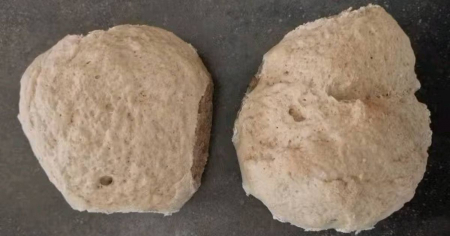
Santiago de Cuba is experiencing one of the most severe supply crises in recent years. The lack of bread, the scarcity of liquefied gas, and the sporadic distribution of hygiene products have tested the patience and resilience of its residents.
Despite official attempts to explain the situation and dispel rumors, uncertainty reigns in Santiago households.
In a recent report from the National Television News (NTV), local authorities reported that bread production is virtually halted due to a lack of flour.
The mills in the province are inactive and depend on the sporadic shipment of flour from Havana, which has forced the implementation of a rotating distribution system by municipalities.
“The bread here in Santiago de Cuba... when the flour arrives, it is distributed on a rotating basis: today to one municipality, tomorrow to another. But it is not for the entire province at the same time,” explained Jorge Luis Arce Ferrer, director of the provincial Food Industry enterprise.
The official also denied that the distribution is limited to children aged 0 to 13, stating that when flour arrives, bread is guaranteed for 100% of the population in the municipality benefiting that day.
However, recent reports from independent media have revealed that, at times, aged flour is being used, which affects the quality of the bread. In some areas, it is only distributed every two days, and the population has already come to terms with the fact that extreme rationing is here to stay.
On the other hand, the situation with liquefied gas is equally concerning. Lisette González Sardinas, the territorial director of Fuel Marketing, stated that there is currently no availability of the product in Santiago de Cuba.
"We are preparing so that as soon as it arrives, it will be marketed efficiently. But right now, we don't have gas," he said during a meeting broadcast by NTV.
González Sardinas also denied that gas would be sold in U.S. dollars or in MLC stores, labeling that information as false and spread by “unofficial sites.” In the same vein, Governor Manuel Falcón Hernández urged the population to stay informed only through official channels, such as the provincial government's Telegram and Facebook.
Despite the clarifications, no specific dates were provided for the restoration of the service, which has led to increased anxiety among the residents of Santiago, many of whom rely on gas for cooking.
To the above is added another source of citizen discontent regarding the distribution of hygiene products.
According to testimonies collected by this medium and reflected in local reports, basic items such as soap, detergent, and toothpaste are only delivered once every three months. This frequency, sometimes more, forces the population to line up from early morning in hopes of obtaining the scarce available products.
In light of this situation, the authorities have promised to update the public weekly on the status of the regulated family basket. "Every Monday, information will be provided on our website and through all government communication channels," stated Governor Falcón.
However, for many residents of Santiago, those weekly updates are insufficient. While there is insistence to follow "official sources," the daily reality consists of endless queues, absent products, and responses that never arrive.
The widespread scarcity in Santiago de Cuba affects the food supply, hygiene, and basic well-being of its residents.
Without bread, without gas, and with hygiene products available only every three months, the population faces a routine marked by precariousness. Although the local government seeks to calm tensions through denials and promises of communication, the lack of concrete solutions only fuels discontent.
Filed under: