
Related videos:
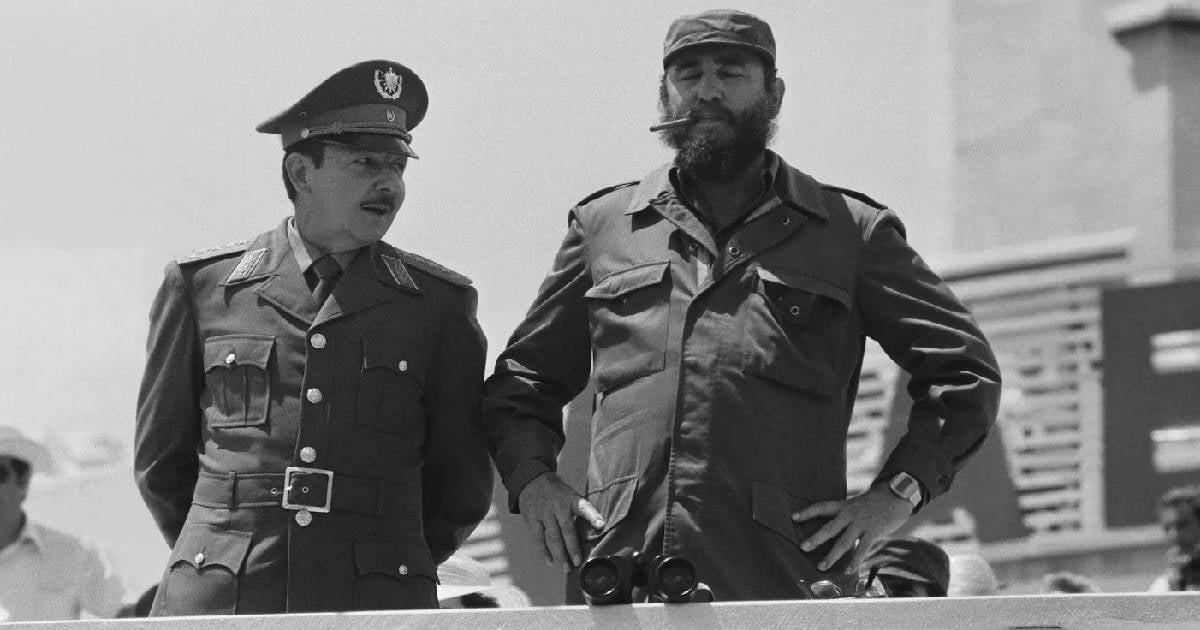
Carlos Lehder, one of the founders of the feared Medellín Cartel, stated in an interview with Martí Noticias that the Cuban regime led by Fidel and Raúl Castro played a crucial role in cocaine trafficking to the United States in the 1980s.
According to the former Colombian drug lord — who had already revealed information on this topic in January 2024 — the island served as a key point in the drug trafficking route, with the consent of the Cuban military high command.
"I was invited by the Castro dictatorship to establish a cocaine trafficking route to the United States from Cuba," said Lehder from Colombia, where he resides after serving over 33 years of a sentence for drug trafficking in the U.S.
It is ensured that, although he eventually withdrew from the agreement, his partners Pablo Escobar and Gustavo Gaviria took control of the operation, sending “hundreds of tons of cocaine” with support from the Cuban government.
"None of the operations could be carried out in Cuba without the authorization of Fidel Castro," reaffirmed Enrique García, a former intelligence officer from the island who defected in 1989.
During the 1991 trial against former Panamanian dictator Manuel Antonio Noriega, Lehder testified under oath that he donated a plane to Raúl Castro as part of the agreement with the Cuban regime to facilitate drug trafficking through their territory.
This version is confirmed in its records and was expanded upon in its recent interview.
The former Colombian drug lord recounts that, after arriving in Cuba at the invitation of Colonel Antonio de la Guardia, he was welcomed with all expenses covered by the government.
During that first business visit, the Cuban officials, according to Lehder, made their interest clear: “We need all the dollars we can get.”
He was authorized to use Cayo Largo as a logistical point and was required to make cash payments to the Cuban government, he said.
Shortly thereafter, Lehder requested to meet Raúl Castro. In a brief and cryptic meeting, he says, the then Minister of the Armed Forces symbolically sealed the agreement of collaboration.
The operation ran for years until, in 1989, the Cuban regime executed four high-ranking officers accused of drug trafficking: General Arnaldo Ochoa, Colonel Antonio de la Guardia, Captain Jorge Martínez Valdés, and Major Amado Padrón Trujillo.
The so-called Case No. 1 of 1989 was interpreted by many as an attempt to cover up the regime's connections to drug trafficking and to avoid international legal repercussions.
According to García, former DGI official, “Fidel decided to put on that show when he learned that there was a federal investigation opened against him in the United States.”
In response to Lehder's revelations, the U.S. State Department declared to Martí Noticias: “It is no secret that the communist and corrupt regime of Cuba has long-standing ties with drug traffickers.”
The U.S. administration also cited the collaboration between the Castros and Manuel Noriega as another example of covert narco-political operations in the region.
Carlos Lehder returned to Colombia in March 2025, after having spent time in Germany, a country of which he is also a citizen.
He was briefly detained upon arrival, but released a few days later due to the expiration of his legal cases.
At 75 years old, Lehder presents himself as a reformed man, although he continues to actively denounce the Cuban regime.
"Any effort to denounce the Castro-communist dictatorship is highly recommended and warranted," he asserted.
With these statements, one of the darkest episodes in the history of drug trafficking and Latin American politics is reignited, directly involving the highest echelons of the Cuban Revolution in the lucrative and bloody drug trade.
Frequently asked questions about Cuba's role in drug trafficking and the revelations of Carlos Lehder
What did Carlos Lehder reveal about Cuba's role in drug trafficking?
Carlos Lehder stated that the Cuban regime, led by Fidel and Raúl Castro, played a crucial role in cocaine trafficking to the United States during the 1980s. According to Lehder, Cuba served as a key point in the drug trafficking route with the consent of the Cuban military high command, facilitating the shipment of "hundreds of tons of cocaine."
How did the collaboration between Carlos Lehder and the Cuban government develop?
Lehder was invited by the Castro regime to establish a cocaine trafficking route to the United States from Cuba. During his stay in Cuba, he was hosted with all expenses covered and was allowed to use Cayo Largo as a logistical point. Moreover, he briefly met with Raúl Castro, who symbolically sealed the collaboration agreement.
What happened to the Cuban officials involved in drug trafficking?
In 1989, the Cuban regime executed four high-ranking officials accused of drug trafficking. These were General Arnaldo Ochoa, Colonel Antonio de la Guardia, Captain Jorge Martínez Valdés, and Major Amado Padrón Trujillo. The so-called Cause No. 1 of 1989 was seen by many as an attempt to cover up the regime's connections to drug trafficking and to avoid international legal repercussions.
What was the United States' response to the revelations of Carlos Lehder?
The U.S. State Department noted that it is no secret that the communist regime of Cuba has long-standing ties with drug traffickers. U.S. authorities also mentioned the collaboration between the Castros and Manuel Noriega as another example of covert drug-political operations in the region.
Filed under: