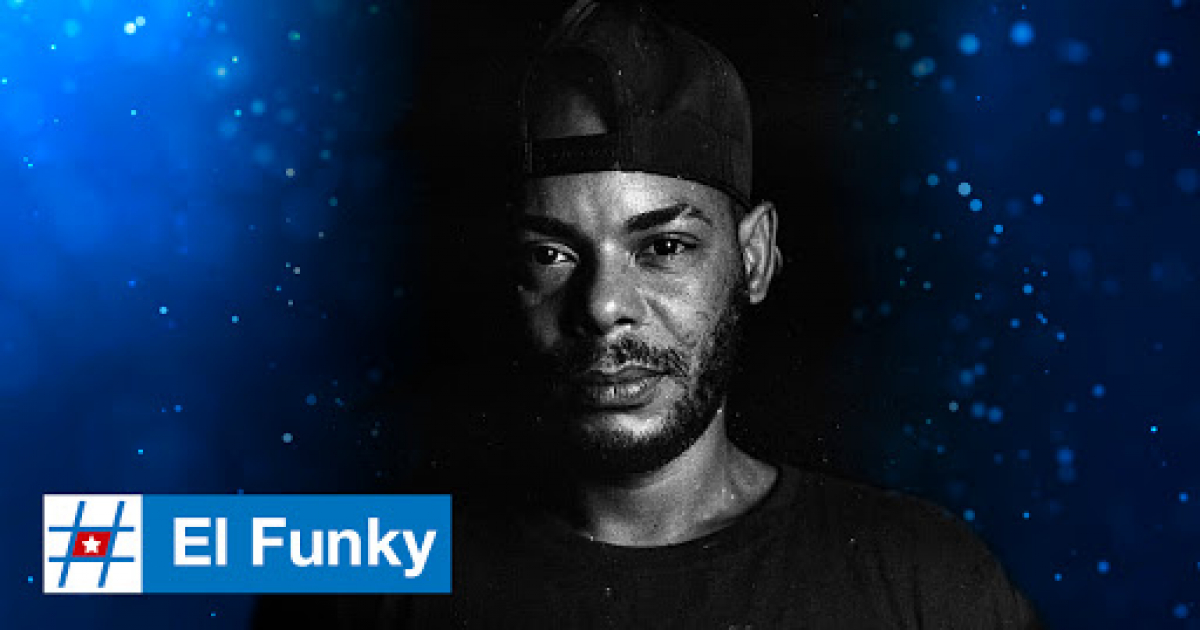
Eliecer Márquez Duany, artistically known as El Funky, is a Cuban rapper born on November 14, 1981, in Havana, Cuba.
The influence for his music comes from English hip hop (Tupac, Dr. Dre, Redman, among others). El Funky began to identify with these alternative genres thanks to the rap gatherings that took place at the Casa de Cultura in Old Havana, very close to his home, where he had his first encounters with Cuban rap.
At the age of 16, he wrote his first song, which was a salsa influenced by the Cuban music most heard on the island, inspired by groups such as La Charanga Habanera and los Van Van. A few years later, he was already rapping his own lyrics.
Although Funky continues to produce his songs, the well-known practice of beef typical of urban genres is also present in his repertoire, which includes love compositions.
Known within the Cuban alternative music scene for his presence on hip hop stages, he released his album El Funky presents: The Zombie Flow in 2014, where he blends rap with Cuban rhythms.
That same year, he participated in the corresponding edition of the "Puños Arriba" awards, which aim to promote and enhance the emergence of new talents and help them establish themselves in the alternative music market. The audience warmly received some of the tracks from that album presented by Funky.
The impact of Funky is starting to grow both inside and outside the island due to his collaborations with the rapper Maykel Osorbo, with whom he has recorded tracks such as Diazcarao, Yamila, or El aletazo de Alpidio.
Maykel Osorbo is one of the faces of the San Isidro Movement alongside fellow artist Luis Manuel Otero Alcántara. Both have become symbols of the resistance of young Cuban artists in their fight against the government to seek change on the island.
El Funky was a member of the Cuban Rap Agency, and due to the songs he has recorded with Osorbo, this agency requested that he voluntarily resign, an option the young man declined.
In February 2021, El Funky made headlines again when he, along with Maykel Osorbo, Yotuel, Gente de Zona, and Decemer Bueno, recorded the song "Patria y Vida," which garnered over half a million views in less than 72 hours. The response and reception from Cubans both on and off the island have provoked an intense reaction from the Cuban government, which has targeted the artists. The song promises to become an anthem of freedom in these times.