
Related videos:
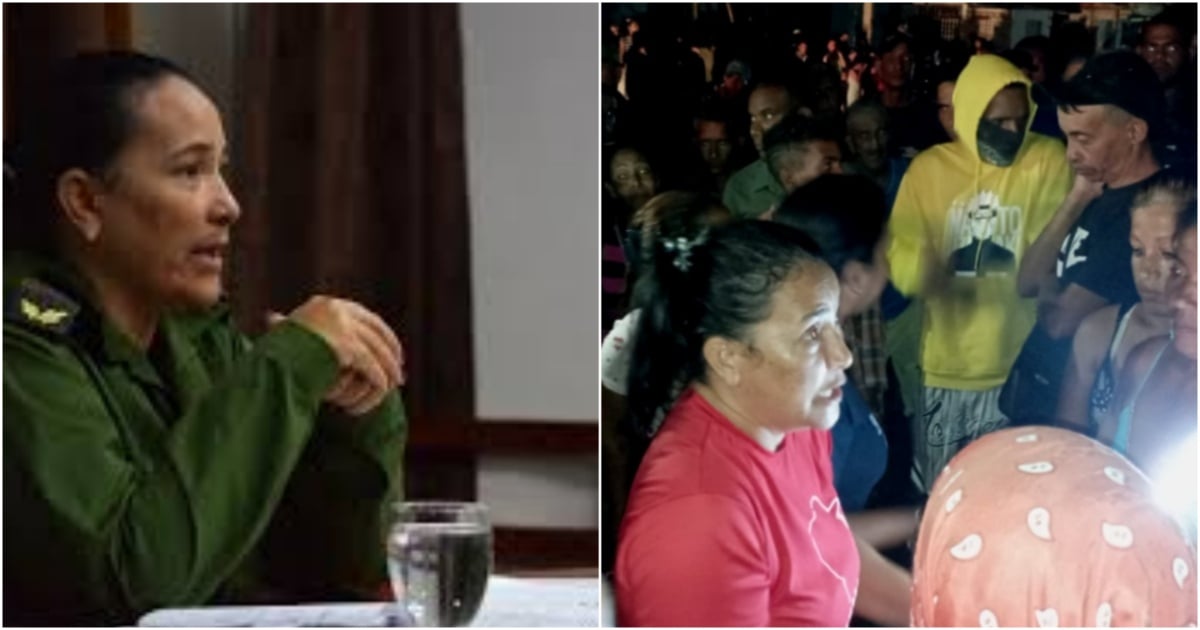
Yudelkis Ortiz Barceló, the first secretary of the PCC in Granma, has responded to criticism on social media just hours before having to go out and provide explanations to the people of Bayamo who protested in the streets.
“We live in a world where the freedom to hate has never been so out of control on social media.... Let's not play along with those who shout from the stands, jeer, and do not participate in the game,” the official stated on Facebook.
"A game that is complicated but without a doubt there will be a winner, and that is the united people of Cuba, as Fidel taught us," he admitted, staying aligned with state propaganda.
During the early hours of Friday, May 24, new popular protests were reported in at least two cities in Cuba: Bayamo, in the province of Granma, and Cienfuegos.
The protests were once again driven by prolonged power outages and the critical situation of scarcity.
In Bayamo, dozens of people took to the streets in various neighborhoods, demanding immediate solutions and shouting, "We don't want any more empty promises!" in clear reference to the empty assurances from the authorities.
In response to popular pressure, the regime's reaction was felt not only on the ground with the deployment of special troops and Communist Party officials, but also in the digital arena.
Additionally, the usual internet outages and connection issues on mobile devices, an intense propaganda campaign on state-controlled social media sought to project an image of calm, dialogue, and complete control of the situation.
While videos showed residents of Bayamo confronting Ortiz Barceló, surrounded by officials from the Ministry of the Interior and the army, several profiles associated with the government began to post images of empty streets, lit streetlights, and phrases like “everything is calm” or “in peace, dialoguing with the people.”
This Saturday, just hours after the protests, the Cuban government responded by organizing food fairs in several municipalities of Granma province, including Pilón.
Images shared on Facebook by Dayamis Silva Lara, a member of the Communist Party of Cuba (PCC) in Pilón, show booths with agricultural products, including corn and other staple foods, under the slogan of a "Saturday fair within everyone's reach."
The organization of these food fairs fits into a well-established pattern of distributing basic products as an immediate remedy for popular discontent, a strategy that has been implemented in other provinces, such as Santiago de Cuba, in recent times.
Frequently Asked Questions about the Protests in Cuba and the Regime's Response
Why are protests taking place in Bayamo and other cities in Cuba?
The protests in Bayamo and other cities in Cuba are mainly driven by the prolonged blackouts and the scarcity of food and other basic goods. Citizens have taken to the streets to demand concrete solutions to their daily problems, as the promises from the authorities have been inadequate and empty. This discontent has been exacerbated by the lack of effective responses from the Cuban government.
How has the Cuban government responded to the recent protests?
The Cuban government has responded to the protests with a deployment of special troops and a propaganda campaign on social media to project an image of calm and control. Additionally, they have organized food fairs as an immediate response to the discontent. However, these measures are temporary band-aids that do not address the underlying causes of the protests, such as the energy crisis and the shortage of basic goods.
What has Yudelkis Ortiz Barceló, the head of the PCC in Granma, said about the criticisms on social media?
Yudelkis Ortiz Barceló, first secretary of the PCC in Granma, has criticized the comments on social media, stating that there is an uncontrolled "freedom to hate" on these platforms. She used her Facebook account to dismiss the criticisms and assert that the Cuban people united will be the victor, following the line of the regime's official discourse. Her stance has been seen as an attempt to delegitimize dissenting voices and minimize public discontent.
What strategies has the Cuban regime used to control the narrative about the protests?
The Cuban regime has employed strategies such as the deployment of digital propaganda to present an illusion of normality and calm, internet shutdowns to limit the spread of information, and the detention of protesters to intimidate the population. These tactics aim to minimize the perception of discontent and project an image of stability. Furthermore, government figures have attempted to discredit the protests by labeling them as "enemy strategies" and justifying their repression as necessary to maintain order.
Filed under: