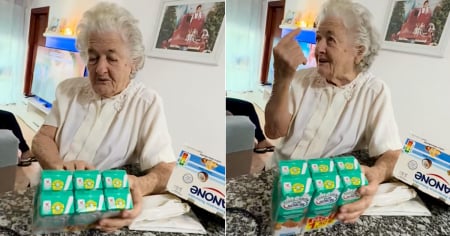
A Cuban woman in Spain shared on TikTok what she described as her first major cultural shock since emigrating over eight years ago: the way children's birthdays are celebrated in that European country.
In a video posted on her account @susana.lavidaesuna, she shared how while organizing her daughter's birthday party, just like any Cuban mother would, she decided to take on all the expenses for the celebration at a playroom. “I sent the invitation to the group of parents at the school, told them it was going to be held at such a place, at such a time, that everyone was invited, and thank you very much,” she explained. However, shortly after, she received an unexpected private message: “One of the mothers called me and asked how much they needed to contribute for the birthday.”
Surprised, she replied that it was nothing, that she was organizing everything as the host. "I tell her, 'What do you mean we should contribute something? No, no, I'm inviting you,'" she recalled. But the other mother’s insistence made it clear there was a cultural misunderstanding. "She keeps telling me, 'But how much are we going to contribute for the birthday?'"
It was then that Susana learned that, in that school environment, the parents of the invited children usually contribute a set amount of money, typically five euros per child, and the host family takes care of covering the rest of the party costs. “They explained to me that if each child brought a gift, it ultimately became more expensive. This way is better; everyone contributes some money and the birthday child's mother buys whatever gift she wants,” she said. Although the idea seemed reasonable to her, experiencing it was a different matter. “On the day of the birthday, they handed me the five euros... I was mortified. I was just standing there with my hand open, but they came as if it were nothing, as if it were completely normal.”
Despite the initial shock, Susana acknowledged that over time she has adapted. "As of today, I am very adjusted; I find it quite practical, and I give my five euros for birthdays and also collect them, and it’s no big deal," she said with a laugh.
His account sparked an intense debate in the comment section of the video. Many Spanish users insisted that this is not a common or widespread practice. "Where do you live in Spain? I have a child and it's never been done like that," wrote Montse. Elena A. agreed: "That rule must have been set by that group of parents. We pay for the birthday, and the others just bring a gift, that's it."
Others were more blunt. "That doesn't happen in Spain; it must have happened to you with those parents," commented Pochi. María del Mar added, "I am Spanish and I have never celebrated a birthday like that. I invite whoever I want, and each child brings a small gift if they can, nothing more."
However, there were also those who confirmed that this type of collection does take place in some areas, especially as a way to organize joint gifts and avoid duplicates. “At my daughter's school, we do it this way: we give ten euros per child, and the family buys whatever they want, clothing, toys, on behalf of all the children,” explained Fatima Pérez. Another user added, “We give the money to the parents, and they buy a small gift for the birthday child on behalf of the guests.”
Some mothers clarified that the money is not handed over directly, but organized discreetly. “One of the moms is in charge of collecting from all the children, and the birthday child's mom is asked if she prefers a voucher, a toy, or cash,” commented a user identified as "septiembre." From Toledo, another mother shared: “Each child contributes five euros, and together they buy a gift, or several, depending on the total amount.”
The experience of Susana adds to a growing collection of stories from Cubans abroad that recount their cultural shocks. In Sweden, a young woman claimed that what struck her the most was that “compliments do not exist” and that “women are the ones who take the initiative in relationships.” In Mexico, another Cuban expressed her bewilderment at the use of spices even in Chupa Chups and the existence of a “Cuban cake” that, according to her, has nothing to do with the island. In the United States, a recently arrived mother stated that the food “tastes like nothing,” which she described as a real “trauma.”
In other cases, cultural differences create situations that are as bewildering as they are humorous. “I bathed with a cup because I didn't know how the shower worked,” confessed a young Cuban on TikTok, joining a long list of viral anecdotes about the adjustment of newcomers to new realities.
Susana concludes her story with a reflection that many migrants share. “I believe that every home has its own rules. If you visit someone, you follow the rules of their home. I am Cuban but I live in Spain. It is my duty to adapt to the new country.”
Have you also experienced a cultural shock like this? How are birthdays celebrated in your surroundings?
Frequently Asked Questions about Birthday Cultural Shock in Spain and Cuban Emigration
What cultural shock did Susana experience in Spain regarding children's birthdays?
Susana experienced a cultural shock when she discovered that in her school environment in Spain, the parents of children invited to a birthday party usually contribute a sum of money for the birthday child's gift, instead of bringing individual presents as is customary in Cuba.
Is it common throughout Spain to contribute money for children's birthdays?
It is not a common practice throughout Spain; rather, it depends on the group of parents or the region. Some parents in Spain reported that this practice is not widespread and that in many places, an individual gift is still brought to the birthday.
How has Susana adapted to the cultural change regarding birthdays in Spain?
Despite the initial impact, Susana has managed to adapt to the cultural change. Over time, she found the system of contributing money to be practical and now participates in it regularly, both giving and receiving money for birthdays.
What other cultural shocks have Cubans experienced abroad according to the context?
Cuban expatriates have shared various cultural shocks, such as the lack of compliments in Sweden, the use of spices in Mexico, or the perception that food in the United States "tastes like nothing." These stories reflect the diversity of experiences and adaptations they face upon arriving in new cultures.
Filed under: