
Related videos:
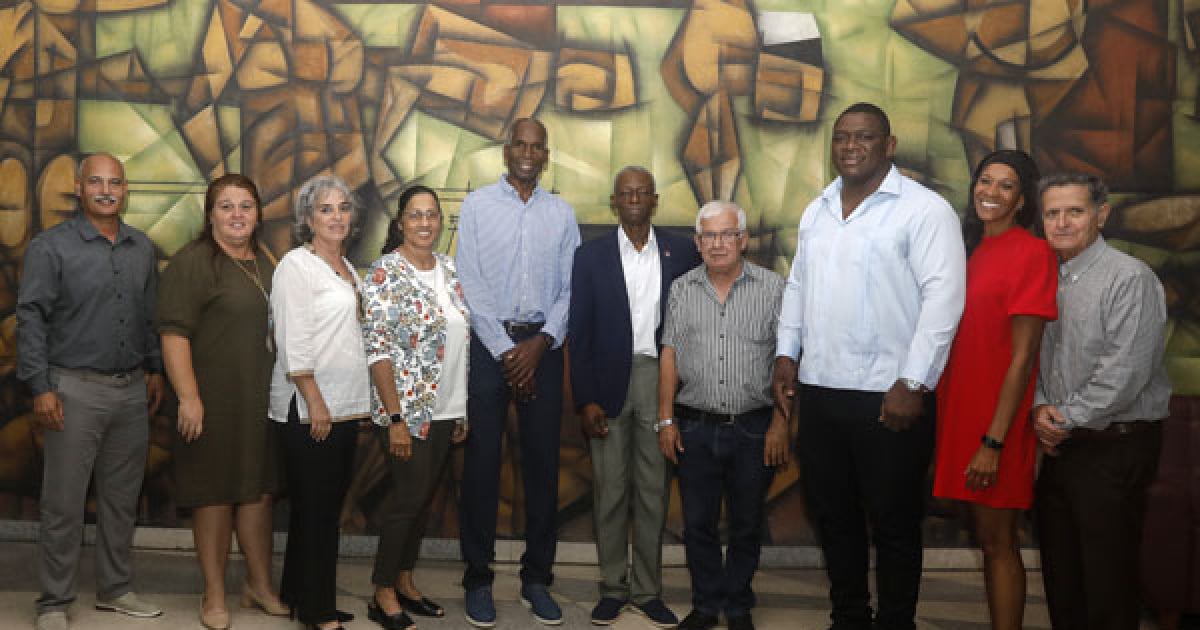
The Cuban Olympic Committee (COC) reported on Monday that the United States government denied visas to its president, Roberto León Richards, as well as to other officials and athletes, preventing them from participating in international sporting events organized in that country and Puerto Rico.
According to the press release published in the newspaper JIT, the refusal also impacted the Secretary General of the COC, Ruperto Herrera Tabío, who was unable to attend the Executive Committee meeting of Panam Sports, held in Miami from May 13 to 15, nor the Olympic Solidarity Forum in San Juan, Puerto Rico, days later.
Furthermore, the vice president of the COC and member of the International Olympic Committee, María Caridad Colón Ruenes, was excluded from the session of the Women in Sports Commission at Panam Sports, held on May 5 in Miami, for the same reason.
The COC stated that this situation is not isolated, as in March, entry was denied to 14 Cuban representatives for the World Masters Indoor Athletics Championship in Gainesville, Florida, limiting Cuba's participation to only two athletes.
Similarly, the men's basketball team was also unable to compete in the qualifier for the Fiba AmeriCup Nicaragua 2025 in Puerto Rico, resulting in their automatic elimination.
True to the regime's style, the COC denounced that this policy is a response to a politicized and discriminatory strategy by the U.S. government, which affects not only sports but also the spirit of international Olympicism.
"We demand that the obligations and fundamental principles of Olympism be upheld, ensuring the unrestricted participation of Cuban representatives in events held in territories of the United States," stated the COC in a statement.
In light of this situation, the COC requested that the International Olympic Committee, Panam Sports, and the United States Olympic and Paralympic Committee intervene to stop these practices, which could impact Cuba's full participation in the Olympic cycle leading up to Los Angeles 2028.
A practice that goes beyond sport
Just a few days ago, a group of students from the National School of Art of Cuba was excluded from a cultural exchange in the United States after their visa applications were denied, amid growing immigration restrictions that impact educational and cultural ties between the two countries.
According to the information published in The Berkeley High Jacket, a student newspaper of BHS, the meeting was part of an exchange project that has for years allowed students from the BHS jazz program to travel to Cuba to meet and collaborate with their peers from ENA.
Additionally, the U.S. has revoked visas for officials of the dictatorship and suspended applications in various fields such as culture, health, education, science, and sports, according to Cuban Deputy Foreign Minister Carlos Fernández de Cossío, in statements to the AP agency.
U.S. Embassy in Cuba strengthens visa controls
The United States Embassy in Havana has tightened its criteria for granting visas under the family reunification program, amidst increasing immigration restrictions.
This was confirmed by Mike Hammer, Charge d'Affaires at the Embassy, during a press conference held in Miami.
Two of the questions raised during the meeting centered on the urgency of revitalizing the family reunification program, a legal route that has allowed thousands of Cubans to reunite with their loved ones in the United States for years.
In response, Hammer stated: "Family reunification is a delicate issue, and the Trump administration's policy on illegal immigrants in the country is already well-known, but we, as an Embassy, continue to carry out our mission regarding the reunification of families through a legal process."
However, that mission faces concrete obstacles. The diplomat confirmed that U.S. immigration laws are being applied more strictly, preventing the granting of visas to individuals with recent ties to the Communist Party of Cuba (PCC).
"Yes, we are strengthening U.S. laws that prevent visas from being granted to members of the Communist Party of Cuba who have held high positions or who have been active members until recent years."
Frequently Asked Questions about U.S. Visa Restrictions on Cuba
Why is the United States denying visas to athletes and officials of the Cuban Olympic Committee?
The United States is imposing visa restrictions on Cuban officials and representatives as part of a broader policy of sanctions and immigration restrictions aimed at pressuring the Cuban regime. This policy has impacted various sectors, including sports, limiting Cuba's participation in international events held on U.S. soil.
What has been the impact of these restrictions on Cuban sports?
Restrictions have prevented Cuban athletes from participating in key international competitions such as the World Indoor Master Athletics Championship and the qualifier for the Fiba AmeriCup 2025. This has resulted in the automatic disqualification of Cuban teams and has limited their international visibility, affecting the development of sports on the island.
How are Cuban authorities responding to the rejection of visas by the United States?
The Cuban Olympic Committee has condemned these actions as part of a politicized and discriminatory strategy by the United States. They have requested the intervention of the International Olympic Committee and other sports organizations to ensure the participation of their representatives in international events, arguing that these measures violate the principles of Olympism.
What other sectors in Cuba are being affected by the U.S. visa restrictions?
The restrictions also impact sectors such as culture, health, education, and science. This has interrupted cultural and educational exchanges and affected international cooperation programs, such as Cuban medical missions abroad.
Filed under: