
Related videos:
More than 60 years after the 1962 Missile Crisis, one of the tensest episodes of the Cold War, new family testimonies have shed light on the role played by the American pilots tasked with conducting aerial surveillance missions over Cuba.
Robert Primrose Jr., son of one of the 11 men who flew U-2 aircraft in top-secret operations over the island, has revealed to the outlet ABC 27 previously unknown details about his father's experience during those critical days.
The major Robert Primrose Sr., a pilot in the U.S. Air Force, participated in the so-called "Operation Brass Knob", a set of reconnaissance missions conducted with U-2 aircraft that flew over Cuban airspace at over 21,000 meters in altitude.
From that altitude, they were able to capture the first images confirming the presence of Soviet nuclear missiles on Cuban territory, which sparked a diplomatic confrontation that brought the world to the brink of nuclear war.
Although Primrose Sr. survived his mission over Cuba, he passed away in 1964 in a plane crash while landing in Arizona, when his son was just six years old. "I believe the winds simply flipped the U-2," recounted Robert Jr., who also became a pilot and professional musician.
The pilots of Operation Brass Knob were awarded the Distinguished Flying Cross, although their sacrifice remained hidden for decades. "Because this was so secret at the time, the pilots never received much recognition for their service," said Primrose Jr.
Although it was the subject of myths and conspiracy theories for decades, the CIA officially acknowledged in 2013 that Area 51 —located in the Nevada desert— was the site where U-2 and OXCART aircraft were developed and tested, key technologies in the U.S. intelligence strategy during the Cold War.
The U-2, designed by Lockheed Skunk Works, was capable of flying at over 72,000 feet (about 22 kilometers in altitude) and capturing images 125 miles wide using seven cameras.
From that secret base, reconnaissance flights took off that, between October 14 and 15, 1962, detected the Soviet missiles in Cuba, triggering a globally significant diplomatic crisis.
Therefore, Primrose Sr.'s work not only made it possible to identify the Soviet missiles in Cuba, even after Fidel Castro denied their existence, but it was also crucial for President John F. Kennedy to confront Moscow with compelling evidence.
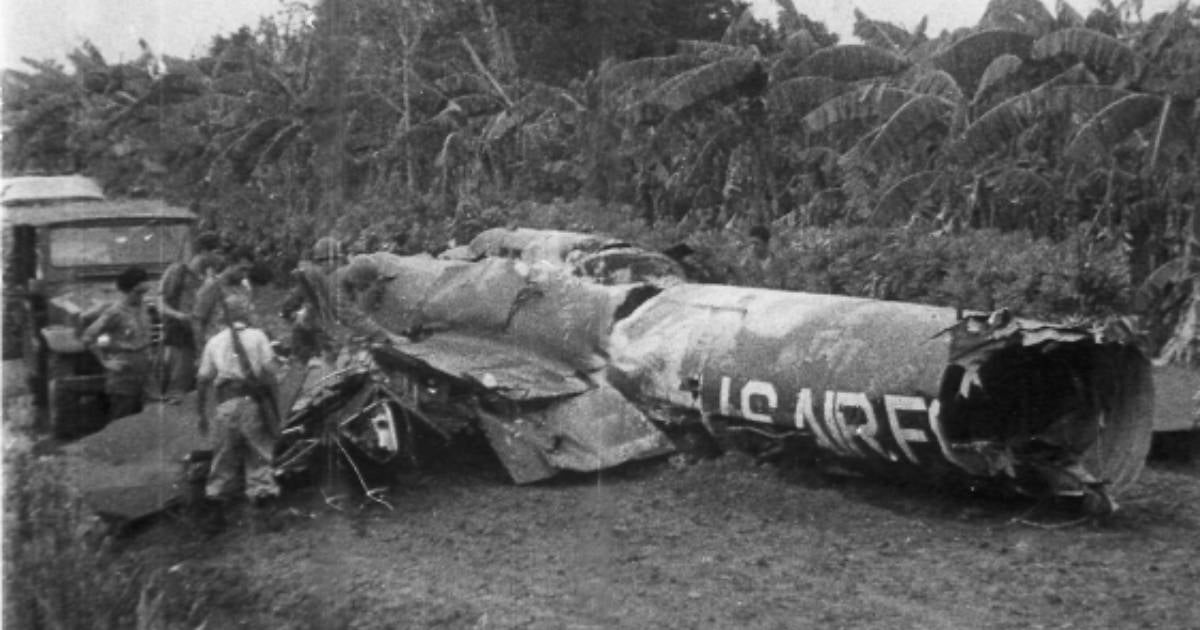
On October 27, 1962, during a flight over the province of Oriente, a U-2 was shot down by a Soviet anti-aircraft battery. The pilot, Major Rudolph Anderson Jr., died when the aircraft crashed near the sugarcane fields of Veguitas Tres.
His body was recovered by Cuban authorities, prepared by local doctors, and subsequently handed over to the U.S. government in an official ceremony at Rancho Boyeros Airport in Havana.
This event marked the peak of the crisis. Castro, in later conversations with the journalist Ignacio Ramonet, explained that the U-2 spy flights were a real threat to the island's security and justified the downing as a defensive measure against a possible surprise attack.
Amidst that tension, Castro sent a letter to the then Chairman of the Council of Ministers of the Soviet Union Nikita Khrushchev on October 26, warning that the Cuban people were ready to confront the aggressor "heroically". The Soviet response on the 28th acknowledged the downing and called for prudence.
Finally, the Soviet leader agreed to withdraw the missiles in exchange for guarantees that the U.S. would not invade Cuba, thereby marking the end of the crisis.
In addition to his missions over Cuba, Primrose Sr. flew 101 combat missions during the Korean War, facing Soviet MIG fighters and rescuing other pilots from being shot down, according to Air Force records.
The story of Major Primrose and his family revives the memory of a key chapter in the history of Cuba and the world. As documents are declassified and testimonies are shared, the role of these invisible pilots is increasingly recognized, as their mission helped to prevent a nuclear catastrophe.
Filed under: