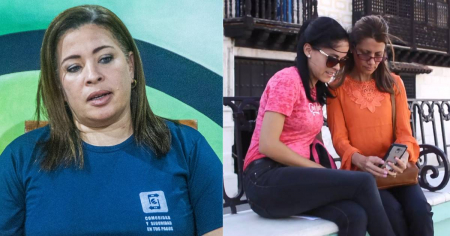
The Minister of Telecommunications of the Cuban regime Mayra Arevich Marín defended the recent implementation of the rate increase by ETECSA, stating that the opinions against it are being taken into consideration.
“The new commercial measures implemented by ETECSA are essential for the sustainability of the telecommunications infrastructure, to continue supporting the development of the country, to ensure cybersecurity, and to maintain the quality of services for the people,” wrote in a thread on X.
"The population's opinions on ETECSA's new commercial measures are being evaluated, and coordinated actions are being implemented with the Party, the Government, various agencies, organizations, and localities to address them," he stated.
On Friday, ETECSA limited the top-ups in Cuban pesos (CUP) to a maximum of 360 in a 30-day period, forcing users to purchase larger data packages in U.S. dollars (USD) or at excessive costs in CUP. This measure has drawn criticism for excluding those who do not have access to foreign currencies.
Cubans who do not have access to dollars or cannot afford an additional 3GB for over 3,000 CUP can only purchase a 6GB package for 360 CUP per month, which is insufficient for daily internet needs. This deepens inequality and limits connectivity for a large segment of the population.
The measure has sparked widespread outrage and criticisms even within the ruling party itself.
This Saturday, the University Student Federation (FEU) from several faculties of the University of Havana and the Higher Institute of International Relations (ISRI) issued a joint statement rejecting the new rates.
In an unusually critical stance for an organization aligned with the government since the victory of the so-called "revolution," students denounced that ETECSA's so-called "rate hike" restricts the fundamental right to information, education, and communication, which are essential pillars for their academic development.
Spokespersons of the regime, such as Ernesto Limia and the singer of Buena Fe, Israel Rojas, have also reacted against the price hike in light of the widespread public discontent.
Frequently asked questions about the ETECSA rate hike and its implications
What is the ETECSA rate hike and why has it caused so much discontent?
The ETECSA rate hike is a set of new commercial measures that severely restrict top-ups in Cuban pesos (CUP) and promote the purchase of data packages in U.S. dollars (USD). These measures have sparked discontent as they exacerbate economic inequality, excluding those who do not have access to foreign currencies, and limit internet access, which is considered an essential service.
How does ETECSA's price hike affect students and professionals in Cuba?
The ETECSA price hike impacts students and professionals by severely limiting their access to the internet, which is essential for academic and professional development. Many students rely on this access to obtain updated resources and communicate with tutors, especially in a context where universities use virtual platforms to distribute grades and study materials.
Why does ETECSA justify the dollarization of its services?
ETECSA justifies the dollarization of its services as a necessity to sustain and develop the telecommunications network in Cuba. The company argues that the increase in data consumption and the decrease in foreign currency revenue require new sources of financing. However, this explanation has been met with skepticism and criticism from the public.
What are the most common criticisms of the new ETECSA measures?
The most common criticisms of ETECSA's new measures include the exclusion of those who do not have access to dollars, the widening of the digital divide, and the rising costs of an essential service like internet access. Additionally, there are concerns about the quality of the service in relation to the high prices and the lack of prior consultation with the population before implementing the measures.
Filed under: