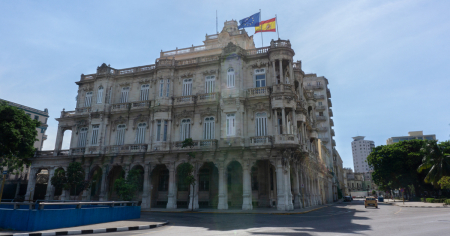
The new online appointment system of the Spanish Consulate in Havana, as part of the Democratic Memory Law (LMD), has been introduced as an efficient solution for managing nationality applications. However, a well-known lawyer warns about how the limitations imposed by ETECSA could become yet another obstacle course for Cubans seeking Spanish nationality.
The lawyer and director of the immigration group Aristeo, Estela Marina Pérez Cabrera, issued a serious warning through her social media, alerting about the challenges the Cuban population will face in accessing the new digital platform of the Spanish Consulate.
“The new system will be launched on June 23 and has a good internet connection, because it’s not just about sending an email, it’s about accessing a platform where you need to fill in data and upload documents. That platform, which is already in use in Miami and in professional offices, requires high connectivity,” explained Pérez Cabrera on his social media.
The documents uploaded to the platform must meet certain specifications; otherwise, they cannot be easily attached, which consumes a lot of connectivity time for those who are not accustomed to working on that website.
The lawyer recommended scanning the documents and converting them to PDF format, following the instructions of the platform so that users can properly upload the files related to their cases and successfully request appointments.
The main concern is that the platform requires real-time interaction, file uploads, and stable browsing—conditions that are not always met in Cuba due to high prices, slow speeds, and restrictions on internet access controlled by the state operator ETECSA.
This situation is compounded by the recent changes announced by the Consulate, which on June 23rd will eliminate all user credentials for those who have not yet scheduled an appointment. From that date forward, access to appointments will only be possible through the new platform.
The news has generated anxiety among Cuban applicants, many of whom rely on relatives abroad to secure their appointments due to the instability of the connections on the island.
The consulate assures that this change aims to improve service and will allow scheduling appointments until October 22, 2025, but the implementation comes at a time when the Cuban government has begun to impose new rates for mobile phone services, something that has yet to show any visible technological improvements.
Cubans who are in the process of obtaining Spanish nationality should keep this detail in mind and hire an internet service that is powerful enough to allow them to complete the digital process within the stipulated timeframe.
The Consulate is also promoting other measures, such as increasing the number of weekly appointments by 336 since May 5, to address the high demand for procedures by descendants of Spaniards on the island.
Despite this, criticism of the management of the diplomatic mission persists, due to alleged delays in appointments, a lack of transparency in the processes, and irregularities in the issuance of credentials.
For thousands of Cubans, embracing the LMD represents not only a historical right but also a legal pathway to emigrate and improve their living conditions outside the country. However, digitization without guarantees of equitable access could turn this opportunity into a new bureaucratic barrier.
As the clock approaches June 23, the Cuban community on the island faces the challenge of navigating a platform designed to operate in more connected environments. Cubans must achieve this from a country where internet access is a luxury.
Frequently Asked Questions about the Spanish nationality process and the situation in Cuba
How does ETECSA affect the new appointment system of the Spanish Consulate in Havana?
The limited and costly access to the Internet in Cuba, controlled by ETECSA, could hinder the use of the online appointment system at the Consulate of Spain, which is necessary to process Spanish nationality under the Law of Democratic Memory. The platform requires a stable connection to upload documents and browse, conditions that are not always met on the island.
When will the new appointment system of the Spanish Consulate in Havana be implemented?
The new appointment system will be operational starting June 23, 2025. From that date forward, users will need to utilize the new digital platform to book their appointments, as the credentials for the old system will be removed.
What measures has the Consulate of Spain taken to improve services in Cuba?
The Spanish Consulate in Havana has increased the number of weekly appointments by 336 since May 5 to address the high demand for nationality procedures. Additionally, an electronic Civil Registry system has been implemented to facilitate the acquisition of certificates digitally.
Until when can applications for Spanish nationality be submitted under the Law of Democratic Memory?
The deadline for submitting new applications is October 22, 2025. However, those who secure an appointment before that date will be able to complete the process even beyond 2025, as long as they have correctly initiated the procedure within the legal timeframe.
Why is Internet connectivity crucial for the Spanish nationality process in Cuba?
The process of obtaining Spanish nationality requires uploading documents and filling out forms online in real time. This demands a stable and fast Internet connection, something that is limited and expensive in Cuba due to the restrictions imposed by ETECSA, complicating citizens' access to the digital process.
Filed under: