Negotiations between Russia and Ukraine to reach a ceasefire are once again at a standstill following a brief meeting held on Monday in Istanbul.
The meeting, which lasted barely half an hour, was interrupted by the severe conditions imposed by Moscow, which international analysts have termed a "maximum demand," far from a realistic resolution to the conflict.
The Russian delegation, led by the former Minister of Culture and advisor to the Kremlin, Vladimir Medinski, presented a memorandum outlining political, military, and territorial demands that Ukraine should accept for Russia to agree to a ceasefire.
Among the most controversial points is the complete handover of the territories occupied by Russia—Crimea, Donetsk, Luhansk, Zaporizhia, and Kherson—and the immediate withdrawal of all Ukrainian troops defending them.
Furthermore, the Kremlin demanded that Ukraine formally renounce joining NATO or any other international military alliance, significantly reduce the size of its Armed Forces, and dissolve the battalions that Moscow labels as "nationalist."
He also requested the holding of elections under Russian supervision before signing a definitive peace agreement, once again highlighting Vladimir Putin's unhealthy animosity towards Ukrainian leader Volodimir Zelenski.
In the diplomatic and economic sphere, Russia demanded the complete lifting of the sanctions imposed by Ukraine and its allies, as well as the restoration of Russian gas transit through Ukrainian territory. At the same time, it insisted that Kiev abandon all intentions of claiming compensation for the damages caused during the war.
The memorandum also included sociocultural conditions, such as the recognition of Russian as an official language in Ukraine and the rehabilitation of the Orthodox Church subordinate to the Patriarchate of Moscow.
In terms of international security, Moscow proposed an explicit ban on the presence of foreign troops on Ukrainian soil and the signing of an agreement that would prevent the development, acquisition, or deployment of nuclear weapons.
The response from Ukraine was swift. The Ukrainian Minister of Defense and head of the delegation, Rustem Umérov, expressed regret that Russia presented its list of demands only at the start of the meeting. "We shared our positions in advance, hoping for reciprocity in order to move towards concrete outcomes," he stated.
Ukraine, which is seeking a ceasefire of at least 30 days as a step towards advancing a broader peace process, announced that it will officially respond to the Russian proposals within the next week.
Among its own conditions, Kiev has reiterated its demand for the return of children abducted by Russian forces, the immediate release of prisoners, and the unconditional cessation of hostilities.
For his part, Zelensky reiterated his request for a face-to-face meeting with Putin to personally discuss the key issues of the conflict, but Moscow has already responded that such a meeting will only be possible once the delegations reach substantial agreements.
In that regard, Umérov reiterated that peace cannot be negotiated under conditions imposed by the aggressor and urged the international community to intensify pressure on Moscow to prevent the process from becoming a diplomatic facade without real commitment.
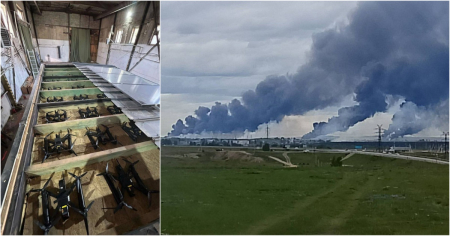
The Istanbul meeting comes at a time of heightened military tension. Just one day earlier, Ukraine carried out a drone operation that destroyed one third of the Russian strategic bomber fleet, which has been considered the most successful attack in Russian territory since the onset of the invasion in 2022.
Moscow responded on Monday with new bombings in the Kharkiv region, leaving at least six people injured, including a minor.
Meanwhile, international mediators from France, Germany, and the United Kingdom are trying to facilitate dialogue, although they acknowledge that the positions remain deeply divided. Turkey, the host of the process, has expressed its willingness to continue as a neutral venue in search of a diplomatic solution to the conflict that has already surpassed three years.
Despite the firmness of Russia's demands, some observers caution that they may be framed as a starting point for future negotiations, in which Moscow would be willing to moderate its requirements in exchange for strategic concessions. However, on the ground, the war continues with no clear signs of a lasting truce.
Filed under: