
Related videos:
Amid a growing climate of tension in Cuban universities due to the rejection of new fees imposed by the state telecommunications company ETECSA, the Provincial Coordination Secretary of the University Student Federation (FEU) of Havana, José Alberto Almeida Cabrales, asserted on Wednesday that the student movement will not lead to chaos.
In a lengthy statement shared on social media, Almeida defended the path of consensus and structured debate within universities.
While it was asserted that "no Council of the FEU of the Universities of Havana has agreed to undertake actions other than those aimed at dialogue," the statements signed by faculty councils of the FEU itself support the teachers' strike and peaceful protests, particularly at the Faculty of Mathematics and Computing (MATCOM).
“We are revolutionaries. We want peaceful solutions that include everyone. The FEU will never allow trivial disputes among its members to be encouraged,” stated the leader, apparently in response to the growing student strikes and public statements from various faculties.
Almeida said on Facebook that they have heard "a lot, a lot" from different perspectives on campus, but he emphasized that his role is to represent the will of the majority within the formal bodies of the organization.
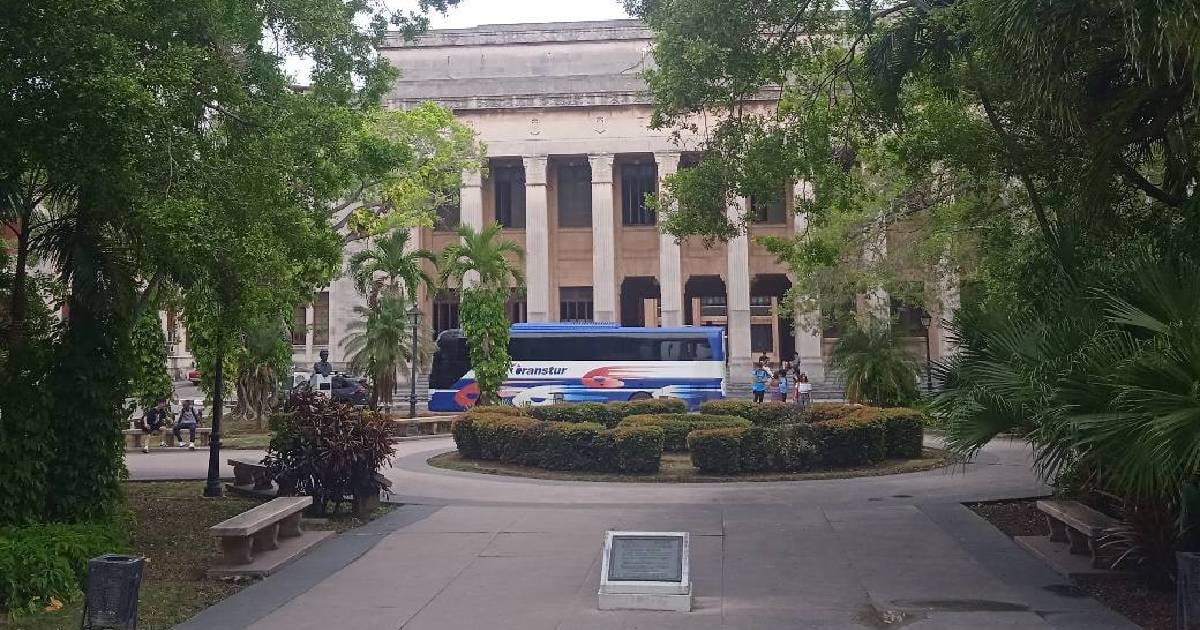
Meanwhile, in a post, the University of Havana warns that it will not tolerate strikes and reaffirms its loyalty to the PCC. Additionally, it sought to portray a climate of normality on social media by publishing photographs of academic events such as the graduation of pre-university students in the Aula Magna.
The images contrast with testimonies that point to a tense and semi-empty atmosphere in the university hallways.
This is complemented by a report from CubaNet, whose journalists observed a significant decrease in class attendance, the presence of alleged State Security agents on campus, and the suspension of teaching activities to hold ideological talks.
In a recent assembly held at the University of Havana, students reiterated their decision to continue the strike due to the lack of concrete solutions from ETECSA.
The meeting, which included representatives from the state-owned company, was criticized for its restrictive format, which limited the participation of numerous faculties.
"We will not attend classes until there is a respectable proposal," a student stated during the meeting, summarized on social media by the group Reclamo Universitario. "We are not vulnerable; it is their measures that make us vulnerable," another added.
The student movement has called into question not only the rates of ETECSA but also the representativeness of official youth organizations, such as the national FEU.
In fact, Humanities students have demanded the resignation of Ricardo Rodríguez González, the national president of the FEU and a member of the Council of State, due to his proximity to the government’s discourse and his inaction regarding grassroots demands.
Despite attempts to channel the protest into controlled avenues, the students assert that the strike will continue until the true needs of the people are heard and addressed.
Frequently Asked Questions about the Student Protest in Cuba and ETECSA Fees
Why have student protests against ETECSA emerged in Cuba?
The student protests in Cuba have arisen due to the increase in fees imposed by ETECSA, which restricts access to the internet in national currency and favors offers in foreign currencies. Students believe that these measures impact their academic performance and their right to equitable access to information and communication.
What has been the stance of the FEU regarding the student protests?
The FEU has maintained a stance aligned with the Cuban government, rejecting strikes and accusing "enemies of the Revolution" of manipulating student discontent. Although they have participated in dialogues with ETECSA, many students criticize their lack of representativeness and demand reforms within the organization.
What measures has ETECSA taken in response to the students' criticisms?
ETECSA has announced an additional package of 6 GB for 360 CUP exclusively for university students, along with free access to more than 40 educational sites. However, students consider this measure insufficient and are calling for a comprehensive review of the pricing policies.
What are the main demands of Cuban students in these protests?
Cuban students are demanding equitable access to the internet for all citizens, not just for university students, and criticize the lack of horizontal and transparent dialogue with the authorities. They also call for the revocation of the new ETECSA tariffs and the resignation of student leaders who do not represent their interests.
Filed under: