U.S. airlines operating flights to Cuba are facing a new landscape of uncertainty following the recent proclamation by President Donald Trump, which restricts the entry into the United States of citizens from several countries, including Cuba.
The presidential order, signed on June 4 and effective next Monday, June 9, does not directly prohibit flights, but undermines the viability of many routes. If Cubans cannot enter the United States with the most common types of visas, the demand for tickets will decrease, forcing airlines to cut frequencies or suspend operations, as already happened in 2023 with JetBlue and Delta.
According to the analysis by Cirium, cited by Forbes, over 12,800 flights were scheduled this year between Cuba and the U.S., with more than 2 million seats available, especially during the peaks in March and December. However, this landscape could change dramatically if the new immigration policy of the president becomes established.
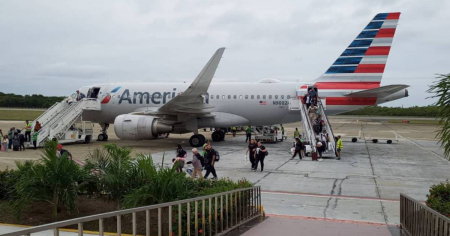
American Airlines, with nearly 9,300 flights scheduled in 2025, is the airline most exposed. From Miami, it flies to six Cuban cities, including Havana. Delta, Southwest, and United Airlines also operate more limited routes. However, all could be forced to reassess their operations if demand collapses, as already happened in 2023.
Although the restrictions have not yet resulted in immediate changes to the flight options, the fear is already palpable. For many Cubans, the flight that connects Havana with Miami or Houston is not just a flight, it also represents a bridge to family, a reunion, the chance to start a new life.
The new measures evoke what happened in 2023, when JetBlue completely suspended its flights to Cuba and Delta and United reduced their routes due to low demand generated by regulatory changes.
If Trump's policy progresses and further restricts access to visas for Cubans, it wouldn't be unreasonable to consider a similar scenario for 2025.
For now, airlines remain cautious. But recent history suggests that, when immigration restrictions tighten, flights are often the first to be affected.
What will happen with the flights in December?
December is traditionally the month with the highest volume of travel between Cuba and the U.S., when thousands of families plan to reunite for the holidays.
With over 183,000 seats planned, airlines like American Airlines and Southwest have high expectations. However, with Trump's new policy, many of those seats might remain empty.
For Cubans both on and off the island, the message is clear: migration policy remains a minefield that directly impacts their lives. And every announcement, every restriction, every canceled flight feels like another barrier on a journey that is already quite challenging.
Context and possible consequences
The measure, which directly affects holders of B-1/B-2 visas (tourism and business), F, M, and J (students and exchange), threatens to disrupt air traffic between the island and the United States and put on hold the dreams of family reunification for thousands of Cubans.
The text signed by Trump on June 4 justifies the exclusion of Cubans by considering them part of a “State Sponsor of Terrorism” and highlighting a high rate of visa overstays by travelers from the island.
Specifically, the measure suspends the entry of Cuban citizens under B-1/B-2, F, M, and J visas, and instructs consular officials to reduce the validity of any other non-immigrant visa issued to Cuban citizens.
The White House assured that the new restrictions include exceptions for legal permanent residents, individuals with valid visas, or those whose entry is deemed to be in the national interest, but the practical implications remain uncertain.
This decree recalls the "migration bans" from Trump's first term, which were widely criticized for their disproportionate impact on vulnerable communities and considered discriminatory.
Filed under: