The already routine power outages are once again spreading across Cuba just as summer begins. Almost half of the country is left without electricity for several hours a day, at a time when the heat intensifies and social unrest escalates. The regime has failed to reverse the energy crisis: the deterioration of thermal power plants, the lack of fuel, and no investment keep the country in darkness. In Havana, electrical interruptions range from 4 to 7 hours daily, while in other provinces, outages extend up to 20 hours.
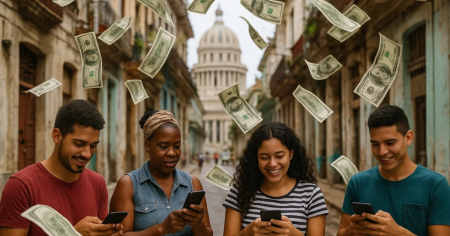
In parallel, there is another blow to the wallet and connectivity: ETECSA imposed a price hike in May that increases and partially dollarizes access to the internet. From now on, Cubans can only purchase 6 GB for 360 CUP before being forced to pay in foreign currency. With the minimum wage set at 2,100 CUP, even working a full month is not enough to ensure a few days of basic connection.
The impact is devastating. Thousands of people who used their phones to get information, study, or communicate during the blackouts will now also be cut off. The gap between those who receive top-ups from abroad and those who do not is growing ever wider. “It’s a digital apartheid,” many users complain, forced to choose between food or connectivity.
Indignation was swift. For the first time in years, university students from various faculties came together in a coordinated protest, declaring academic strikes and demanding a reversal of the tariff hike. The mobilization, which began at the Faculty of Mathematics and Computer Science at the University of Havana, quickly spread to others such as Psychology, Philosophy, History, Engineering, and to centers in provinces like Villa Clara.
They were not street protests nor were they massive like those on July 11, 2021, but they were significant due to their origins within public universities, led by young people who grew up under the system and are now firmly claiming their rights. The protest for internet access revealed a deeper discontent related to daily hardships: no electricity, no water, no transportation, no food.
The regime, instead of correcting course, insisted that “nothing and no one will interrupt” the school year. Miguel Díaz-Canel justified the increase by claiming that without fresh foreign currency, the telecommunications system would collapse. In other words, he acknowledged the state’s bankruptcy and shifted the burden onto the citizens. With empty words, he said he did “not wish” for the measure, but deemed it “inevitable,” as if the people had any alternative.
In 2025 so far, the island is experiencing a rapid decline: longer lines, empty stores, widespread blackouts, digital disconnection, censorship, and hopelessness. While the elderly sweat in the dark, the youth are losing the few opportunities left to them. Without light, without internet, and without a future, Cubans face a summer that will be not just warm, but bleak and silent. The regime continues to steal time, rights, and dignity from a people weary of merely surviving.
Filed under:
Opinion article: Las declaraciones y opiniones expresadas en este artículo son de exclusiva responsabilidad de su autor y no representan necesariamente el punto de vista de CiberCuba.