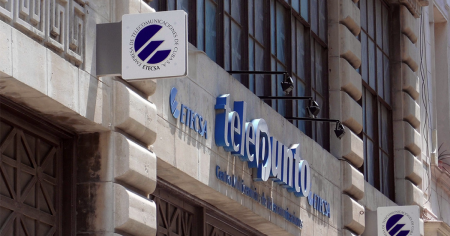
A Physical Culture student reacted to the price hike by voicing the exhaustion of Cubans in the face of the eternal rationing of products and services.
“We need to move away from the Cuban logic of ‘I ration the things for you’ and [we] have to endure it. It’s unacceptable; we are tired of rationing. Moreover, rationing that is increasingly becoming less prominent,” said the student from the University of Physical Culture and Sports “Manuel Fajardo” in Havana, according to the video shared by San Memero.
"Now we have to accept that you can only transfer 360 pesos to your mobile if you have a bank account (...) You work for the state sector, you have your bank account, you have your line, you have everything in order, and yet they limit you. That goes against individual freedoms," the young woman added.
The student further questioned why ETECSA modifies the rates for state-owned enterprises but not for students.
In recent days, videos have gone viral featuring frustrated students confronting officials unable to address their grievances during the assemblies called by the State to quell discontent.
A medical student stood out last Thursday for his eloquence in rejecting the measures.
"They are limiting our internet as a company, as a monopoly, because this is the only company we have in Cuba. I would like them to explain to me again how I can have credit if I cannot recharge from abroad. Because I can have 10,000 pesos in credit and recharge all the 360 pesos packages I want, but... How do I obtain that credit?" he asked.
The academic strike in Cuba began on June 4 and is spreading across universities throughout the country, with its epicenter at the University of Havana. The response from the ruling Miguel Díaz-Canel has been clear: There will be no reversal of the rate increase.
The student movement shaking Cuban universities demands fairer fees and equitable connectivity. The atmosphere of dialogue, proposals, and agreements described by the regime's spokespersons stands in stark contrast to the response videos going viral from these assemblies.
Frequently Asked Questions about the ETECSA Rate Increase and Student Protests in Cuba
Why are Cuban students protesting against ETECSA?
Cuban students protest against ETECSA for the increase in telecommunications service fees, which they consider unjust and restrictive. These fees limit access to the internet, an essential resource for their education and communication. The student movement demands fairer rates and equitable access to information and communication technologies, as the new measures have drastically raised the cost of mobile data services, making it difficult to meet their academic responsibilities.
What measures has ETECSA taken that have generated so much discontent?
ETECSA has imposed a limit on top-ups in the national currency to 360 Cuban pesos per month, forcing customers to pay high prices for additional packages or to resort to plans in dollars. This has generated strong opposition as many Cubans do not have access to foreign currency nor receive remittances, and these rates far exceed the average salary on the island. Additionally, access to the internet has become an unattainable luxury for many, impacting their academic and professional lives.
What has been the Cuban government's response to the student protests?
The Cuban government has taken an inflexible stance and made it clear that there will be no reversal in the increase of rates. Miguel Díaz-Canel has stated that these measures are necessary to maintain service and avoid a technological collapse. Despite the protests, the government insists that unpopular decisions are essential for future progress and has accused students of being manipulated by a supposed "media war" orchestrated from abroad.
How does ETECSA's rate hike affect education in Cuba?
The rate hike by ETECSA severely affects education in Cuba by limiting internet access, which is crucial for research and study. Students rely on connectivity to access bibliographic sources, communicate with tutors, and complete academic projects. The data restrictions and high cost of additional packages directly impact their ability to meet educational responsibilities, affecting their academic performance and professional development.
Filed under: