
Related videos:
A medical science student in Havana questioned during a meeting with university authorities and ETECSA executives the official discrediting of student statements.
"Comrade, the letter was not fake news, the letter was written by the student body sitting here," is heard saying the student amidst general acclaim.
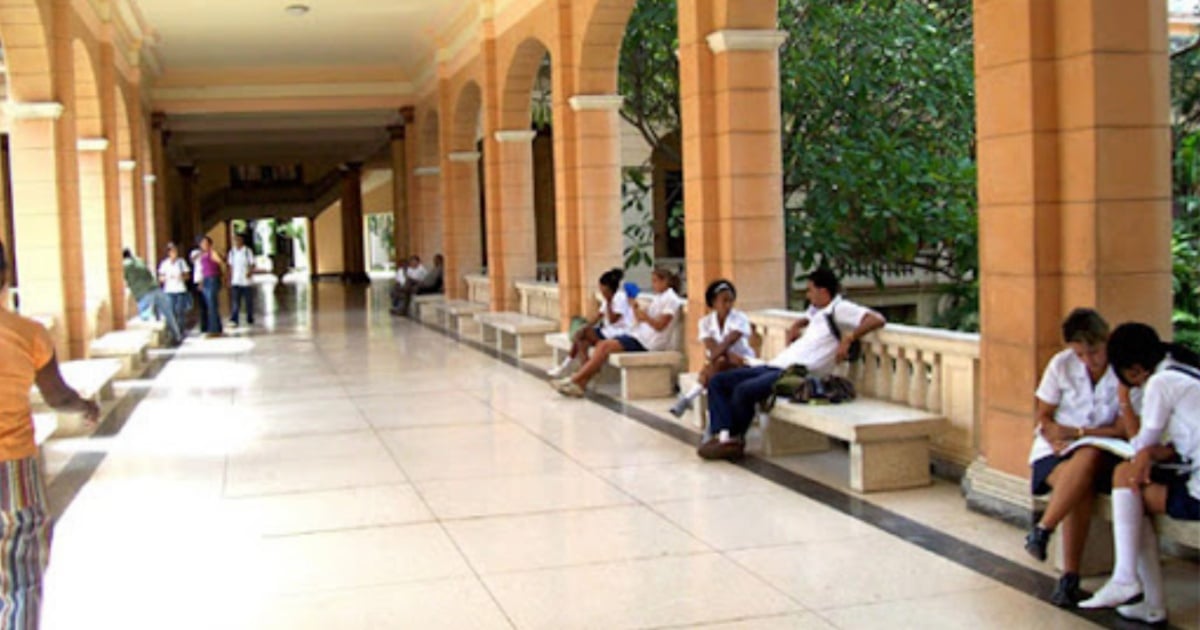
The audio was obtained by the independent outlet Árbol Invertido from the meeting of students at the Victoria de Girón University of Medical Sciences in Havana, held on June 5th.
"Let me see, it's with our efforts, with the efforts of the parents, and many of those here are working, because this one here is out and about at any time of day, so how can they tell me that you can only consume 6 gigabytes, and now they’re going to give you 12, they’re going to give you 6 more. And on top of that, you have to be grateful for it! That’s not right!" was heard from this student earlier.
The Cuban regime has tried to discredit the existence of a movement of university students ready to confront the new rates imposed by the state company ETECSA.
"Despite calls from abroad to create an atmosphere of chaos and discouragement in the university environment, the teaching process continues to develop," declared journalist Talía González on the National Television News (NTV), reiterating the official narrative that insists on normalcy within the classrooms.
But as the days went by and the evidence became undeniable, the official narrative has had to start backtracking.
On Saturday, official spokespersons Arleen Rodríguez Derivet and Bárbara Betancourt denied the student protest against ETECSA's rate hike and blamed independent media for spreading "textbook fake news," but they had to acknowledge the dissent and the student statements.
During Chapeando Bajito, a podcast from Cubadebate, the spokespersons stated that “everything has been directed through institutional dialogue.”
“Once again, fake news is raining down. What has happened in the last few hours has been a genuine war operation, only comparable to the invasion of lies on July 11,” they complained.
The atmosphere of “dialogue, proposals, and agreements” described by the spokespersons contrasts with the viral videos circulating on social media showing disgruntled students confronting officials unable to address their demands.
The academic strike in Cuba began on June 4 and extends across universities nationwide, with its epicenter at the University of Havana. The response from the ruler Miguel Díaz-Canel has been clear: There will be no reversal of the rate increase.
The student movement shaking Cuban universities demands fairer fees and equitable connectivity.
Frequently Asked Questions about the Student Protests Against ETECSA's Tariff Hike in Cuba
Why are Cuban students protesting against ETECSA?
Cuban students are protesting against the new ETECSA fees because they believe these measures restrict their access to the internet, a crucial resource for their academic and personal development. They report that the fee increase imposes a limit on top-ups in local currency and forces the purchase of additional packages in dollars, which creates inequality and affects their right to information and communication.
How has the Cuban government responded to the student protests?
The Cuban government, led by Miguel Díaz-Canel, has rejected the student demands and denied that there is an academic strike, accusing students of being manipulated by external media. The official position is that there will be no reversal of the rate increases, arguing that these are necessary to maintain the telecommunications service in the country.
What role does the University Student Federation (FEU) play in these protests?
The University Student Federation (FEU) has issued statements rejecting the new rates from ETECSA and has supported the student protests. However, some students criticize the FEU for not representing their true interests and are demanding the resignation of the national president of the FEU, Ricardo Rodríguez González, for aligning with the government instead of with the students.
What has been the reaction of independent media to this conflict?
Independent media have supported student protests, sharing videos and statements that showcase the students' discontent. They have criticized the government for trying to discredit the protests as "fake news" and have emphasized the importance of equitable access to the internet as a fundamental right for all Cubans.
Filed under: