
Related videos:
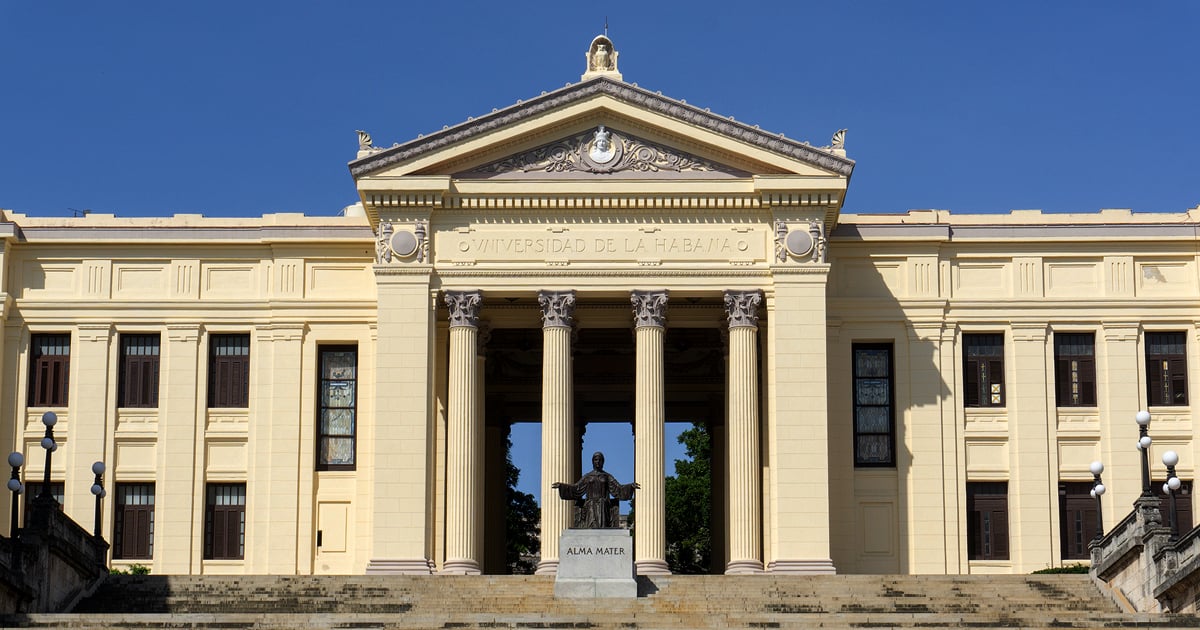
The Faculty of Mathematics and Computer Science (MATCOM) of the University of Havana announced this Monday the cancellation of the teaching strike that began on June 4, after receiving concrete commitments from the Ministry of Higher Education and the Telecommunications Company of Cuba (ETECSA).
The decision was made following a voting process at the brigade level, in which 51% of the student body (173 votes in favor, 82 against, and 25 abstentions) chose to return to classes starting this Monday, June 9th.
The strike was called in protest of the commercial measures announced by ETECSA on May 30, particularly due to the monthly limit on national top-ups and the increase in mobile data access costs, which the students consider a direct attack on the Cuban people.
An unprecedented strike in terms of its organization and scope
The original call for the strike was the result of a democratic and structured process within the faculty, driven by the Council of the University Student Federation (FEU) of MATCOM.
In an initial vote, 60% of the student body (205 out of 341) supported ending in-person classes as a peaceful way to express their disagreement with ETECSA's policies.
During the strike days, the students held meetings with professors, university officials, and representatives from the Ministry of Higher Education.
The assemblies served to consolidate a critical yet collaborative stance, aimed at proposing viable technical solutions, and demanded transparency and participation in the redesign of the rates.
Commitments and new roadmap
On Friday, June 6, the Faculty welcomed the visit of the Minister of Higher Education, Walter Baluja García, who committed to conveying student concerns to the highest levels.
As part of the institutional response, the creation of a multidisciplinary group was officially announced, consisting of students and specialists from eight faculties at UH, who will work alongside ETECSA in reviewing the tariff model.
This group will begin its work this week and represents, according to the FEU of MATCOM, a legitimate avenue to continue the dialogue without disrupting the educational process. “We value other mechanisms to guide us toward a solution without hindering the dialogue,” stated the student organization’s announcement.
Ongoing demands and latent skepticism
Despite the return to classrooms, the FEU Council insisted that the underlying concerns have not been addressed.
In that regard, they requested a public explanation from ETECSA, with concrete and verifiable data, justifying the need for the new rates. They also proposed extending the limit on national top-ups, currently set at 360 CUP, and the urgent creation of more affordable alternative plans.
"The people trust us with these spaces," expressed a student during the preliminary assemblies. This vision was echoed by students from other faculties who also joined similar protests, such as the Faculty of Communication in Holguín and CUJAE in Havana, solidifying a national movement against ETECSA's unilateral decisions.
Autonomy and a clear message
The MATCOM FEU Council defended the authenticity and autonomy of the student movement, warning against the partial or distorted use of its messages by external actors.
Their Telegram channel was restricted to prevent manipulations and preserve the integrity of the internal debate.
"We trust that our specialists will provide the best possible solution," the statement concluded, expressing gratitude for the support from the faculty and the University Administration.
The end of the strike does not mean conceding to the demands, but rather a change of strategy: to continue applying pressure from the negotiation table, with technical and civic proposals, for a fairer and more democratic access to telecommunications in Cuba.
Pressure from the regime after the reversal?
Although the official statement from MATCOM highlighted consensus and institutional support as the driving forces behind the change in stance, numerous observers are left wondering whether a strong pressure from the Cuban regime and its State Security agents lies behind the decision, given their historically consistent and effective presence in university environments.
The hypothesis is not far-fetched. This very weekend, students from the Central University “Marta Abreu” of Las Villas (UCLV) reported being threatened with expulsion and imprisonment for organizing a similar strike.
According to journalist Mario J. Pentón, the young people were visited at their homes by State Security officials and forced to publicly retract their statements in student WhatsApp groups, under pressure in front of their families.
In that context, MATCOM's shift may have been motivated, at least in part, by similar mechanisms of deterrence and control, especially following the national media impact generated by its initial call.
The removal of the Telegram channel and the insistence that the message be reproduced "in its entirety and respectfully" could also be interpreted as signs of an institutional containment strategy.
The "condemnation of all social media accounts and press outlets that used our genuine words as part of their own narrative, unrelated to our intentions and motivations," also suggests possible intervention by State Security in drafting the text of the statement.
Full text of the statement:
Havana, June 8, 2025
Year 67 of the Revolution
To whom it may concern:
The Council of the FEU of MATCOM, in response to the dissatisfaction expressed regarding the commercial measures announced on May 30, 2025, by the Telecommunications Company of Cuba (ETECSA), and the inadequate policy of communication and public consultation, particularly during the dialogue that took place on June 3 and in their television appearances, where the demands of the university students were not addressed, called for a discussion and consultation process at the brigade level.
As a result of the process, with 205 students in favor (60%), 27 against, and 24 abstentions, out of a total of 341 students, the FEU Council of MATCOM called on the student body of the Faculty to stop attending in-person classes starting Wednesday, June 4, 2025, as a form of protest, considering this the most peaceful and controlled way to express and uphold our position. The call was read in the Patio of the Laurels of the Felipe Poey Building at the University of Havana, where our Faculty is located, in front of an audience of students and professors, and was later shared on our official channel on Telegram.
Due to the media impact of the call to action message, it was decided to make the channel private and detach it from its discussion group to protect ourselves from misunderstandings and misrepresentations by individuals outside our Faculty, as well as to preserve the integrity of that internal space. We condemn all social media accounts and press outlets that have used our genuine words as part of their own narratives, which are unrelated to our intentions and motivations.
We validate and respect the positions taken by all the faculties, both at our university and at other universities in the country. We thank everyone who supported our paths and proposals; the faculty of our department, which stands by and defends our interests and motivations, from the perspective that impacting the teaching process is not the best way to address the issue; and the university administration, which has responded to our demands with understanding and a willingness to help.
The days of June 4th, 5th, and 6th were filled with discussions and impactful meetings with teachers, students, and administrators, where we consistently made our positions and demands clear, as well as our full willingness to be part of the search for a solution that would mitigate the social impact of ETECSA's new rates without compromising the company's economic and financial recovery. We reaffirmed that we are not satisfied and will not be satisfied with sectoral solutions that do not address all those affected by the measures.
Considering that:
We understand the need to leverage the quality of our faculty and the importance of maintaining the teaching process in our School, which is in its final stage and requires even more of our time and attention.
We value other mechanisms and actions to guide us toward a solution without hindering the dialogue we will continually maintain with the authorities of the University and the country in the days ahead.
On Friday, June 6, 2025, we received a visit from the Minister of Higher Education, Dr. Walter Baluja García, with whom we had a discussion that left us with his commitment to address our concerns and suggestions at the highest level.
We learned that the call for the formation of a multidisciplinary group, consisting of specialists and students from eight faculties of the UH, including ours, has been made official. This group will assist ETECSA in analyzing the company's current economic situation and in reevaluating the design and application of measures.
After conducting a consultation process at the brigade level, ensuring above all unity in our stance, with 173 votes in favor (51%), 82 against, and 25 abstentions, we have decided to call on our students to return to the classrooms starting Monday, June 9, 2025. Meanwhile, we await the commencement of the work of the multidisciplinary group, scheduled for this coming week (from June 8 to 14, 2025), and we are considering a way to express our discontent and concerns that does not directly impact teaching.
We believe that the critical situation described by the company on multiple occasions has yet to be validated with real and convincing data, nor has any short-term measures been implemented to facilitate connectivity while working on finding real solutions. Therefore, we insist on conducting a clarifying broadcast on national television where the study supporting the implementation of these measures can be presented, and to extend the limit for national top-ups, which is currently set at 360 CUP, or to promptly design and activate more accessible "Extra" plans for the population.
We thank our students for the strength and determination shown during these unusual days, as it fills us with pride to represent such capable, revolutionary young people who are invested in the future of Cuba. We trust that, with the necessary information, our specialists from the University of Havana and other universities in the country will be able to provide the best possible solution to the problem currently faced by ETECSA, ensuring the people's right to free access to information and communication technologies.
Sincerely,
Council of the FEU of the Faculty of Mathematics and Computer Science at UH
Approved on June 9, 2025, at 12:15 AM
The authors of this text authorize its publication or reproduction in any media outlet or social network only if it is done in its entirety and respectfully with all the ideas presented in it.
Filed under: