
Related videos:
The energy crisis in Cuba continues to produce images that, in the 21st century, seem inconceivable: Cubans sleeping on the roofs of their homes to endure the constant blackouts.
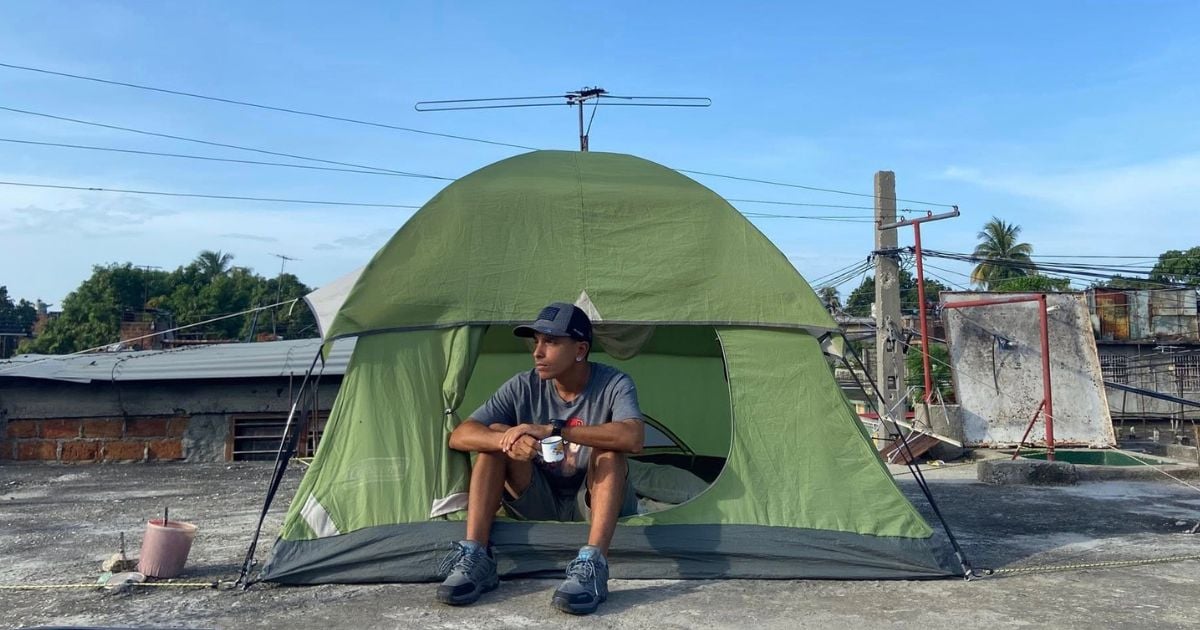
One of those testimonies was shared this Wednesday by young audiovisual creator Daniel Ross Diéguez, a resident of Guantánamo, who posted on Facebook that he has been “camping” on the roof of his home for almost a month, trying to rest amid darkness, stifling heat, mosquitoes, and even Sahara dust.
"I've been camping on the porch of my house for almost a month now. Trying to sleep despite the blackout, the mosquitoes, and the Sahara dust," he wrote.
He accompanied the message with images of the makeshift tent set up on the rooftop and a photograph of the sunrise he sees from that improvised refuge in the heights.
The young man reported that, after weeks of energy shortages, he experienced an "atypical day" in which he enjoyed more than five and a half hours of continuous electricity, which even caused him a sense of disorientation.
"Today, I have experienced over five and a half hours of power outages because every time the clock hits 12:00, it resets. I haven't even had the desire to work on the movie; today's power situation is disorienting, just like it is for many Cubans on the island," he added, alluding to the intellectual consequences of living with constant blackouts.
The post concludes with the hashtag #WeAdvanceByGoingBackwards, an ironic critique that encapsulates the sentiment of thousands of Cubans facing an increasingly unbearable electricity crisis.
For months, prolonged blackouts have been affecting much of the country, especially in the eastern provinces, forcing many families to alter their routines, resting conditions, and basic habits such as cooking or studying.
The image of a young person sleeping on a slab to escape the heat and mosquitoes is not a metaphor: it is a daily reality in today's Cuba.
The energy crisis in Guantánamo has profoundly transformed the daily routine of the population, forcing institutions and families to adopt extreme measures to cope with the lack of electricity.
In the education sector, a children's circle in Baracoa has had to cook with firewood and reduce operating hours to cope with power outages. This situation jeopardizes children's nutrition and increases the workload for educators, who must reorganize their tasks under difficult conditions.
Similarly, in the schools of Artemisa, timings have been adjusted and the use of uniforms has been suspended due to the instability of the electric service.
In the school system, the administration has made drastic adjustments in the organization of teaching staff. Due to the inability to maintain classes at regular hours, alternative shifts and changes of venue have been established to continue with the academic calendar.
These decisions aim to prevent students and teachers from being exposed to extreme heat and the unhealthy conditions caused by the lack of electricity, such as the proliferation of mosquitoes.
Frequently Asked Questions about the Energy Crisis in Cuba
How are power outages affecting daily life in Cuba?
Prolonged blackouts are seriously affecting daily life in Cuba, disrupting basic routines and causing significant emotional strain. The lack of electricity hinders essential tasks such as cooking, refrigerating food, studying, and resting properly. Many families are forced to improvise solutions to cope with the situation, such as sleeping on rooftops to escape the heat or using candles and rechargeable lamps to light their homes.
What alternatives have Cubans found in the face of the lack of electricity?
In the absence of electricity, Cubans have turned to various alternatives, such as installing solar panels, using electric generators, wood stoves, and storing energy in batteries for when there are power outages. Some people have chosen to sleep on the roofs of their houses to escape the sweltering heat and mosquitoes, like the young man Daniel Ross Diéguez in Guantánamo.
What is the Cuban government's response to the current energy crisis?
The response of the Cuban government has been insufficient in the face of the energy crisis. Although drills like Meteoro 2025 have been conducted to simulate disaster preparedness, these actions have been criticized for not addressing the root causes of the problem. While authorities offer excuses such as the economic blockade and issues with thermal power plants, the population continues to endure constant blackouts with no effective solutions in sight.
What impact do power outages have on the economy and well-being of Cubans?
Power outages have a significantly negative impact on the economy and the well-being of Cubans. Electrical instability affects production, food storage, and access to basic services. Furthermore, the cost of energy alternatives such as generators and batteries is prohibitive for many families, exacerbating an already precarious economic situation. The emotional well-being of the population is also affected by uncertainty and the deterioration of living conditions.
Filed under: