
Related videos:
A total of 274 young Cubans are currently studying at 25 universities in Russia as part of a program promoted by the Cuban regime to train cadres ideologically aligned with Moscow, representing a continuation of the bilateral political indoctrination between both governments.
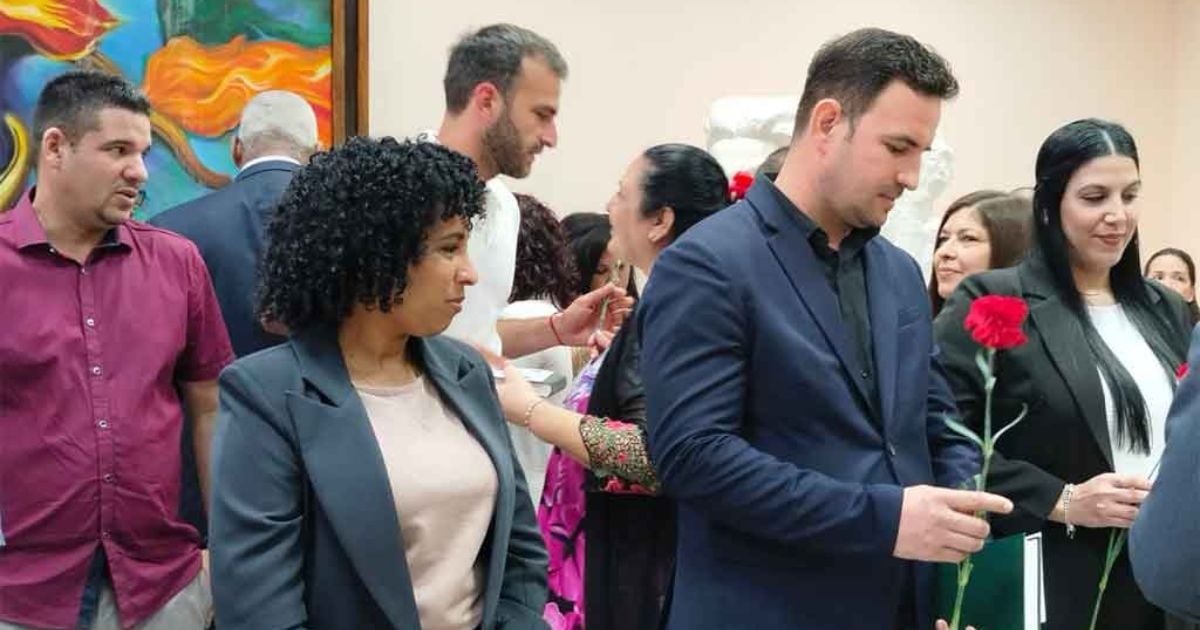
The information was announced during a ceremony held this Saturday at the Cuban embassy in Moscow, where 68 students received diplomas after graduating from 13 Russian universities, reported the official Prensa Latina.
The event was dedicated to the dictator Fidel Castro and the 65th anniversary of the restoration of diplomatic relations between Havana and Moscow, marking a scene of political exaltation and a cult of the revolutionary leader's figure.
Of the active students, 163 are studying in Moscow, 61 in St. Petersburg, and the rest in cities such as Kazan, Ufa, Yekaterinburg, Kaliningrad, and Samara.
According to the Cuban ambassador in Russia, Julio Garmendía, graduates specialize in areas deemed priority by the regime, such as Energy, Environment, Tourism, Transportation, and Agriculture, in line with the Economic and Social Development Program until 2030.
The First Vice Minister of Higher Education, Modesto Ricardo Gómez, who was present at the event, emphasized that this type of training is "strategic" for addressing the country's challenges.
Your statement reinforces the instrumental nature of these scholarships, which not only aim for professional training but also seek to shape the thinking of the future technical and administrative leaders of the system.
The young Yanay Gómez, responsible for reading the graduates' oath, stated that their time at the Russian universities prepared them to "change the way of thinking and acting" in Cuba, a phrase that, in the context of political indoctrination, resonates clearly.
Old methods, new graduates: this is how the Cuban indoctrination operates in Russia
This model of political training under the guise of academia is not new. For several years, young Cubans have been sent to Russia under a framework that reproduces Soviet-style ideological recruitment methods.
However, in September 2024, there was news of a surge of defections among Cuban students in Russia, many of whom cited political pressure, precarious conditions, and covert surveillance.
Similarly, days later it was revealed that sending more young people to Russia was part of a strategy for political and military alignment, rather than academic benefit.
More than 80 professionals from the railway sector participated in training at various educational levels, as part of the collaboration between Russia and Cuba, according to the Minister of Transport, Eduardo Rodríguez Dávila, on his Facebook account.
In January 2025, Moscow expanded the reception of international students as part of its geopolitical agenda, with Cuba among its key allies.
And last April, it was confirmed that Cuban Civil Defense cadets would be trained in Russian military academies, a sign of the strengthening of the ideological and strategic axis between both countries.
Frequently Asked Questions about Cuban-Russian Education and Political Influence
How many young Cubans are currently studying in Russia?
Currently, 274 young Cubans are studying at Russian universities as part of a program promoted by the Cuban regime. This program aims to train individuals ideologically aligned with Moscow, continuing the political indoctrination between both governments.
What areas of study does the Cuban regime prioritize in Russia?
Cuban graduates in Russia specialize in areas deemed priorities by the Cuban regime, such as Energy, Environment, Tourism, Transportation, and Agriculture. These fields are in line with Cuba's Economic and Social Development Program through 2030.
What role does Russia play in the education of Cuban students?
Russia not only provides academic training to Cuban students, but also shapes the thinking of future technical and administrative leaders within the Cuban system. This model of political education under the guise of academia aims to strengthen the ideological alignment between both countries.
What implications does education in Russia have for Cuban students?
The training in Russia involves not only academic learning but also a change in the way students think and act upon their return to Cuba. This reflects the goal of the political indoctrination program that seeks to consolidate the ideological control of the regime over new generations.
Filed under: