
Related videos:
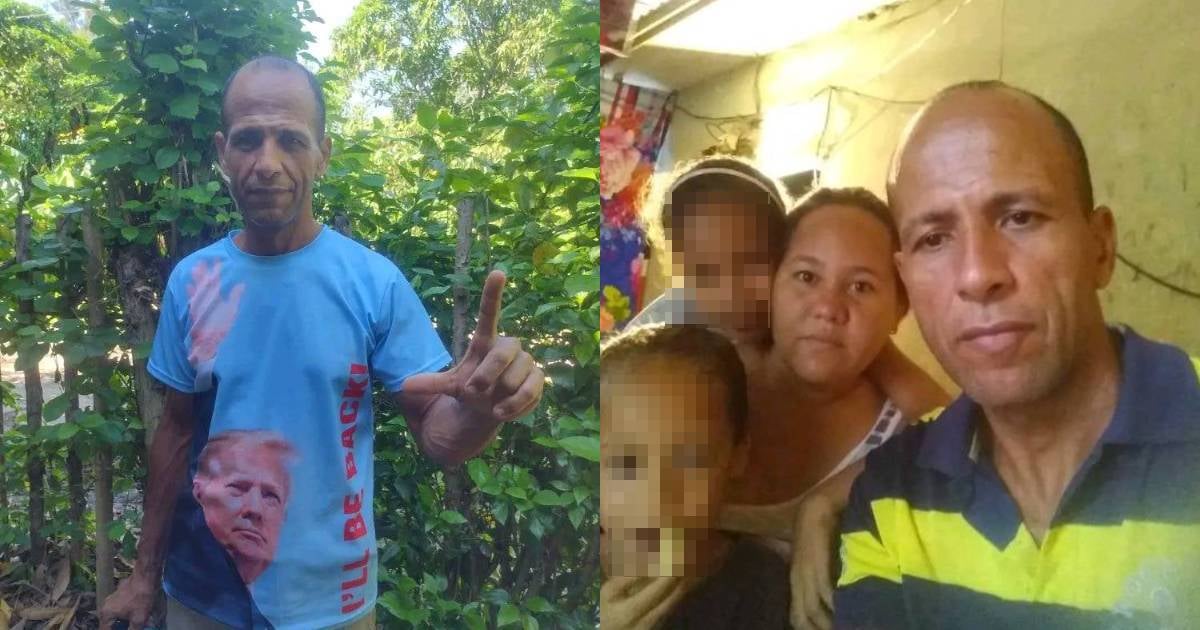
The Cuban Prosecutor's Office has requested a 10-year prison sentence for Alexander Verdecia Rodríguez, an activist and coordinator of the Patriotic Union of Cuba (UNPACU) in the Río Cauto municipality, Granma province. The reason: for having published criticisms of the Cuban government on social media.
The case has generated outrage both inside and outside of Cuba, and has been publicly denounced by his wife, Eliannis Villavicencio Jorge, who shared on social media a snippet of the Prosecutor's document detailing the request for condemnation.
"We are utterly astonished by this number of years. In Cuba, it's considered worse to think differently than to kill someone. This innocent man will be sentenced as if he were a murderer or a criminal, simply for asking for freedom and better living conditions," wrote the wife in an emotional message.
Detained for "expressing oneself"
Alexander Verdecia was detained on February 6, 2025, by the Cuban political police, accused of making posts that, according to the authorities, "threaten the constitutional order". Since that day, he has been held in the provincial prison of Las Mangas in Bayamo.
According to a report -before he was imprisoned again- the national leader of Unpacu, José Daniel Ferrer, stated that the arrest was arbitrary and part of a repressive escalation against opposition activists, in a context of growing public discontent due to the economic crisis and the lack of civil liberties on the island.
"He is imprisoned for posting critical opinions of the regime on social media and for attempting to travel with other activists to the Unpacu headquarters in Santiago de Cuba. He has committed no crime," Ferrer stated to CiberCuba.
Crime of opinion?
The case of Alexander Verdecia once again brings to light the use of the penal system in Cuba to punish political dissent. On multiple occasions, international organizations such as Amnesty International and Human Rights Watch have reported that the Cuban Penal Code is used to criminalize the exercise of freedom of expression, especially when it occurs on digital platforms.
The request for a 10-year prison sentence contrasts with typical cases of serious crimes (such as theft or assault), which usually receive lesser sentences. The message from the system is clear: words can also be seen as a threat when they challenge the established power.
Unpacu and the family members of Verdecia have demanded his immediate release and have urged the international community to raise awareness about the situation of Cuban political prisoners, which continues to increase in number following the social uprising of 11J and the escalating digital repression.
Filed under: