
Related videos:
Juan Bautista dedicated his life to teaching exact sciences in Cuban classrooms and composing songs that never reached a wide audience.
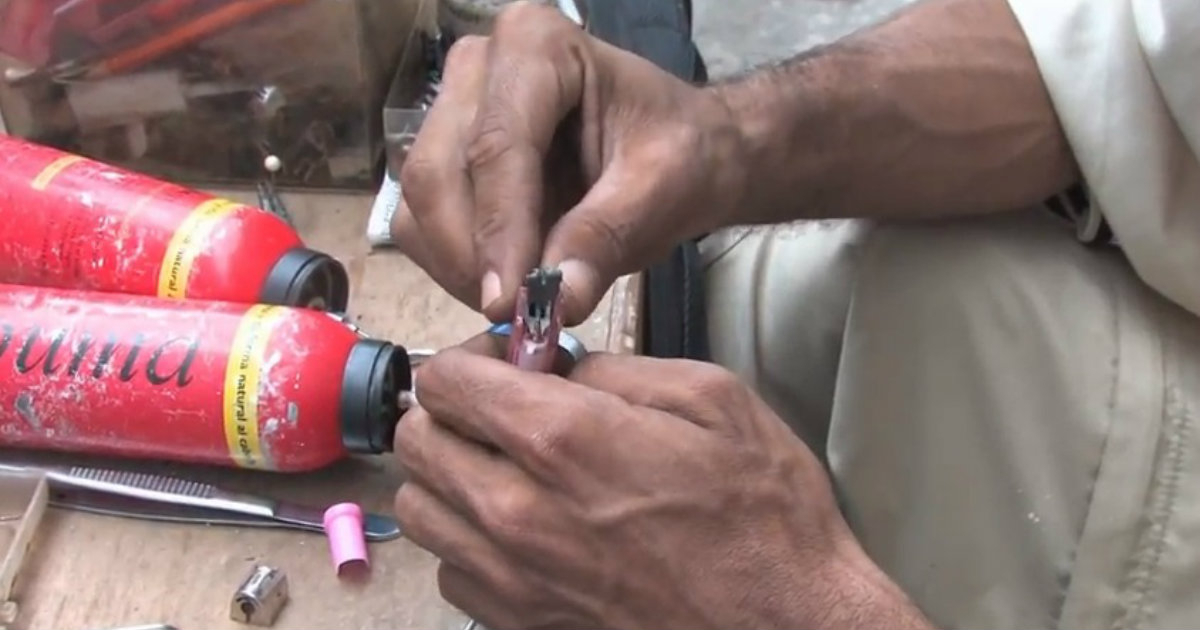
Today, in a Havana worn down by the crisis, he survives by filling matchboxes at a corner in Vedado.
Without a mobile phone, without stable income, and lacking the minimum conditions for a dignified old age, her story was shared on social media by the news portal CubaNet.
"I have a degree in physics and mathematics and I was a teacher for many years. I am also a singer and songwriter, because my hobby has always been music," the elderly man recounted.
“I’ve only been filling matchboxes for a month. I don’t really look for much during the day, to be honest... although right now I don’t have a cell phone because it was stolen from me,” she added with resignation.
Juan's case is not an exception: it is the face of a generation of professionals who, after decades of service to the country, have been condemned to oblivion.
Engineers, teachers, musicians, scientists, and doctors today wander through informality, poverty, and invisibility, lacking resources and recognition.
Her story has moved activist Lara Crofs, whose real name is Yamilka Lafita, who lamented on Facebook that so many brilliant, honest, and hardworking Cubans are living in such precarious conditions today, after having given their best to the country.
He described the testimony as a painful combination of "sadness and dignity," and recalled that Juan Bautista is not alone, but represents many silenced and forgotten Cubans.
For Lafita, what the former professor is experiencing today is not just a personal anecdote, but a broader indictment of "the real Cuba, the Cuba of abandonment, of wasted talent, of dignified yet silenced pain."
He also expressed the hope that the country would one day learn to value its most precious children again and stop condemning them to survive instead of live.
"If you see Juan Bautista in Vedado, don't ignore him," he wrote. "He could have been your teacher. Perhaps, your inspiration. Today he needs us to remember him. Let's extend a hand to him."
In present-day Cuba, old age has become synonymous with precariousness, abandonment, and forced labor. Dozens of elderly individuals are forced to survive by doing street work due to the lack of institutional support.
Such is the case of an elderly Cuban who, without legs, has dedicated himself to farming in Pinar del Río, demonstrating that even disability does not exempt him from striving to earn his livelihood through his own efforts.
Another distressing case is that of a sick man who earns a living as a street vendor, walking the streets in deplorable physical condition. His image generated equal parts outrage and compassion, as it represents many elderly people who continue to work purely out of necessity.
The case of an abandoned elderly man who survives as a street vendor after being evicted from his home has also come to light. He lives without electricity, cooks on the floor, and sleeps in unsanitary conditions while trying to earn some money selling on the streets.
Her story highlights the failure of social protection mechanisms for the elderly.
Poverty, loneliness, and the need to survive also shape the lives of many other elderly people who, as documented in multiple cases, continue to work despite their age and ailments.
Many live alone, in precarious conditions and without the support of their families or the State, relying solely on what they can sell or do on their own.
Frequently asked questions about the situation of Juan Bautista and the crisis of professionals in Cuba
Who is Juan Bautista and why is his story relevant?
Juan Bautista is a graduate in physics and mathematics who dedicated his life to teaching and music in Cuba. His story is significant because it represents a generation of Cuban professionals who, after decades of service, live in precarious conditions and without recognition in a crisis-stricken Cuba.
What problems does Juan Bautista face in his daily life?
Juan Bautista survives by filling matchboxes in Havana without any stable income or decent conditions for his old age. Furthermore, he has been a victim of theft, losing his cellphone, and like many other professionals in Cuba, he faces invisibility and a lack of resources.
How has the community reacted to Juan Bautista's situation?
The story of Juan Bautista has touched many people, including activists like Yamilka Lafita (Lara Crofs), who has expressed her sadness and used social media to highlight his situation. The community has reacted with outrage and solidarity, seeing in him a symbol of the neglect that many professionals in Cuba suffer.
What does Juan Bautista's situation represent in the current Cuban context?
The situation of Juan Bautista is a reflection of the neglect and lack of recognition that Cuban professionals face. In a context of economic and social crisis, his case highlights the precariousness and abandonment experienced by many who have contributed to the country's development.
Filed under: