
Related videos:
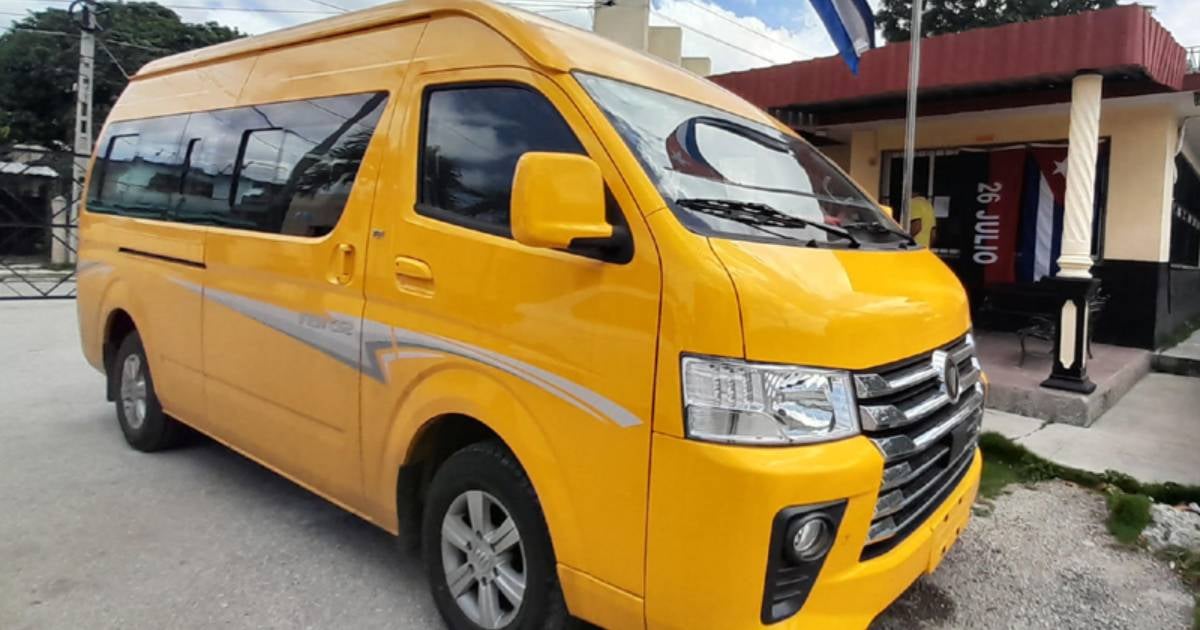
A group of 10 Fotón microbuses, manufactured in China, is set to begin their services in the city of Holguín, which represents a breath of fresh air for the critical state of public transportation in the eastern region.
Each minibus has a capacity for 14 passengers and is equipped with air conditioning, which has been seen as an advancement in "comfort," even though the transportation issue in the province is not about comfort, but rather about access, frequency, and actual coverage.
The media will be operated by self-employed workers or renters and will have a schedule from 6:30 a.m. to 6:30 p.m., although it could extend until 8:30 p.m. at night, if determined by the authorities. As for the fare, it has been set at 20 pesos per segment, reported the official newspaper ¡Ahora!
The itineraries have not yet been specified, although two "main routes" are mentioned, departing from the Las Baleares terminal, located in front of the Major General Calixto García Stadium, an area of high congestion, especially due to its connection with medical appointments.
Five of the minibuses would cover the route from Baleares to the Lucía Iñiguez Clinical Surgical Hospital and the Vladimir I. Lenin General Teaching Hospital, while the other five would make the reverse trip, as explained by Yoel Rodríguez Vázquez, director of the Holguín Taxi Agency, as reported by the media.
The authorities are rushing to have the means operational before June 28, Transporter’s Day, but there is not a single word about price control, service oversight, or how to prevent this measure from benefiting only a few while the rest of the population continues to stand in endless lines under the sun.
In early June, the Ministry of Transportation announced the arrival in Cuba of 100 Fotón model minibuses, intended to strengthen the public transportation system in Havana, which has been facing a critical situation for years.
According to the sector head, Eduardo Rodríguez Dávila, the new vehicles were acquired using funds generated by state-owned export companies in the transportation sector, particularly in civil aviation.
In the case of the capital, they will be managed by the Metrotaxi subsidiary on the 23 capital routes where the Gazelles currently operate.
Starting in July, Santiago de Cuba is set to receive 20 new 14-seat minibuses, with the aim of organizing four main routes for the provincial capital, confirmed the provincial delegate of the Ministry of Transportation, Jaime Codorniú, in a recent conference.
In March, the government acknowledged the collapse of national public transportation, which significantly impacts the population who endure long waits, overcrowded trips, and canceled routes due to a lack of resources every day.
Nationally, more than half of provincial routes were disrupted last year, due to a lack of fuel and spare parts. This situation has caused many Cubans to rely on alternative means of transportation, such as electric bicycles, for their daily commutes.
In Havana, for example, the public transportation crisis has reached a critical point for years, with cancelled routes, vehicles out of service and an increasingly frustrated population, facing long waits and overcrowded means of transportation due to the lack of concrete solutions.
Due to the scarcity of public transportation, the government of Guantánamo decided years ago to lease old buses to self-employed workers, so they could address the technical issues and breakdowns of the vehicles. However, this alternative did not solve the problem, and the crisis persists.
In the case of Las Tunas, traveling from one municipality to another is an obstacle course. The scarcity of fuel, the lack of parts, and structural improvisation have turned inter-municipal transport into a daily odyssey for students, workers, and residents.
Recently, the state media acknowledged that obtaining a ticket to leave Sancti Spíritus has turned into an odyssey characterized by endless lines, inefficient applications, and a system where bribery is more effective than legality.
Since 2021, the government has put into operation the ferrobuses in response to the transportation shortage that particularly affects residents in rural areas of the country, who are often forced to take unsafe or extremely slow vehicles, such as carts.
The official press announced the upcoming sale of 10,000 mechanical bicycles in national currency, as an alternative to alleviate the severe public transportation crisis in the country.
Frequently Asked Questions about the New Microbuses in Holguín and the Transportation Crisis in Cuba
What features do the new minibuses in Holguín have?
The Fotón model minibuses have a capacity for 14 passengers and are equipped with air conditioning. These vehicles are part of an effort to improve the public transportation system in Holguín, which has been affected by issues of access and service frequency. They will be driven by self-employed workers or tenants, operating from 6:30 a.m. to 6:30 p.m., with the possibility of extending to 8:30 p.m.
What is the cost of the fare on these new microbuses?
The fare for the new Fotón minibuses has been set at 20 pesos per segment. However, the exact routes that these vehicles will cover have not yet been specified.
How is the transportation crisis being addressed in other parts of Cuba?
In other regions of Cuba, such as Havana and Santiago de Cuba, different measures have been implemented to address the transportation crisis. In Havana, microbuses have been introduced to replace inactive units, while in Santiago de Cuba, "solidarity transport" is being used, and the arrival of new microbuses is anticipated in an effort to organize main routes. Nationally, the transportation system is facing challenges such as a lack of fuel, spare parts, and a deteriorating infrastructure.
What challenges does the public transportation system in Cuba currently face?
The public transportation system in Cuba faces numerous challenges, including a lack of fuel, shortages of spare parts, and an aging vehicle fleet. These difficulties have led to the paralysis of more than half of the provincial routes and reliance on alternative modes of transportation such as electric bicycles. Furthermore, the lack of concrete solutions has generated frustration among the population, which faces long waits and overcrowded transportation.
Filed under: