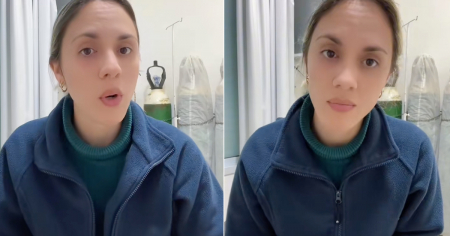
A young Cuban living in Uruguay sparked an intense debate on social media after sharing a video in which she expresses what she likes the most and the least about living in Montevideo. The post, shared on her TikTok account @la.cubana.en, has garnered hundreds of comments with mixed reactions.
In the video titled “What I Love and What I Don’t About Uruguay,” the young woman starts by praising one of her favorite places: the Montevideo Rambla. “I love the Rambla here, I really like it a lot,” she says while walking through the city. She also highlights her fondness for the pastries and everything related to typical Uruguayan sweets.
However, her observations about certain local expressions and the way Uruguayans dress sparked controversy. "The part about the accent when they call me 'boluda,' things like that, 'gorda'... it's like, no. Are you calling me 'gorda'? Look at this body, I’m not fat," she commented. She also expressed that she does not identify with the predominant clothing style: loose pants and sweaters. “I don’t like it at all, it’s not my style, I don’t adapt to it,” she asserted, clarifying that she respects other people's opinions.
The video sparked extensive discussion, eliciting responses from Uruguayans and Cubans. Many users explained that the use of words like “gorda” or “boluda” is not intended to be offensive; rather, they are part of a colloquial language filled with affection and trust. “'Gorda' is super normal for us, and it’s not meant as an insult, it’s used affectionately,” commented one user.
Regarding clothing, some defended the oversize style as part of a global trend, while others agreed with the young Cuban that they did not find it attractive. There were also those who questioned her decision to publicly comment on cultural aspects of the country that hosts her. “The door is open, you can leave, no one called you,” wrote an internet user.
In the face of the attacks, messages of support were readily available. "Everyone has their own style. You can wear whatever you want," commented one user. Another Uruguayan user added, "No one tells you how to dress; if you have personality, dress how you like. No one will judge you as you judge yourself."
In recent months, TikTok has become a space where Cubans residing in Uruguay share their migration experiences. The posts range from intimate reflections on small achievements abroad to direct comparisons between life in Cuba and the Uruguayan system.
A Cuban doctor recently recounted the differences she experienced when starting her profession in Uruguay, which also sparked divided comments ranging from gratitude to criticism. Other testimonies have addressed topics such as access to public transportation —recalling the transportation struggles in Cuba—, the cost of living, or the challenges of finding employment in Uruguay.
This phenomenon reveals a growing presence of Cubans in the South American country, accompanied by an adaptation process marked by cultural differences, economic challenges, and, at times, social tensions. At the same time, it highlights the willingness of many of them to integrate and to express, with respect, their opinions and personal experiences.
Frequently Asked Questions about the Experience of Cubans in Uruguay
What aspects of Uruguay do Cubans living there highlight?
Many Cubans living in Uruguay highlight the safety, public transport, and economic stability as positive aspects of the country. They compare these advantages with the difficulties experienced in Cuba, such as resource scarcity and limitations in basic services.
How do Cubans perceive the lifestyle and culture in Uruguay?
Cultural adaptation is a challenge for some Cubans in Uruguay. The use of local expressions and style of dress are key adaptation points, as demonstrated by a young Cuban on TikTok who voiced her lack of identification with certain Uruguayan customs, while others support cultural diversity and integration.
What difficulties do Cubans face when emigrating to Uruguay?
Upon migrating to Uruguay, Cubans face challenges such as the high cost of living and difficulties finding employment. However, many find opportunities to improve their quality of life compared to the conditions in Cuba.
How do Cubans express themselves about their life in Uruguay on social media?
Cubans in Uruguay use platforms like TikTok to share their experiences, reflecting on cultural differences and personal achievements. These testimonies spark debates about the quality of life and the integration of migrants in the South American country.
Filed under: