
Related videos:
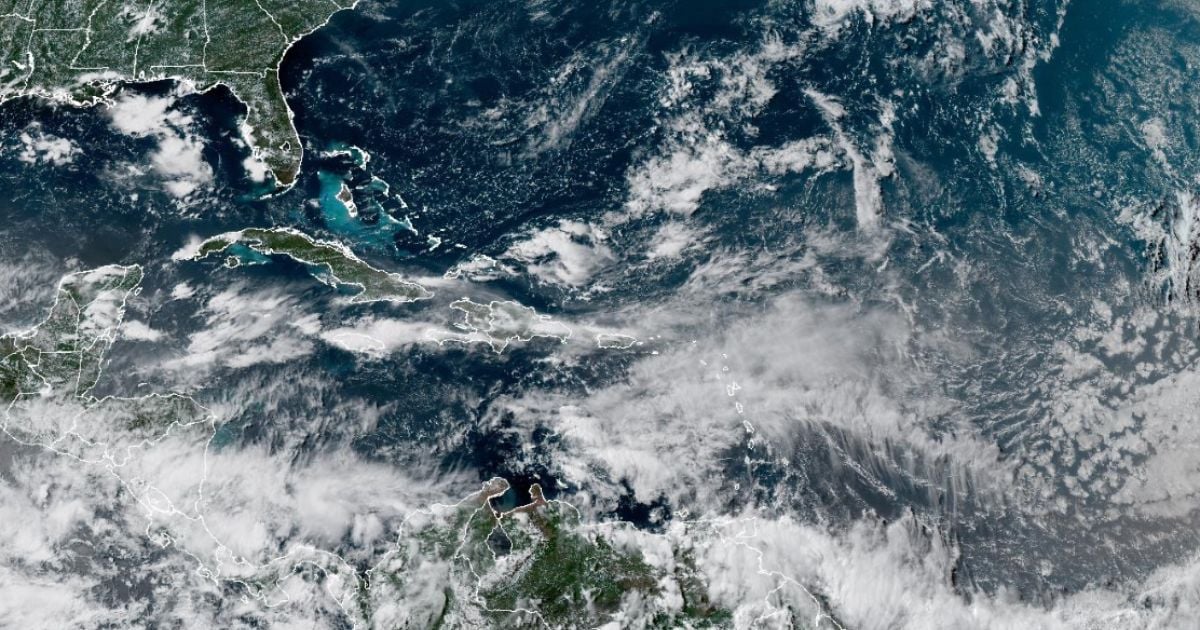
Cyclonic activity in the Atlantic and the Caribbean remains unusually low, and all indications suggest that June could end without the development of tropical events, something that hasn't happened since 2014.
Meteorologists cited this Monday by the official newspaper Granma emphasized that current conditions make it unlikely for cyclones to form during the remainder of the month and in the early days of July.
If this trend is confirmed, June would close without storms or hurricanes in the month when the hurricane season officially begins, which runs from June 1 to November 30.
Although no cyclonic activity was reported in June 2019 either, a subtropical cyclone had formed in May of that year.
Experts attribute the current calm to the presence of dry air in the region and unfavorable conditions in the upper atmosphere, which have limited the development of tropical systems.
In contrast, the Pacific Ocean has shown greater activity in recent weeks.
However, the National Hurricane Center (NHC) of the United States reported that it is monitoring a low-pressure area located in the northern Atlantic, approximately 500 miles east-southeast of Bermuda.
This system is generating scattered rain and thunderstorms, and it has a 10% chance of development in the next 48 hours.
It is expected to move northeast and enter a region of strong winds at high levels, which would further limit its potential development.
Despite the unusually calm start, the season has been classified as "active" by specialists, and the formation of cyclones is expected to increase in the coming months.
The list of names for this season revisits those used in 2019 and will start with Andrea, followed by Barry and Chantal.
Instead of Dorian —removed due to its catastrophic impact— Dexter will be used, in compliance with the rules of the World Meteorological Organization.
The list of expected names is completed with: Erin, Fernand, Gabrielle, Humberto, Imelda, Jerry, Karen, Lorenzo, Melissa, Nestor, Olga, Pablo, Rebekah, Sebastien, Tanya, Van, and Wendy.
Frequently asked questions about cyclonic activity in the Atlantic in 2025
Why could June 2025 close without any cyclones in the Atlantic?
Cyclonic activity in June 2025 remains unusually low due to unfavorable atmospheric conditions, such as the presence of dry air and upper atmospheric conditions that limit the development of tropical systems. This has made the formation of cyclones unlikely for the remainder of the month.
What factors are contributing to an active hurricane season in the Atlantic in 2025?
The temperatures of the Atlantic Ocean are well above average, which, combined with the absence of the El Niño phenomenon, creates a favorable environment for the development of tropical cyclones. These factors contribute to making the 2025 season more active than usual, according to forecasts from Colorado State University and the National Oceanic and Atmospheric Administration (NOAA).
How many storms and hurricanes are expected for the 2025 hurricane season?
17 named storms, 9 hurricanes, and 4 major hurricanes are expected for the 2025 hurricane season in the Atlantic. These numbers are above historical averages and reflect a pattern of high cyclonic activity that can be particularly dangerous for the Caribbean and the southeastern United States.
What is the probability that Cuba will be impacted by a hurricane in 2025?
The Cuban Meteorological Institute has forecasted that there is a 50% probability of an Atlantic hurricane entering the Caribbean Sea and a 35% chance that a hurricane will directly impact the island. The likelihood of a tropical storm affecting Cuba is even higher, at 70%.
Filed under: